What I'm Buying With $30,000 Whilst Markets Are Crashing
AI Summary
This market update, titled "The Five Figure Escape," provides a comprehensive look at recent volatility in global markets, significant shifts in a $30,000 investment portfolio, and the emergence of massive opportunities in both traditional and decentralized finance.
The discussion begins with the dramatic fluctuations in the oil markets. Oil has experienced extreme volatility, surging over 50% in a matter of days before crashing by the same margin, and subsequently rising another 25% recently. A primary driver for this movement is the ongoing geopolitical tension and blockages involving Iran, which have disrupted global oil sectors. Interestingly, the transcript highlights Hyperlid as a significant venue for these trades. This platform is currently facilitating over 1% of the total global trade for the oil asset ticker "CL." Because Hyperlid offers 24-hour trading—including weekends—it has become the second-largest ticker on the platform by volume, surpassing major assets like the NASDAQ and Ethereum. This surge in oil trading has also benefited the Hype token, which rose 42% in a couple of weeks to reach $37.
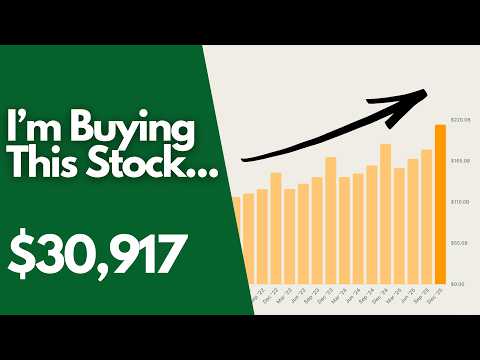
Regarding portfolio management, the total value currently sits at approximately $30,000. A significant new addition is a $5,000 position in Amazon. Despite the company’s $2 trillion valuation, the speaker argues that Amazon currently represents one of the strongest fundamental plays among the "Magnificent 7" stocks. Amazon is generating more revenue than Walmart and recently reported record-breaking figures for its fourth quarter. From a valuation standpoint, it is trading at its lowest Price-to-Earnings (PE) ratio in history—around 29—with a forward PE that is even lower. While earnings per share, net income, and free cash flow are at all-time highs, some investors remain hesitant due to high capital expenditure (Capex) related to artificial intelligence.
Amazon, along with other "hyperscalers" like Google and Meta, is spending heavily on AI infrastructure and data centers. To mitigate the high costs of third-party hardware, specifically Nvidia chips, Amazon is developing its own silicon, such as the Trainium and Graviton chips. These internal chips already generate over $10 billion in revenue. By bringing chip production in-house, Amazon aims to capture margins at every layer of the stack and reduce its reliance on external providers. Beyond AWS and AI, Amazon’s strength lies in its diverse ecosystem, which includes the world's largest retail store, a massive advertising business, and various holdings ranging from Twitch to satellite technology.
The transcript then shifts to the aerospace sector, highlighting the anticipated IPO of SpaceX. The company is expected to file confidentially as early as March with a valuation exceeding $1.75 trillion. This would immediately make SpaceX the sixth-largest company in the world, surpassing giants like Meta and Tesla. This massive valuation is expected to trigger "mania" within the space and aerospace stock sectors. The speaker is monitoring smaller companies like Rocket Lab (RKLB), ASTS, RTX, and LMT. While these companies are substantial, they appear tiny compared to the projected SpaceX valuation, potentially creating a spillover effect where investors seek exposure to the sector through these smaller, more affordable alternatives.
In the hardware sector, the video mentions the release of the "MacBook Neo." Priced at £599, it is significantly cheaper than the MacBook Air or Pro lines. The speaker notes the irony of the pricing, as this laptop costs nearly the same as Apple’s AirPods Max. While Apple continues to dominate the hardware market, the speaker views this particular product as a budget-friendly option and does not plan to add Apple stock to the portfolio at this time.
The final major update concerns a new asset in the portfolio called "Flying Tulip," a project by Andre Cronje. Flying Tulip is described as a suite of financial instruments, including exchanges and lending markets. What makes this asset unique is its "perpetual pot" structure, which offers investors 100% downside protection. The capital backing the token is deployed into yield-generating strategies to cover the team's operating expenses, while investors retain the right to redeem their tokens for the full principal ($0.1 per token) at any time. This creates a "call option" scenario where there is significant potential upside if the project succeeds, but practically zero risk of losing the initial investment. The speaker has allocated $10,000 to this asset, viewing it as a safer way to gain exposure to new DeFi infrastructure.
In summary, the portfolio is moving toward a more stable, traditional asset-heavy strategy while maintaining selective exposure to high-upside decentralized projects. The focus remains on identifying undervalued giants like Amazon and preparing for sector-wide shifts driven by landmark events like the SpaceX IPO.