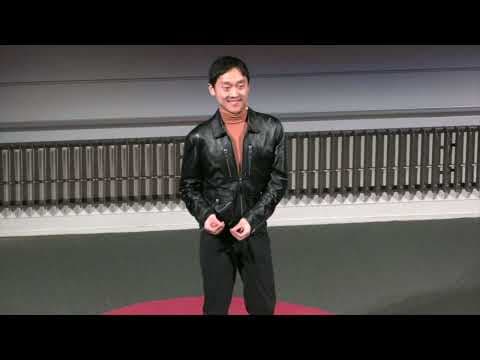
Ownership Is the New American Dream | Steven Wang | TEDxCranbrookSchools
Audio Summary
AI Summary
The speaker's parents immigrated to the United States with limited resources, driven by the belief in America as a leading economy that rewarded ambition and fostered innovation. Their first year in the U.S., the speaker's father earned $1,000 a month, relying on hard work and hope. Growing up, this meant a frugal lifestyle, which instilled in the speaker a desire not just to work hard, but to earn significant money.
This desire led the speaker to investing. In second grade, fascinated by the riches of Wall Street, the speaker convinced their parents to open a custodial brokerage account on Scott Trade. They borrowed $200, which they considered their "venture capital," to start investing. While acknowledging initial losses, the speaker understood the deeper purpose: to own a piece of the economy, rather than just participating in it. This experience profoundly changed their perspective on their future.
The speaker highlights a critical disparity in America: to build lasting generational wealth, one must own a part of the economy, not just work within it. Over the last century, American markets have grown at a rate of 10% annually, creating trillions in wealth. However, this prosperity is unevenly distributed, with the top 10% of Americans owning 90% of the stock market's wealth, and 40% of Americans not owning any stock. This is described as "ownership inequality," where a lack of asset ownership prevents growth and compounding, causing people to fall further behind. The speaker notes that parental investment habits often dictate whether subsequent generations invest, perpetuating this inequality.
In 2021, after selling their first company and working at Apple, the speaker, at 18, started Harvard during the fall of 2020. With ample free time due to social distancing during the COVID-19 pandemic, they dedicated themselves to investing and trading. This period followed the COVID crash and an incredible market recovery, characterized by "frothiness" driven by meme stocks, crypto, and SPACs. Millions of Americans began investing for the first time, often buying high and selling low when the markets crashed again in 2020. This resulted in not only financial losses but also a loss of trust in the system.
Observing this, the speaker recognized a need for a safer way for people to invest long-term. They noticed a new generation of investors who weren't just looking at numbers but were influenced by people and ideas on social media. This "influencer investing" phenomenon, while powerful, could also be dangerous, leading to gambling-like behavior and undermining the benefits of long-term investing.
This realization led the speaker to drop out of Harvard seven months into their studies to create a company called "Dub." Their mission was to build the greatest financial institution for the next generation, simplifying and democratizing investing by making it safer and accessible to all Americans. Dub is a platform where users mirror the investments of vetted expert investors with real track records, eliminating the need for individuals to become experts themselves. The company aims to make investing accessible with as little as a hundred dollars, replicating how the wealthy often manage their money through trusted experts.
Dub has since reached 2 million downloads and is valued at over nine figures. The speaker views this as the beginning of a revolution to bring long-term investing to all Americans. They argue that the American dream, traditionally associated with homeownership, must now also include ownership in companies driving future innovations like AI, biotechnology, and clean energy. The speaker reflects on their initial $200 loan, emphasizing that ownership creates leverage, belief, and freedom, and that making it accessible to everyone is crucial for the future. When people own a piece of the future, they protect it, invest in it, and believe in it, contributing not just money but hope. Ownership, the speaker concludes, is the new American dream and should be accessible to all.