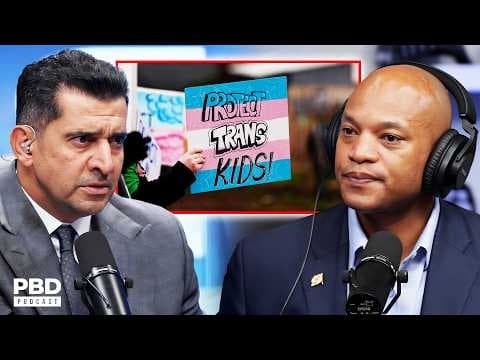
"Not A Choice I'd Make" - Gov. Wes Moore's HONEST Answer On Transgender Kids
Audio Summary
AI Summary
The discussion centers on the complex issues surrounding gender identity, particularly concerning children and their participation in sports and access to medical interventions like puberty blockers. A key point of contention is men competing in women's sports, which is presented as a major factor driving people to become independents. The speaker expresses a personal stance against allowing men to compete in women's sports, emphasizing the importance of fair competition and safety, especially for their daughter. They believe these decisions should primarily rest with local jurisdictions, not federal or state governments, and trust these local bodies to find solutions.
The conversation then shifts to parental involvement in decisions about a child's gender transition, specifically the use of puberty blockers for minors. The speaker, a parent themselves, stresses the absolute necessity of parental involvement in such significant life decisions, viewing it as a shared process between parents and educators. They believe parents should be fully informed about any conversations their children are having with teachers or others that could influence their decisions about gender transition.
A hypothetical scenario is presented: a son expresses a desire to transition and asks about puberty blockers. The speaker emphasizes their unconditional love for their son, regardless of his choices. They would prioritize understanding his feelings and reasons, ensuring he feels comfortable and supported throughout his journey. However, they would not advise him to wait until 18 but would insist on being involved in the decision-making process at 14, ensuring his safety and well-being. This contrasts with a scenario where a child might be influenced by a teacher or peers in public school, prompting parents to question the sudden shift in their child's expressed identity and the role of external influences.
The broader societal impact of these issues is explored, with concerns raised about declining birth rates in America and the potential influence of the LGBTQ+ community on this trend. Statistics are presented showing a significant increase in identifying as LGBTQ+ across younger generations, leading to questions about whether this is a choice or an inherent identity. The speaker notes that even some Democrats are considering shifting their vote due to disagreements on these issues, particularly regarding transgender rights and children.
Poland is cited as an example where sexual education for minors in schools is prohibited, with the responsibility left to parents, highlighting a different societal approach to these topics. The speaker believes that education on sexual orientation and gender identity should remain within the parental domain to prevent the imposition of potentially biased opinions by educators.
The discussion touches upon the complexities of identity and the potential for external influences to shape a child's understanding of themselves. The speaker recounts personal experiences from their youth, including military school and the "Don't Ask, Don't Tell" policy, reflecting on how societal norms and the openness of discussing LGBTQ+ identities have evolved. They also share a story about growing up in a challenging environment and the potential for negative influences to steer individuals down a different path, drawing a parallel to the concerns about children being "confused" and potentially influenced towards gender transition.
Looking ahead to the 2028 election, the speaker predicts that issues like puberty blockers, transgender rights, and men in women's sports will be central topics. They suggest that a candidate's stance on these issues will be crucial for securing independent voters, who they believe are increasingly concerned about these matters. The speaker references Donald Trump's strategy of sidestepping direct questions on LGBTQ+ issues to appeal to a broader electorate, suggesting that a similar approach might be beneficial for a Democratic candidate seeking to win over "reasonable parents." The core message remains that parental involvement and clear stances on issues like men in women's sports are vital for political success and for addressing the concerns of many families. The speaker concludes by reiterating that education, especially on sensitive topics like LGBTQ+ issues, must involve parents and cannot be conducted in their absence. They express a personal belief that while a percentage of people may choose their identity, a larger percentage might be influenced by confusion or external factors, leading to a different path. The importance of parental consent and involvement in any medical decisions, including puberty blockers, is stressed, framing it as a deeply personal decision for each family.