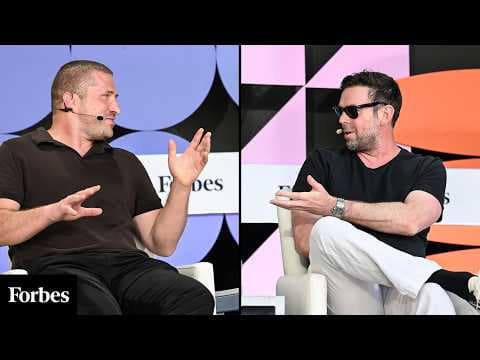
How To Build Companies That Shape Markets And Culture According To Citizen And Napster Founders
Audio Summary
AI Summary
The discussion features two individuals, Sean and Andrew, who are described as "true disruptors" with backgrounds in hacking that led to their entrepreneurial ventures. Sean's journey began as a hacker in a private online group called "Woowoo" at age 15. He met Andrew online through this group, where they researched internet security and vulnerabilities. Sean's hacker handle was "Napster," and he was instrumental in creating an easier way to share MP3s, which eventually led to the creation of Napster. The "Woowoo" group also included other future tech leaders like Jan Koum, who went on to build significant cybersecurity companies.
Sean, at 19, launched Napster, which he states ushered in the streaming era and disrupted the entire music industry. He recounts the world before Napster as one where people still paid for music through CDs and record stores, and the internet was a niche. Napster became a primary reason for many to get online and purchase broadband. The service was highly controversial and disruptive, presenting a "code red" for music and media companies who were the gatekeepers of promotion and distribution. Napster's existence, though only about two years, significantly changed the internet landscape.
Andrew discusses his venture, Citizen, which was originally called "Vigilante." The objective was not to challenge the police but to create ultimate safety by empowering communities. The initial concept was to democratize access to public safety information in real-time. Andrew explains that if a child were kidnapped, people nearby would be notified instantly, allowing them to participate in finding the child and preventing the perpetrator's escape. The platform would use a live-streaming interface, similar to a first-person shooter game, with a map showing the situation, red for danger, and green for helpers. This community-driven approach aimed to make it impossible for criminals to escape. However, the police perceived this as a threat, leading to a rocky relationship, though they are now allies. Andrew acknowledges that Citizen today is a "watered-down version" of the original "Vigilante" concept.
The conversation then shifts to advice for founders pushing boundaries and facing controversy. Sean advises that an objective should feel almost insane and urges founders to increase their scope and ambition. He shares his experience of being sued for an astronomical amount (over $1 quadrillion) due to Napster's massive music transfers, emphasizing that being sued for such sums is a sign of pushing hard. He regrets not pushing further in some instances.
Andrew recounts a story about investing in Citizen, where Sean initially couldn't disclose the project's details, only that "people could die." Despite this cryptic warning, Sean was intrigued and readily invested, appreciating the directness. Andrew also touches on the challenges Citizen faced, including being delisted from app stores and rebranding efforts. He believes that being "canceled" or facing intense media scrutiny is a "green flag" indicating a wave that founders should ride, running "into the fire" as that's when the greatest things happen. He admits he wishes he had run faster but acknowledges the fear and personal attacks he endured, including threats and doxxing.
Both entrepreneurs highlight that the "flak is loudest when you're over the target." They discuss Uber as another example of a company that pushed hard, facing significant opposition from entrenched industries like the taxi mafia, which led to police impounding cars and arresting drivers.
When asked about the mindset to push through doubt, fear, and opposition, Andrew describes entrepreneurship as a game where physical harm is unlikely, even though it "feels that way." He acknowledges the psychological challenge and the fear when reporters are at their gates. Sean advises channeling all negative energy into working harder and surrounding oneself with people who challenge them to think deeply and maintain conviction.
Andrew describes the psychological toll, especially when realizing responsibility for the consequences of their creations, particularly with network-effect products where a "genie" is released from the bottle, and its actions are unpredictable. He stresses that entrepreneurs are responsible for managing the genie's impact.
The discussion then turns to creating viral companies and brands, with Sean's "three commandments" being: 1) "Give zero F's," encouraging thinking huge and embracing being called "nuts" as a compliment. Andrew's approach involves selectively working on and investing in ventures that tackle big problems, believing that controversy naturally facilitates virality if the endeavor is significant and interesting.
Looking ahead, they are working on a new consumer-based startup in the current tech and AI landscape. They express excitement about the current era, calling it the most fun time to build in human history. They emphasize the uncanny power founders now possess due to AI, which significantly reduces the need for large teams and accelerates decision-making. They believe that even those at the forefront of AI might not fully grasp its power, making it a democratized time for innovation.
Sean echoes this sentiment, noting how his workflow has changed weekly with AI tools. He cautions against "one-shotting" everything and stresses the importance of staying close to the code and understanding the essence of what is being built, rather than handing over control and decision-making too easily.
Finally, asked for a single piece of advice to their younger selves before becoming entrepreneurs, Sean advises to "enjoy the ride." Andrew's advice is to "move as fast as you can" when your gut tells you someone is wrong, emphasizing that it all comes down to the people, as one wrong person can sink a ship, a lesson they themselves have learned and continue to learn.