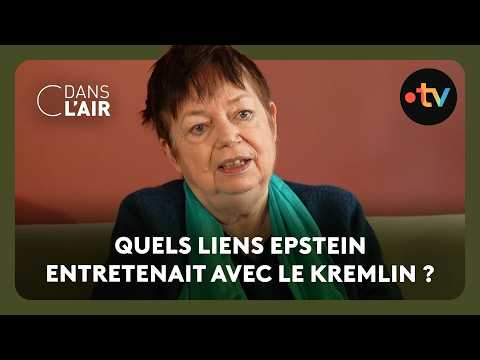
Affaire Epstein : "la russian connexion"
Audio Summary
AI Summary
The transcript explores the alleged deep and multifaceted connections between Jeffrey Epstein and Russia, suggesting a complex network involving political, financial, and potentially espionage elements. Epstein's relationship with Russia is described as extending back to Boris Yeltsin's era, where his expertise in capital exportation, financing, and fiscal matters was in high demand, particularly among Russian oligarchs.
A key figure mentioned is Sergei Beliakov, a former KGB agent and historian who was Epstein's contact in Russia. Beliakov, responsible for an economic forum, reportedly sought Epstein's advice on countering international sanctions imposed on Russia after the annexation of Crimea. This suggests a direct, high-level exchange of information and strategy.
The transcript posits a reciprocal arrangement between Epstein and the Russians. While Russia allegedly provided Epstein with access to young Russian women, reportedly vetted and potentially involved with the FSB, Epstein, in turn, used his influence and resources to facilitate their presence in the US. These women, sometimes introduced through humanitarian associations created by Epstein, served as a cover for potential espionage and to exert influence within American elite circles, including scientific and Silicon Valley communities.
A significant aspect of the alleged connection is Epstein's accumulation of compromising material, or "compromat," on global elites. The transcript suggests that this compromat was a valuable asset, and it is questioned whether the Russians were involved in Epstein's broader project, viewing him as a "supermarket for compromat." The information gathered was allegedly shared with Russia and other countries, fueling a multinational compromise operation with a focus on Russia's interests, including combating disinformation and exerting pressure.
The transcript then pivots to speculate about Mélania Trump's potential role, given her origins in communist Slovenia and her father's party affiliation. The question is raised whether she was sent to the US to seduce a wealthy real estate developer with political ambitions. While documents are not yet conclusive, the argument is made that Epstein was an ally of the Russians, suggesting a broader, interconnected network.
The discussion expands to Donald Trump's own deep and long-standing ties with Russia, predating recent geopolitical events like the Ukraine war or the annexation of Crimea. These connections are described as financial and personal, highlighting Trump's apparent fascination with Vladimir Putin and Russia. The transcript touches upon the financial difficulties Trump faced and his alleged reliance on Russian entities for bailouts.
The possibility is raised by a specialist in Soviet and Russian affairs that the situation might represent "the biggest compromise of history," potentially involving Trump being sent to the US at a young age to become president. However, this remains speculative and unproven. The emphasis is on the depth and historical nature of Trump's relationship with Russia, characterized as financial and personal, and linked to his admiration for Putin.
The transcript also briefly addresses the MAGA movement's electoral strategy and Donald Trump's public pronouncements, including his recent mockery of Emmanuel Macron. It delves into a conspiracy theory circulating within the MAGA sphere, promoted by Candace Owens, suggesting that Brigitte Macron is a man. Donald Trump's reaction to this theory, and his alleged use of it to diminish Macron, is noted. The discussion concludes by highlighting the persistent questions and the lack of definitive answers surrounding these complex relationships.