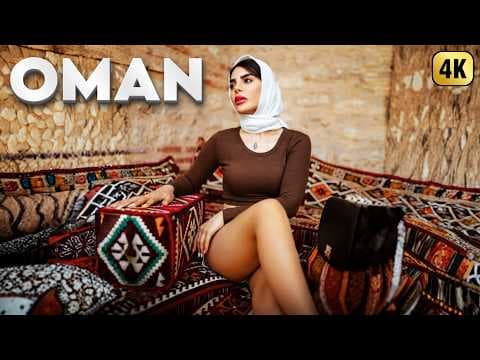
The World's Least Appreciated PARADISE: OMAN! (What the Media Doesn't Show)
AI Summary
Oman, often misperceived as merely a desert country or a chaotic region, is, in fact, a surprising, mysterious, and affordable paradise on the Arabian Peninsula. Its story is one of centuries-long continuity, with the Al Said dynasty ruling since the 18th century. A significant transformation occurred in 1970 when Sultan Qaboos ascended to power, initiating a period of modernization and renaissance that lifted the nation from deep poverty. Oil revenues rapidly funded the construction of roads, schools, hospitals, and state institutions. Today, this modern nation has a population of approximately 5,371,000, characterized by order and stability. While not the Paris or Dubai of the Gulf, Oman's long-term stability, strong social fabric, low noise, and controlled modernization make it the "Vienna of the region."
A visit to Oman reveals a natural charm, distinct from the increasingly artificial image of the Middle East. This naturalness extends beyond its extraordinary landscapes to its way of life, noticeable from the moment one enters the capital, Muscat. The city avoids massive towers, instead featuring low-rise white buildings, spotless roads, a fragrant coastline, and a backdrop of mountains, all contributing to an almost unbelievable sense of calm. The people of Oman are remarkably calm and moderate, believing that slowing the mind is the greatest luxury. Both Muscat and Oman generally exhibit strong internal order, low social crime rates, and a daily life calmer than many regional neighbors. However, caution is advised in areas near the Yemeni border, which are considered sensitive and can pose security risks. Geopolitically, Oman is orderly, safe, and controlled internally, but not entirely risk-free.
The warmth and hospitality of the Omani people are a highlight. Their willingness to help is deeply ingrained, embodying the famous Arab hospitality. A simple example illustrates this: if one accidentally enters an Omani home or shop, they are likely to be welcomed, offered delicious food, coffee, conversation, and even a place to stay if needed. The traditional Omani coffee, flavored with cardamom and spices, is more than just a drink; it's a symbol of welcome, conveying the message, "You are not a stranger here, and you are safe."
The spirit of tolerance is also evident at the Sultan Qaboos Grand Mosque in Muscat, which functions not only as a religious site but also as an aesthetic and political message. With a capacity for around 20,000 people, its main prayer hall accommodates 6,500 worshipers, offering monumental details and a profound sense of serenity. Non-Muslims are welcome to visit, reflecting Oman's respect for all religions and open-mindedness.
Stepping out of the mosque transports visitors to Old Oman, particularly the famous Muttrah Souq. This living memory is a labyrinth of corridors filled with the scents of incense, exquisite fabrics, silverwork, and spices, with stunning alleyways opening to the sea. The souq embodies Oman's maritime trading past, a seafaring civilization with connections to East Africa, India, and traditional dhows that shaped its destiny. This heritage is still alive in cities like Sur.
Oman's natural beauty is a true spectacle. Contrary to the desert-only assumption, Oman offers diverse landscapes. One can explore canyon-like wadis with turquoise waters, climb mountains, traverse sand seas, and experience lush green monsoon landscapes. Wadi Shab, located about 170 km from Muscat, is a striking natural showcase with natural pools, palm trees, limestone cliffs, and a hidden cave with a waterfall. Jebel Shams, the "Grand Canyon of Oman," boasts layered rock formations, dramatic cliff lines, and cool air that dispels any desert image. The Wahiba Sands, or Ash Sharqiyah Sands, spanning 10,000 square kilometers, offers the classic Arabian desert image, with sand colors shifting from pale yellow to orange and deep reddish hues throughout the day.
Further south lies Salalah, Oman's greatest surprise: a monsoon season known as Khareef. From late June to late September, the Dhofar region experiences fog, rain, lush greenery, and cool air, transforming the landscape. The best time to visit Oman depends on the desired experience: October to April for general exploration, but June to September for Salalah's Khareef season. Salalah is also the heart of the frankincense story. This aromatic resin was a valuable product sustaining the country before oil, central to ritual, luxury, and trade in the ancient world, as evidenced by UNESCO sites like Khor Rori, Shisr, Wadi Dawkah, and Al Baleed. Frankincense is not merely a tourist product but an integral part of Omani clothing, homes, atmosphere, and culture of welcoming guests.
Nizwa Fort, one of Oman's oldest intellectual and religious centers, stands as a powerful example of 17th-century military architecture. Its defensive passageways, massive circular tower, and integration with the nearby souk make it more than just a stone building; it's a tangible link to a past era.
Beyond its attractions, Oman offers an interesting economic landscape. The IMF forecasts real growth at 4% and inflation around 1.5%, with resilience, low inflation, and a strong fiscal outlook. This success is not solely oil-dependent; non-oil sectors like tourism, services, logistics, and diversification policies are growing rapidly. The Omani rial is one of the world's most valuable currencies, largely due to its stable exchange rate against the US dollar (1 Omani rial ≈ $2.60 USD).
Rent in Muscat varies by location: a one-bedroom apartment averages around 216 rials ($563) in the city center and 148 rials ($386) outside. Three-bedroom apartments average 388 rials ($1,011) in the center and 273 rials ($711) outside. Transportation primarily relies on private vehicles and taxis, as public transit, while present in Muscat with an official bus network, lacks a widespread metro or rail system. Oman is a "car country" due to sprawling cities, hot climate, and less public transport usage compared to Europe; a car is essential for exploring distant locations.
Omani cuisine, while having depth, is not globally renowned. Shuwa, slow-cooked meat, and Majboos, spiced rice with fish or meat, are notable dishes, alongside Omani halwa for sweets.
Omani women hold a visible presence in education and public life, with new policies aiming to increase their societal role, though their workforce participation remains lower than men's. They are not as closed off as some might imagine nor as free as Western women, with olive to light brown skin tones, dark brown or black hair, dark eyes, and average height with diverse body types.
Nightlife in Oman is limited, controlled, and calm, contrasting with Dubai's fast pace. Its charm lies in peaceful activities like walking along the shore at sunset, conversing by the sea, sipping coffee in the cool evening air, and enjoying the city's stillness. Oman offers unlimited peace rather than unlimited entertainment. Its hidden gems, often least marketed, include Masirah, the Daymaniyat Islands, mountain villages like Wakan, Wadi Darbat in Dhofar, and quiet beaches. These beaches, though not aggressively marketed like the Maldives, captivate with their natural beauty. The keyword for Oman is "naturalness," suggesting that some wonders are more beautiful when unknown, hidden, and untouched. Oman, in essence, portrays itself as one of the world's most natural, unique, cleanest, and calmest paradises, promising an unforgettable experience.