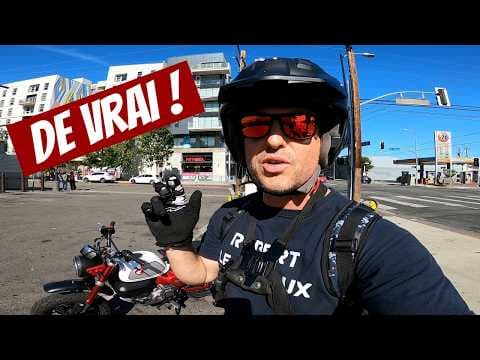
Je fonce à la préfecture pour de vrai
Audio Summary
AI Summary
The speaker is attempting a third vlog to reach the prefecture in Hollywood, specifically on Santa Monica and La Brea. They start their vehicle, noting the traffic in the city. The speaker expresses hunger and thirst, describing the bustling human activity around them. They joke about being in pajamas and nearly losing their pants, suggesting a move to Monlon.
The speaker observes a driver who seems annoyed, and notes the poor road conditions and fast driving of others, making their "monkey bike" feel inadequate. They point out a Tesla driver behaving as if on a highway. The speaker then mentions a "Tesla restaurant" where only Tesla owners are supposed to park. They notice a BMW driver instead of a Tesla, and joke about the driver being a gangster.
They then comment on other vehicles, like a Ténéré, imagining it in a Paris-Dakar rally. The speaker navigates the busy streets, expressing fear and making a U-turn in a no-entry zone. They encounter a woman in a bikini who gives them a "killer look," which the speaker finds intimidating.
The speaker turns onto Formosa Avenue, explaining that this is where the DMV (Department of Motor Vehicles) prefecture is located. They clarify that there are two DMVs: one for driving tests and another for paperwork like vehicle registration and title transfers. The speaker's goal is to double-check their monkey bike's insurance status in the DMV system, as they had insured it recently and want to ensure everything is in order to avoid suspension of their registration document.
Upon arriving at the DMV, the speaker notes its aesthetic appeal in California. They point out the handicapped parking always being near the entrance. Inside, they take a number, B431, and observe a crowd. The speaker then explains the "Notice of Intent to Suspend" letter they received, which indicates a potential suspension if the vehicle isn't properly insured by April 29th. They believe the insurance company has likely already updated the system, but plan to verify.
While waiting, the speaker considers moving their monkey bike, as they've been told these bikes are easily stolen due to their light weight. They recall a story of someone who would bring their monkey bike into restaurants due to fear of theft. They decide to move and secure it, noticing someone parking in a handicapped spot without a visible tag. The speaker mentions the $250 fine for such an offense and discusses how some people fraudulently obtain handicapped tags, sometimes through family members, to exploit the system, which disadvantages truly disabled individuals.
The speaker struggles to find a suitable post to attach their bike, noting the thinness of their chain. They criticize the "handicapped" driver for parking crookedly and reflect on people who complain about minor details. They then observe a genuinely disabled person, emphasizing the importance of not blocking handicapped access.
After leaving the prefecture, the speaker recounts their interaction at the counter. They showed proof of insurance via email on their phone. The clerk confirmed the insurance but mentioned it wasn't yet in the system, suggesting it could take about three days for the insurance company to contact the prefecture. The clerk assured the speaker that their registration likely wouldn't be suspended and advised them to check back the next day.
The speaker then encounters a man on another monkey bike. They engage in a conversation about the bike, its speed, and the need for a motorcycle license. The man, who is 14, mentions having a MacBox X1S and a mini bike that goes 34 mph.
The speaker then observes an accident, noting that a "Broncoch" seemed fine but the other car was significantly damaged. They attribute the accident to a bike lane, which they believe causes chaos and stress among drivers, leading to road rage and arguments. They criticize the bike lane as a "total error" that has led to accidents and conflict over the past two years. The speaker argues that these bike lanes, implemented by city council members with "good ideas," are not a solution, as only a small percentage of people use bicycles, while the majority continue to drive cars. They express frustration with the idea that people will abandon their cars for bikes, especially those who commute long distances for work. The speaker concludes that these initiatives only create problems and stress.