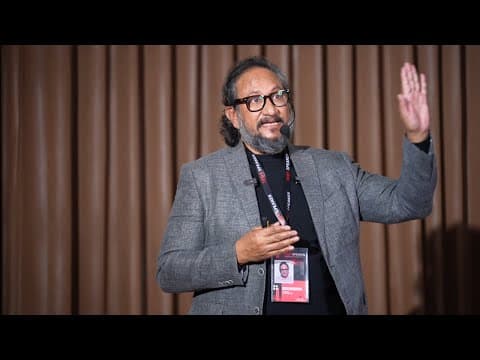
A personal search for meaning | Anurag Asthana | TEDxGaya College of Engineering
Audio Summary
AI Summary
This video discusses past life regression as a tool to understand and overcome life's persistent struggles. The speaker, Anurag Astana Nirman, shares his personal journey from a successful but unfulfilled corporate executive to someone who found deeper meaning through past life regression. He explains that many people, like himself, experience recurring painful patterns in finances, relationships, or careers, and often feel an inexplicable sense of fear, anxiety, or restlessness despite outward success.
Nirman’s own search for answers led him through various holistic modalities, including Reiki, Pranic healing, meditation, and Qigong, which offered help but couldn't address the fundamental gap he felt. The breakthrough came with past life regression, taught to him by his mentor, Dr. Brian Weiss, a renowned psychiatrist in the field. This practice, he explains, allows access to a "soul dimension" beyond the limitations of the logical mind. Through past life regression, memories surfaced, connecting dots and providing insights into the root causes of his internal struggles.
He emphasizes that past life regression goes beyond the social narrative of success, which often revolves around material possessions and achievements. For those questioning what lies beyond these external markers, he suggests past life regression can unlock undiscovered dimensions of life. His findings and experiences are documented in his book, "The Zodha Manuscripts."
Nirman recounts a pivotal moment when his unfulfilled life led to a near-fainting episode, prompting him to leave his corporate career and dedicate himself to teaching past life regression. He addresses common myths surrounding the practice, asserting that it is a safe, scientific process involving hypnosis, not imagination, and that participants remain in control. He notes that students from diverse professional backgrounds, including CEOs and engineers, have experienced significant breakthroughs.
He highlights scientific backing for past life regression from researchers like Ian Stevenson and Jim Tucker, and connects it to concepts like epigenetics, suggesting trauma can be passed down through generations. Furthermore, he references ancient Eastern traditions, such as Jainism's "Jati Smarn" and Buddhist teachings, which advocated for remembering past lives to break cyclical patterns of existence.
Ultimately, Nirman posits that past life regression is not just about looking backward, but about delving deeper within oneself to discover the "true you." Recognizing this core identity, beyond roles and social status, is presented as the key to healing past wounds and opening up a new, purposeful future. He encourages those seeking answers to life's big questions to explore past life regression, not by thinking harder, but by going deeper into memory.