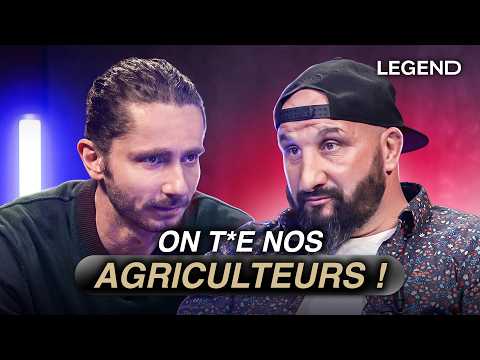
AGRICULTEUR : SON PÈRE SE SU*CIDE LUI TRAVAILLE 80H SANS SALAIRE À CAUSE D’ABSURDITÉS INIMAGINABLES
AI Summary
Jérôme Bale, an agricultural farmer from southern Toulouse, has become a prominent spokesperson for French farmers, known for his 33-day highway blockade and numerous media appearances. He shares his personal story, including the suicide of his father, a farmer, which deeply impacted him and fueled his commitment to defending agriculture. This personal tragedy, combined with the struggles faced by many farmers, drives his activism.
Bale highlights the alarming rate at which agricultural operations are declining in France, with the number of farms having decreased by 75% in recent decades. He also exposes the inconsistencies in agricultural policies, where France exports high-quality, pesticide-free products while importing cheaper goods cultivated with pesticides banned in France. He argues that this hypocritical system forces French consumers to ingest harmful chemicals while undermining local, sustainable farming practices.
Bale’s journey as a spokesperson began on January 16, 2024, during a regional protest in Toulouse. Dissatisfied with the weak discourse of union representatives, he spontaneously took the microphone, urging fellow farmers to block the highway. His powerful speech, delivered with the intensity of a rugby captain, resonated with the crowd, leading to an immediate and unplanned blockade. He emphasizes the values of respect, solidarity, and determination, which he learned from his rugby background, as crucial to their movement.
The blockade, initially planned for a few days, lasted 33 days, setting a world record for highway blockades. Despite initial opposition from agricultural unions, the movement gained widespread public support. Bale and his team meticulously maintained the blockade, ensuring cleanliness and non-violence, even cleaning the highway at their own expense. This commitment to being "respectable" earned them credibility with politicians and the public.
During the blockade, Bale engaged in direct negotiations with government officials, including Prime Minister Gabriel Attal. He recounts a candid conversation with Attal, where he challenged the Prime Minister's understanding of agriculture and insisted on concrete actions. Their demands included the abolition of a new tax on non-road diesel, aid for animals affected by epizootic hemorrhagic disease, and the easing of regulations on water access for agricultural use. Bale kept his word by lifting the blockade once their demands were met, emphasizing the importance of integrity and collective action.
Bale works an average of 12 hours a day, often more during peak seasons, managing 240-250 cattle on his 230-hectare farm. He explains that despite working 60-80 hours a week, he often struggles to cover his expenses and cannot afford a regular salary. He laments the lack of political and media support for farmers, who are essential for feeding the nation and supporting 14 other professions indirectly. He also criticizes the common agricultural policy (CAP), which, while providing aid, forces French farmers to align with global market prices, often leading to losses.
He points out the irony of French citizens demanding pesticide-free produce from local farmers while readily consuming imported goods treated with banned chemicals. He advocates for prioritizing French products in public institutions like school canteens and for re-educating the public on the origins of food and the importance of supporting local agriculture.
Bale highlights the profound isolation experienced by farmers, which, coupled with financial difficulties, contributes to the alarmingly high suicide rates in the profession. He shares the personal trauma of finding his father after his suicide, an event that solidified his resolve to fight for the dignity and survival of farmers. He describes how police initially treated him as a suspect, reflecting a broader societal misunderstanding and lack of empathy towards the agricultural community.
He criticizes the "hypocrisy" of urban dwellers who, despite their ecological concerns, often complain about the realities of rural life, such as farm noises or smells. He argues that many in urban areas are disconnected from the agricultural world and quick to judge without understanding the complexities of farming.
Bale reflects on his personal journey, from growing up on the farm and being ashamed of his parents' profession due to financial struggles, to becoming a proud advocate for agriculture. He recalls never having taken a real vacation until his early twenties and the sacrifices his family made, including his mother, who worked tirelessly for meager wages and now lives on a minimal pension after a lifetime of labor. He emphasizes that his fight is not just for himself, but for these generations of farmers who have been abandoned and for future generations who dream of continuing the agricultural tradition.
He expresses pride in the movement he co-founded, "Les Ultrad 64," which promotes solidarity among farmers. He believes that by uniting and speaking out, farmers can regain their dignity and ensure the future of French agriculture. He remains hopeful, believing that despite the challenges, the French people will eventually rise to defend their agricultural heritage, which is the foundation of their country's history and economy. He asserts that the future of France lies not with politicians, but with sensible, reflective individuals who are proud to be French and committed to their country's well-being.