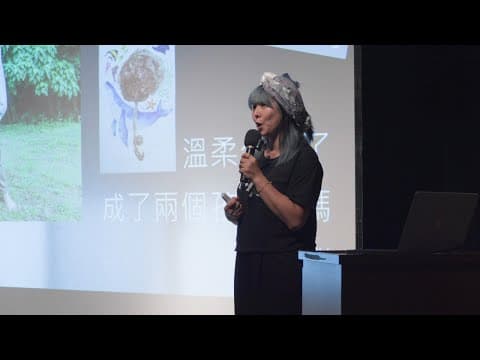
在一無所有之中 看見夠好的自己 | 雷娜 賴 | TEDxNTHU
Audio Summary
AI Summary
The speaker reflects on various aspects of their life, focusing on personal growth, self-perception, and relationships. They begin by expressing a sense of wonder and talent, noting that others perceive them as brave. The speaker shares a personal mantra about living their life fully and growing within it. They then delve into past experiences, mentioning a period between 18 and 23 years old where they focused on three key elements for personal development.
The first element was the creation of a safe environment. At 16, they found refuge in a house with a social worker and family members, which provided them with a secure space and a teacher who offered support. This environment was crucial for their initial sense of safety.
The second element involved a significant learning experience at age 23. While working as a teacher, they found the role relaxing but realized the necessity of self-guidance. This led them to adopt a more structured approach to personal development and to become part of a well-functioning group, implying a newfound understanding of collaboration and effective teamwork.
The third element centered on a desire to help others, specifically couples, who were willing to seek assistance. This focus on guiding and supporting others marked a turning point, helping them to discover their life's direction. The speaker emphasizes the importance of embracing challenges and engaging in difficult tasks.
The speaker then contrasts their own experiences with those of others who excel and enjoy their work. They admit to spending their days doing things they dislike and are not good at, specifically mentioning administrative tasks and management. Despite this, they are now the founder of a social welfare unit. They question why they continue to pursue these challenging activities, attributing it to a desire to connect with many people, even if they don't consider themselves exceptionally talented. They acknowledge that they are not always doing what they enjoy most but are driven by a deeper purpose.
A significant part of the narrative revolves around overcoming past traumas and negative self-perceptions. The speaker describes a deep-seated self-hatred and a desire to express themselves through writing, specifically mentioning writing a book. This drive stems from a deep personal need and a desire to share their experiences, even though it presents a significant challenge. They express hope that their story can resonate with others, particularly younger generations, and offer a path forward without self-harm. They emphasize the importance of creating a positive impact and avoiding unnecessary conflict.
The speaker recounts a personal struggle with self-worth, stemming from childhood experiences where their mother consistently told them they were not good enough. This has led to a persistent feeling of self-doubt, even when receiving positive feedback. They describe a need to re-evaluate their own internal narrative and disconnect from the negative influences of the past.
A key turning point in their life involved a shift in perspective regarding their own circumstances. They realized that despite lacking certain things, they possessed other valuable attributes such as freedom, creativity, and emotional resilience. This realization allowed them to reframe their outlook and focus on what they "have" rather than what they "lack." They also highlight the importance of seeking help, acknowledging that they cannot navigate challenges alone. At 41 years old, they continue to seek support and guidance, recognizing that this process enables them to work effectively and embrace new challenges.
The narrative then shifts to the experiences of others. One speaker, Simon, shares his journey of self-discovery at 57 years old. He recounts three significant life changes. Firstly, as a young man of 20, he was discharged from military service and struggled with leadership, questioning his identity as a leader. Secondly, 25 years prior, as a teacher, he aimed to provide his wife with a stable life. This led him to transition from a maritime career to land-based work. He pursued further education and eventually became a teacher himself, learning from his students and adapting his teaching methods. He notes that his colleagues' approaches differed, and he found it challenging to articulate his needs and understand general directives.
Thirdly, Simon discusses his three children and the importance of youth training. He realized the need to connect with his children as they grew, opening up to them and acknowledging their individual journeys. He mentions attending a lecture in 2021 called "神... 神们出走 就是出走 宜无所有中堪尽永有" (roughly translated as "Gods... Gods are running away, run away, possess nothing, endure everything"). This experience led him to meet Lena and, more importantly, to meet himself. He had previously perceived himself as a "nice man" but also prone to self-talk. This course helped him to be more relaxed and to share his experiences and stories, which he believes can help others. He highlights the importance of seeking help and accepting support, noting that even his deaf mother could be understood and seek help.
Simon shares a personal anecdote about his wife’s reaction to his emotional expression, noting that she initially found it unusual but eventually recognized its significance. He emphasizes that true love requires vulnerability and the courage to express oneself. He expresses a desire to apologize to his wife and children, acknowledging his past mistakes and the difficulty in expressing remorse. He hopes his children will understand his journey and his efforts to improve.
Finally, Simon reflects on his relationship with his father, wishing for his forgiveness but understanding that his father may not be able to acknowledge his own mistakes. He expresses gratitude for the opportunity to share his story and for the time dedicated to the discussion, highlighting the transformative impact of the experience.