Amtrak’s Most Important Tunnels Are Doomed
Audio Summary
AI Summary
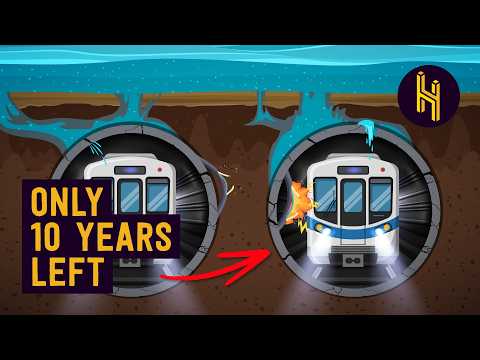
The North River tunnels, the sole rail connection between Manhattan's Penn Station and New Jersey, are North America's most heavily trafficked rail tunnels and a critical choke point for Amtrak. However, they are nearing the end of their operational life, with only a few years remaining before they are deemed unusable. The tunnels are already deteriorating beneath the Hudson River, causing frequent delays and posing a threat to Manhattan's connectivity.
The tunnels' origins trace back to the early 1900s when New York City, an island, was isolated from the national railroad network. Ferries were the only means of transport from New Jersey to Manhattan. By 1902, tunnel-digging technology had advanced sufficiently to construct a tunnel under the Hudson River, albeit with a significant fatality rate. Eight years later, the first train arrived at Penn Station.
The critical turning point for the tunnels occurred in 2012 with Hurricane Sandy. During the storm, the Hudson River overflowed, pushing seawater inland. A train yard acted as a drain, diverting 13 million gallons of seawater into the North River tunnels. While the water was pumped out within days and trains resumed operation shortly after, the flood caused irreversible damage. The seawater left behind deposits of chlorides and sulfates embedded in the tunnel surfaces.
Over time, these chemicals have led to a range of structural problems. Sulfates expand when exposed to water, causing the tunnel's structure to slowly expand, crack, and fall apart as it constantly comes into contact with groundwater. Simultaneously, chlorides are corroding and disintegrating the iron rebar within the concrete. This process is likened to the damage caused by salt, which is identified as a major enemy of New York City's infrastructure.
Beyond the internal dissolution of the tunnel walls, the salt deposits trigger a cascade of smaller, daily disruptions. Concrete pieces fall onto the tracks, water infiltrates and damages the electrical system, and icicles short-circuit the catenary system. This debris also makes it difficult for operators to determine if a train is in the tunnel, which is crucial for safety and sending additional trains.
The current solution to maintain safety involves a crew of 20 to 30 people inspecting the tunnels every night to assess their condition for the next 24 hours. Often, the tunnels must be shut down to remove damaged concrete, set new concrete, or even to send empty trains at high speeds to dislodge icicles before they cause electrical shorts. This is the method of infrastructure maintenance in what is described as the wealthiest city in the world.
The Gateway Program is presented as the tunnels' only hope. This project involves digging an entirely new, 9-mile, $16 billion tunnel from Penn Station to Secaucus, New Jersey. This new tunnel would double the number of tracks under the Hudson River from two to four, allowing the existing North River tunnels to be shut down for extended periods to thoroughly clean out the 14-year-old salt deposits. The new tunnel is projected to be completed by 2035, a year before the existing tunnels are expected to become unusable. The summary concludes with a cynical note about potential delays in this expensive infrastructure project.