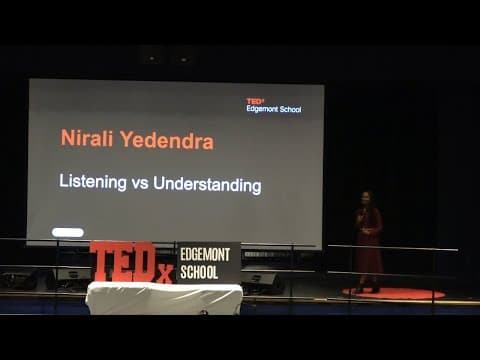
Listening vs Understanding | Nirali Yedendra | TEDxEdgemont School
Audio Summary
AI Summary
The video explores the crucial difference between merely hearing someone's words and truly understanding their meaning. The speaker shares a personal anecdote about a letter from a friend who felt understood, listened to without judgment, and safe to express herself. This letter prompted reflection on the distinction between listening and understanding.
Listening, the speaker explains, is simply paying attention to words, but it can involve focusing on fixing, correcting, or judging. Understanding, on the other hand, requires seeing the world from the speaker's perspective and prioritizing the intended message over its delivery. The speaker recounts an experience growing up in an immigrant family where a friend corrected their language, shifting the focus from their intended meaning to the way they spoke, leaving them feeling diminished. This phenomenon isn't limited to language; it occurs when we dismiss someone's feelings by saying "everyone feels that way" or "you're overreacting," often while preparing our own response.
Researchers suggest that people desire to feel loved, and this feeling stems from being understood. True understanding involves curiosity, asking questions, and listening patiently to grasp the speaker's genuine meaning. This requires humility and a focus on meaning rather than correction. When we practice understanding, people feel seen, heard, and safe to be more vulnerable, which can profoundly impact friendships and other relationships.
The speaker encourages listeners to pause before correcting or judging and to ask themselves if they are listening for mistakes or for meaning. Speaking can be an act of bravery, and truly understanding is a kind gesture. The speaker concludes by reflecting on the letter, realizing their aspiration to be someone who hears meaning, not just words, offering the gift of being truly heard.