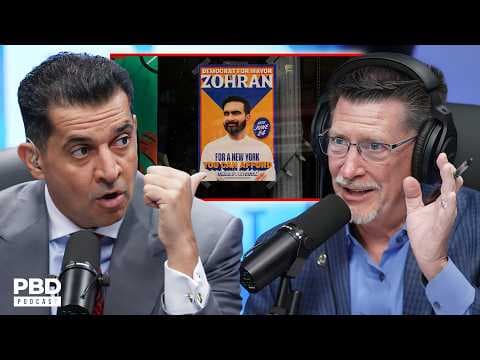
“$6M To $30M” - Mamdani's ‘Free Grocery’ Plan BLOWS Budget BEFORE Opening
Audio Summary
AI Summary
The discussion begins by addressing the topic of affordability and skepticism about political outcomes, despite a socialist winning in New York City. This individual, Pumani, announced plans to build city-run grocery stores to provide free essential items for those in need. The initial plan involves five boroughs, with the first store projected to cost $30 million.
When questioned about the timeline for opening the first store in 2027, given that bodegas open frequently, it was explained that building a city-run grocery store from the ground up, the first in Manhattan, requires extensive design, construction, and inter-agency coordination. The construction will also utilize prevailing wages. Subsequent stores, expected to open by the end of 2029, will not demand the same scale of production.
Skepticism was voiced regarding the success of this initiative, particularly concerning the financial viability of grocery stores. It was highlighted that publicly traded grocery stores worldwide operate on low single-digit profit margins, indicating that the business is not highly lucrative. Existing commercial grocery chains have refined their supply chains over decades to operate efficiently due to competitive pressures. The logistical challenges of managing perishable food items, coupled with the high cost of labor in the current environment, make it a difficult business. The expectation is that these city-run stores will face cost overruns, similar to other large projects, even those in the private sector.
An alternative approach suggested was to enhance the existing SNAP program. The argument was made that a tightly controlled, fraud-filtered SNAP program, allowing individuals in challenging economic situations to receive subsidies and shop at existing stores like Costco, would be far more cost-effective than building and operating new city-run grocery stores. The current initiative was metaphorically compared to past public works projects plagued by massive cost overruns, predicting it will be a "disaster" due to government inefficiencies and contractors taking advantage.
The broader implications of such initiatives were also discussed, linking them to a societal shift where economic struggles, fueled by inflation, can push the middle class into lower economic tiers. This, in turn, can lead to increased support for socialist ideas, as people are drawn to messages promising free and fair solutions to perceived exploitation by greedy business owners. New York and California were cited as case studies of this phenomenon. The concern was raised that such situations could facilitate the rise of unconventional political figures. It was emphasized that a significant portion of the population might not fully grasp the underlying economic reasons for unaffordability or the long-term impact of government interventions like these, which could inadvertently make things more expensive.
The conversation concluded with a prediction that if affordability remains a top issue, figures like AOC, who are openly socialist and have consistently advocated on this topic, could have a stronger chance of winning in future elections.
The transcript also included a segment about aggressive hiring at "Value Tamement," which is described as more than just a podcast. It encompasses nine companies operating on an 11-acre campus, involved in various fields such as HR, full-stack development, events, merchandise, marketing, consulting, sales, and content production. The company is actively seeking talent for roles including full-stack engineers, bookers, UI/UX designers, consultants, SAS sales, and assistants, offering relocation packages for qualified candidates from New York, California, Austin, and Dallas. Those interested in learning more or applying were directed to vt.com/careers.