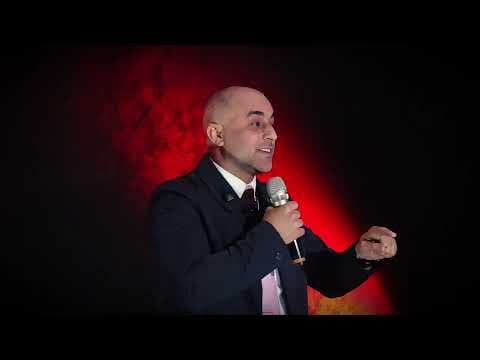
The "What If" Trap | Mohammad Aljaidi | TEDxZarqa University
Audio Summary
AI Summary
The speaker addresses a distinguished audience, choosing to use clear and simple language rather than overly formal phrases, hoping to connect more directly. The core of the message revolves around a small but impactful question: "What if?" This question, often disguised as wisdom, can shatter dreams, stifle ideas, prevent decisions, and rob individuals of initiative, leaving them hesitant at life's threshold. The speaker argues that this "What if?" is not the voice of wisdom, but the voice of fear, often reinforced by external voices urging caution and comfort. This fear can keep individuals stuck while opportunities pass by and others succeed.
The emphasis is on the courage needed to make decisions and distinguish between unjustified fear and pursuing one's dreams. The speaker highlights the importance of having a goal in life, something to work hard for, as a dream that requires effort to achieve. To illustrate this, the speaker shares a personal journey, starting from a pivotal decision point where they had to choose between becoming the person they aspired to be or succumbing to what they disliked.
The personal story begins in 1999, during high school, when the speaker harbored a dream of studying computer science and becoming a researcher in the field. Despite not owning a computer, the idea of this new field captivated them. After high school, the speaker was accepted into a prestigious IT college. They excelled academically, maintained excellent relationships with professors, and were known for their consistent attendance and performance. However, due to unforeseen family circumstances—specifically, a parent's severe illness and resulting economic hardship—the speaker was forced to leave university. This was despite being on a scholarship, covering only transportation costs.
Faced with this setback, the speaker pursued an alternative: a military college. The primary goals were to earn a salary and continue learning. While studying at the military college, the dream of studying IT persisted, though the college initially offered only aerospace engineering majors. In the preparatory year, just three weeks before graduation, the college opened an IT major. The speaker, being the top student in the preparatory year and having a high GPA, was selected to study IT, where they again excelled, graduating first in their class for all three years.
After graduating, the speaker joined the armed forces, yet the fear of taking risks lingered, whispering caution about leaving a secure job for an uncertain adventure. This fear of making decisions continued for a long time. In 2008, during an advanced English course, the instructor prompted the speaker to articulate their future aspirations. The speaker declared a desire to be an academic researcher in IT, complete doctoral studies, teach at universities, and pass on knowledge. Colleagues dismissed this as a distant dream, advising them to stick to their current, technically skilled and certified job.
The internal struggle continued until 2012. A turning point occurred in 2010 when the speaker, working as an IT manager in a reputable company, faced a significant hurdle: the lack of a university degree. Despite the CEO's efforts to advocate for the speaker's skills, the board of directors insisted on formal qualifications. This led to the speaker's departure. After a brief stint in another unfulfilling role, the speaker enrolled in the evening program for Computer Science at Zarqa University.
Financial difficulties were initially a concern, but the speaker's determination and the university's support for outstanding students proved crucial. As a top student, the speaker received significant discounts, effectively studying for free. After completing a bachelor's degree in an accelerated timeframe (about a year and eight months), graduating first in the university, Zarqa University offered master's and doctoral scholarships. Despite initial hesitation and pressure from the army, the university, particularly its chairman, Dr. Mahmoud Abu Shira, insisted on supporting the speaker's academic journey.
The speaker pursued a master's degree at Zarqa University, again graduating first in their class. The university then generously offered support for PhD studies abroad, covering travel and family expenses. The speaker went to Britain and, despite joining a program late, was appointed as a lecturer, not just a supervisor or assistant. They successfully supervised 11 master's theses. Throughout this period of success, the familiar nagging voice of caution persisted, warning against taking further steps that could lead to ruin.
However, the speaker persevered, completing their PhD with more research papers than any other student in their department. Upon returning to Zarqa University, within three years, the speaker became the top researcher, with over 225 research papers and more than 20 patents registered in top international offices. The speaker emphasizes that this is just the beginning of the dream, encouraging the audience that success is a continuous, step-by-step process.
The speaker concludes by offering two crucial pieces of advice: maintain strong faith in God and cultivate high self-confidence. They stress the importance of fighting for one's dreams and not becoming complacent. The example of accounting graduates is used to illustrate how individual determination shapes one's career path, regardless of the initial major or high school average. The message is that success is attainable through self-belief and continuous effort, not just academic credentials. The speaker's final warning to graduating students is "Beware of hesitation," identifying it as the greatest enemy of success.