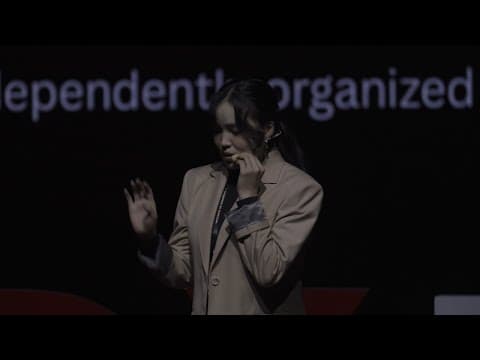
Bullying and Friendship | Nomingerel Jimi | TEDxECL
Audio Summary
AI Summary
Choosing a career is one of life's most significant decisions, yet the speaker emphasizes that being a good person, characterized by humanity, compassion, kindness, and intelligence, is even more crucial. The speaker addresses the issue of superiority, drawing from personal experience. When they were 10 years old, they often received compliments, which they initially perceived as normal. This led them to mistreat classmates, including a boy who wore glasses and another who was quiet and humorous. The speaker now recognizes this behavior as wrong and attributes it to a lack of empathy—the ability to understand and share the feelings of another. They suggest that if the bully could imagine themselves in the victim's position, such actions might not occur.
The problem, however, extends beyond just the bully and the bullied. Many children witness bullying without intervening. The speaker reflects on their own past, where they would simply observe from the sidelines. They believe that if a friend had pointed out their wrongdoing, they would have eventually understood and stopped. Therefore, the speaker encourages bystanders to speak up when they see someone acting wrongly. They commend the current generation for being brave, intelligent, and free to express their opinions, urging them to use these qualities to help those struggling with bullying.
The speaker believes that bullying can be completely unfounded and that friends should stand up for each other. They implore listeners to be brave and tell a friend or classmate who is bullying to stop. The speaker stresses the importance of communication: if someone is doing something wrong but isn't told, they may not realize it. It is unfair to expect a bully to stop if they haven't been told their actions are wrong. Therefore, if you want someone to change their behavior, you must first communicate what is wrong. The speaker hopes that everyone will practice empathy and consider things from another person's perspective.
The discussion then shifts to the topic of friendship. The speaker, who works in a production company with three female friends from the same class, highlights the immense importance of friendship, likening it to choosing a life partner. A person's environment and circle of friends significantly define them. If one's social circle is not conducive to growth or leads to negative behavior, it can hinder personal development. The speaker advises that if you find yourself in the wrong circle, try communicating your concerns once, twice, or even three times. If it doesn't work, learn to let go for your own well-being. It's not acceptable to stay in a detrimental friendship simply because it feels "cool." The speaker acknowledges the existence of truly great friends but also stresses the need to end relationships with those who are detrimental. If you can't even communicate with that person, it's time to break off the relationship, as this might help them understand their mistakes.
The speaker feels incredibly fortunate regarding their friends, with whom they continue to work. They express satisfaction with their life, dividing their 24 hours into eight hours of happy work, eight hours of happy home life with their husband, and eight hours of peaceful sleep. Friends represent a crucial personal space that should never be neglected, as there are things one might not share with a spouse or even parents. This "friend space" needs to be filled with valuable connections. The speaker hopes listeners will cherish their friendships and make the right choices in this area.
Life is full of choices, and people live by their outcomes. The speaker reiterates that if one prioritizes being a good and humane person, all subsequent choices will naturally align. While professional choices are important, the speaker focuses on the human choices that matter most in real-world environments. They emphasize carefully choosing friends, recalling their own two good friends from 10 years ago, whom they still cherish despite distance.
Finally, the speaker discusses how to perceive others without filters. Whether it's a friend or anyone else, it's essential to look beyond superficial appearances and focus on a person's inner personality and human nature, which are constant, unlike outward appearances that change. The speaker desires friendships based on personality, behavior, and genuine connection. They believe they have made the right choices in their profession, friends, and husband, which contributes to their incredible happiness and resilience in facing problems. The speaker concludes by stating that making these difficult, correct choices allows life to flow wonderfully.