Silent Hill f - Part 1
AI Summary
This summary explores the opening hours and key narrative beats of *Silent Hill F*, based on the provided transcript.
### Setting the Scene: Ebisuoka, 1945
The story takes place in the rural Japanese town of Ebisuoka during the Showa era, specifically around 1945. Once a thriving hub for coal mining and dam construction, the town has since fallen into economic decay. The atmosphere is defined by a thick, oppressive fog and a series of strange environmental phenomena, including geysers spewing arsenic-laced water and hydrogen sulfide gas.
The protagonist, a schoolgirl named Hinako, navigates this landscape while dealing with a deeply troubled home life. Through journal entries and dialogue, we learn of her abusive, "patriarchal" father who fluctuates between cold silence and violent outbursts. This domestic tension serves as a backdrop to the town's broader supernatural decay.
### The Inari Faith and Local Superstition
Religion and superstition permeate Ebisuoka. The town is filled with fox shrines dedicated to Inari Sama. Local lore suggests that the town’s recent earthquakes and strange maladies are the result of a divine curse. Warnings from the local doctor advise residents to stay away from wild foxes, citing diseases like rabies, but the elderly population views the creatures with religious reverence.
Hinako interacts with "Hokura" (small shrines) that serve as save points and places of offering. By offering items like "Yokan" (bean jelly) or "Inari Sushi," she gains "Faith," which can be used to restore her sanity or obtain "Omamori" (charms) that provide combat buffs, such as increased stamina or health restoration.
### Character Dynamics and the "Friends"
Hinako is joined by several key figures, though their motivations and fates are often ambiguous:
* **Shu:** Hinako’s childhood "partner." Coming from a lineage of pharmacists, he provides Hinako with red capsules (painkillers) and first-aid kits. While he claims to protect her, the narrator notes a sense of misplaced credit, as Shu is often absent during the actual danger.
* **Rinko:** A hardworking but rigid friend. There is an underlying tension between her and Hinako, particularly regarding their relationship with Shu. This tension culminates in a supernatural encounter where Rinko appears to push Hinako into danger.
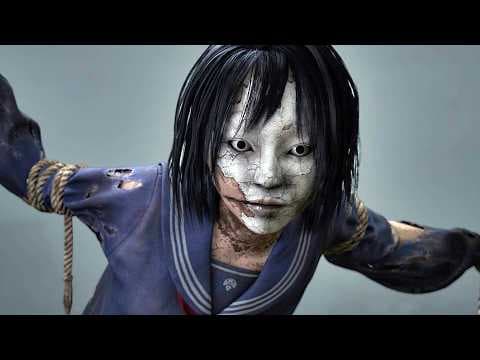
* **Sako:** A friend from a shrine-owning family who claims to hear otherworldly voices. Her mother’s letters reveal a desperate attempt to suppress these "spiritual" traits to avoid social ostracization. Sako eventually transforms into a major supernatural threat.
* **The Fox Mask Man:** A mysterious, refined figure who guides Hinako. Though he acts like a "prince," Hinako (and the narrator) remains deeply suspicious of him, especially after finding notes in a shrine vault suggesting a predatory obsession with "pretty little things" and "tearing off masks."
### Combat and the Sanity System
The gameplay introduces a heavy emphasis on melee combat and resource management. Hinako defends herself with lead pipes, sickles, and eventually a sturdy "Naginata" (polearm). Combat is tactical, requiring "Perfect Dodges" to recover stamina and "Focus Attacks" to deal massive damage.
A central mechanic is the Sanity Meter. Mental health is directly tied to physical survival; as Hinako’s sanity depletes—often triggered by the presence of monsters or the use of focus abilities—her physical health begins to drain as well. Healing items like "Ramune" and "Divine Water" are essential for maintaining her mental state.
### The Shadow Realm and Symbolism
The game frequently shifts into a "Shadow Realm," a distorted, nightmare version of the town. This realm is populated by grotesque, doll-like monsters. The narrator suggests these creatures represent the societal expectations placed on women during that era—to be silent, decorative, and subservient.
One significant sequence involves a "Scarecrow Puzzle" in a misty field. Hinako must identify the "different" scarecrow based on cryptic notes about thorns and loneliness. This puzzle serves as a metaphor for Hinako’s own feelings of being an outsider in a traditionalist society. Another standout horror element is the "Baby Ball," a mass of intertwined celluloid dolls that screams and attacks Hinako, representing the loss of childhood innocence.
### Key Narrative Discoveries
As Hinako explores, she finds disturbing medical logs and autopsy reports. These documents describe a mysterious plague where patients’ faces deform into permanent glares and their skulls are hollowed out by parasitic insect eggs. The police and local authorities appear to be covering up these "blasphemous" deaths, disposing of bodies that show signs of the Inari curse.
One particularly poignant discovery is a letter from a mother of three who, trapped in an arranged marriage with a violent drunk, decides to take her own life as her "first and last selfish act." This reinforces the game's recurring theme: the suffocating nature of traditionalism and the literal monsters created by social repression.
### Conclusion of the Session
The segment concludes with a major boss fight against a corrupted version of Sako. After defeating her with the Naginata, Hinako is reunited with the Fox Mask man, who continues to lead her deeper into the mystery. The narrator concludes that the game is a "feminist" exploration of breaking the mold, where the "Silent Hill" is not just a place, but the weight of traditional expectations being forced upon a young woman. Hinako stands as the only character truly "vibing" against the grain, fighting to survive both the literal monsters and the metaphorical ones.