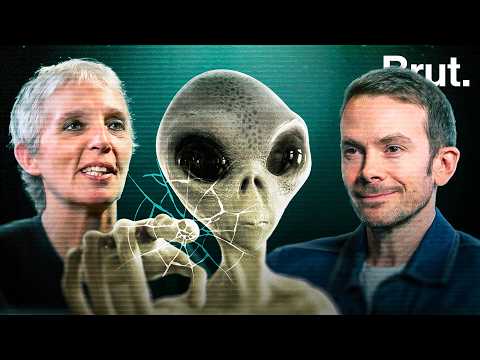
Vie extraterrestre : tout ce qu'on sait aujourd'hui, grâce à l'astrobiologiste Nathalie Cabrol
AI Summary
Nathalie Cabrol, an astrobiologist and director of the Carl Sagan Center at the SETI Institute in California, discusses her work searching for life in the universe, the nature of life, and humanity's place in the cosmos.
As a scientist, Cabrol states there is currently no evidence to confirm or deny the existence of extraterrestrial life, leaving the question open. She acknowledges the public's fascination with unidentified flying objects (UFOs) and the associated conspiracy theories, clarifying that "unidentified" simply means unknown, not necessarily alien spacecraft. She highlights the distinction between SETI's astrophysical search for extraterrestrial intelligence in space using radio telescopes and cameras, and the investigation of UFOs, which often relies on accidental sightings and witness testimonies, resembling police investigations. While both aim to determine if humanity is alone, their methodologies differ. She also points out that a significant percentage of UFO sightings are misinterpretations or secret military projects, and that the media often uses UFO stories as a distraction from other issues.
Cabrol's debut novel, "Dimension," a thriller blending Leonardo da Vinci and extraterrestrials, explores themes of spirituality. She explains that her scientific pursuit of understanding the universe's origins and the future of life is inherently spiritual. She clarifies that spirituality is not synonymous with religion, but rather a natural human inclination to comprehend our existence and the cosmos. She draws a parallel between spirituality and breathing, suggesting it's a fundamental aspect of being human, even if not consciously acknowledged.
The novel begins with Buddhist monks, a deliberate choice reflecting Cabrol's attraction to Buddhist philosophy, which she finds resonates with physics. She appreciates its emphasis on action and reaction (karma and dharma) and personal responsibility, where individuals are their own judges.
Cabrol discusses the role of intuition in scientific discovery, noting that what appears as a sudden insight often stems from prolonged contemplation and the brain's background processing. She cites Einstein as an example, who used thought experiments to place himself within physical forces to understand them. She emphasizes that humans are composed of the same particles as the universe, suggesting a constant, albeit subtle, connection.
She recounts Carl Sagan's visionary idea in 1990 to turn the Voyager 1 probe's camera back towards Earth from near Neptune, capturing the iconic "Pale Blue Dot" image. This moment, she argues, marked a new era in astronomy and a Copernican-level revolution, offering humanity its first distant view of what an exoplanet might look like. Sagan's initiative provided multiple insights: the fragility of humanity on a tiny "spaceship" in the vast cosmos, and a conceptual framework for searching for other planets. This was followed by the discovery of the first exoplanet shortly after, validating Sagan's foresight.
The "Pale Blue Dot" image, released around Valentine's Day, is described as a profound declaration of love for our planet, a timeless message about our shared home. Cabrol connects this to the "overview effect" experienced by astronauts who, seeing Earth from space, realize the absence of borders and the interconnectedness of all life. Sagan further pushed this understanding by asking, six months after the Pale Blue Dot, if Earth's life could be detected using Galileo's instruments, which were not designed for that purpose. Within that short period, he not only defined humanity's place as planetary citizens but also how to search for other life in space.
This period in the late 20th century saw a surge of enthusiasm in planetary research, with hundreds of scientists exploring Earth's cosmic neighborhood. Carl Sagan, along with others like Hubert Reeves, recognized the profound philosophical implications of these discoveries, urging humanity to prepare for this new era. Cabrol argues that humanity has yet to fully embrace this understanding of living together on one planet, often focusing on differences rather than commonalities. She explains that human differences are a "biodiversity anthem" shaped by climate, history, and environment, but all life on Earth shares a common ancestor and genetic heritage.
Regarding the definition of life, Cabrol admits that no one truly knows what life is, nor is there a clear definition for intelligence, which poses a challenge when searching for it elsewhere. She suggests that even bacteria, having adapted for billions of years, exhibit a form of intelligence, viewing intelligence as a continuum of complexity and environmental response rather than a binary state.
The possibility of life originating on Mars and being transported to Earth through planetary exchange (meteorites) is discussed. Mars, being smaller, cooled faster and may have been habitable before Earth. If life emerged quickly on Mars, primitive organisms or prebiotic chemistry could have been ejected by impacts and landed on Earth. This raises the intriguing idea that humans might be "Martians" seeking to return home when exploring Mars. If independent life is found on Mars, it would suggest that life is incredibly abundant in the universe.
Cabrol notes that Mars underwent a catastrophic climate change around 3.8 to 4.1 billion years ago, losing its magnetic field due to rapid cooling. This exposed its atmosphere to solar winds, leading to its erosion and the surface to harmful radiation. This rendered the surface uninhabitable for life as we know it after about 3.5 billion years ago. However, she explains that conditions deep underground on Mars could still support life, with liquid water, energy sources from geological activity (recent volcanic traces and quakes), carbon, and nutrients. This makes Mars a natural laboratory for understanding habitability and planetary thresholds, offering insights into Earth's future.
She stresses that the climate change on Mars is fundamentally different from Earth's current situation, which is driven by human activity. The burning of fossil fuels releases carbon with a distinct isotopic signature, indicating human modification of the atmosphere and a runaway system. Cabrol believes that denying this human impact is a refusal to project humanity into the future, driven by short-term profits.
Addressing criticisms of space exploration, particularly regarding pollution and cost, Cabrol argues that these are misinformed. She compares the pollution from rockets to car emissions, suggesting that the focus should be on developing cleaner propulsion methods. She highlights that space exploration's budget (e.g., NASA's 0.4% of the national budget) is minimal compared to the societal returns. Many everyday technologies, from memory foam mattresses and athletic shoes to LASIK eye surgery and baby food, originated from space research and development. This technology is also reversed for Earth-based applications like climate monitoring. She emphasizes the need for informed criticism and public understanding of science.
Regarding Elon Musk and SpaceX, Cabrol acknowledges the positive impact of private companies in providing alternative access to space, allowing researchers with innovative ideas to pursue projects outside national priorities. However, she also points out negative aspects, such as the lack of regulation in space (the "Wild West" analogy) and the controversial launch of a Tesla car into space, which was seen as a pointless act by the scientific community.
Cabrol touches upon the impact of the Trump administration on scientific funding. While there were initial concerns about proposed budget cuts to NASA and other government agencies, the bipartisan support for space and planetary research ultimately prevented severe reductions. This demonstrates the understanding, even by politicians, that fundamental research is crucial for national technological superiority, a lesson well understood by countries like China.
Finally, Cabrol discusses artificial intelligence (AI). She views AI as a powerful tool for scientific research, particularly in processing vast amounts of data and modeling future trajectories, accelerating scientific progress. However, she cautions against the "abandonment of human creative capacity" when people blindly accept AI-generated content without critical thought. She distinguishes AI's logical, pattern-recognizing intelligence from human emotional intelligence, which is crucial for art and our relationship with the world. Cabrol is fascinated by AI's "emergent phenomena," where it develops unexpected solutions, like in the game of Go or protein folding. This suggests that complex intelligence can arise from simple systems exposed to multiple experiences, a potentially universal phenomenon. She speculates that if extraterrestrials also have AI, the first contact might occur between their AI and ours, with humans being sidelined due to an inability to keep pace with the conversation. She even jokes that Hollywood might steal this idea for a film.