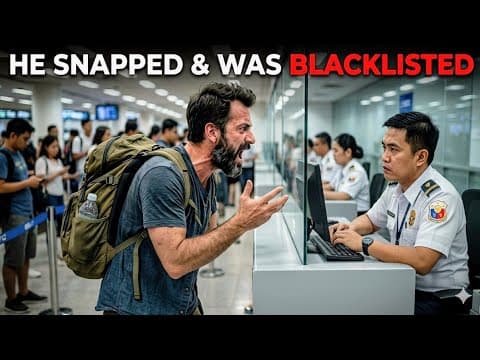
DEPORTED AND BLACKLISTED FROM THE PHILIPPINES, THIS IS WHAT HAPPENED
Audio Summary
AI Summary
This story recounts the experience of a U.S. military veteran, referred to as "Joe Blow," who faced deportation and blacklisting in the Philippines due to his behavior at immigration. Joe, a 20-year veteran, was dealing with a back injury requiring surgery, which was scheduled a few months out. During this waiting period, he decided to visit the Philippines to meet a woman he had been chatting with online for a couple of years, and to see if he liked the country. His plan was to spend about a month and a half there, then return to the U.S. for his surgery, and potentially come back to the Philippines if things went well with the woman and the country.
His journey to the Philippines was long and arduous, lasting about 30 hours with connecting flights, exacerbating his back pain. By the time he arrived at immigration, he was physically exhausted and in a foul mood. When he presented his passport and e-travel document, the immigration officer asked for his declaration page, a form he had not received or filled out. He became agitated, raising his voice and complaining, essentially "acting like a prick," as the narrator describes it, attributing his outburst to his pain and exhaustion.
The officer directed him to another lady to get the form. After filling it out with assistance, he tried to return to the front of the line, but the officer, likely due to his previous attitude, told him to go to the back. This further enraged Joe, who lost his temper, shouting and cursing, though not directly at anyone but generally expressing his frustration. As a result, immigration officials intervened, stating they didn't want him in their country, and placed him in a detention cell. He was then given a choice: pay for a flight back to America or remain in detention. He chose to pay for his return ticket.
His journey back to the U.S. involved two layovers, and at each stop, he was escorted to a detention center, which he described as progressively worse. Upon finally returning home, he contacted the woman he intended to meet, who was distraught from waiting for him at the airport. Joe, still wanting to meet her, devised a new plan: he would fly to Thailand, and she would fly there to meet him, bringing a family member for safety. He covered all expenses for her flight and hotel.
However, when the woman attempted to fly to Thailand with her companion, she was offloaded by Philippine immigration. They questioned her travel, noting her lack of international travel history and the poor track record of Filipinos leaving the country and not returning. When she explained she was going to meet her boyfriend, they asked why he wasn't coming to the Philippines. She revealed he had been blacklisted. The immigration officers checked their system and informed her that Joe was not on any blacklist.
Upon learning this, Joe, who was already in Thailand, booked a flight back to the Philippines. This time, he was prepared with all necessary documents, including the declaration page, and made a conscious effort to be polite and cooperative. He successfully passed through immigration, received his stamp, and was welcomed into the Philippines. He then met the woman.
The story takes a final twist when Joe later discovered that he *was* eventually blacklisted, but the bureaucratic process took time. The initial incident at the airport didn't immediately result in him being entered into the system. Now in the Philippines and on the blacklist, he cannot return to the U.S. for his surgery. He is currently working through a connection to get off the blacklist, a process estimated to cost over $10,000. Meanwhile, he is enjoying his relationship with the woman he met, but must remain cautious due to his precarious status in the country.
The moral of the story, as highlighted by the narrator, is the importance of treating people with respect, especially when dealing with bureaucracy like immigration. Short tempers, even those fueled by pain or stress, can lead to severe consequences.