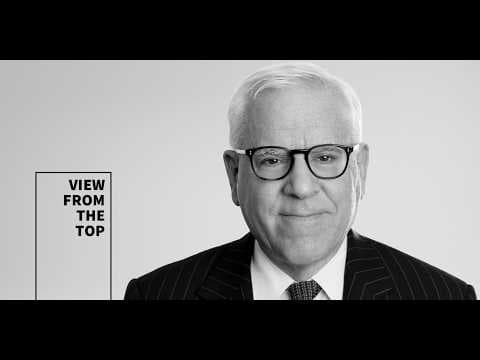
David Rubenstein, Co-Founder and Chairman of the Carlyle Group: Pursue Something Meaningful
Audio Summary
AI Summary
David Rubenstein, a prominent figure in private equity and a renowned business interviewer, shared insights from his extensive career and life experiences. He began by expressing his admiration for Stanford University, highlighting its ability to open doors for graduates and provide opportunities, even to make mistakes, given the prestige of a Stanford GSB degree.
Rubenstein's upbringing in a blue-collar Jewish family in Baltimore, a city segregated by race and religion at the time, instilled in him values of resilience and self-reliance. His parents, neither of whom were high school graduates, taught him to adapt to circumstances rather than complain. He sees an advantage in growing up in modest conditions, as achievements are more likely to be attributed to personal effort rather than family wealth or connections.
Education, for Rubenstein, has been a crucial path to economic mobility. As the first in his family to attend college, he emphasizes that education is a lifelong asset that cannot be taken away and significantly influences how one is perceived. While acknowledging the rise of a "dropout culture" fueled by successful entrepreneurs like Bill Gates and Mark Zuckerberg, he asserts the substantial advantage of obtaining a degree, noting that most people won't achieve similar success without one.
After earning degrees from Duke and the University of Chicago Law School, Rubenstein chose a career in politics over law, driven by an early admiration for John F. Kennedy. He aspired to be an advisor, helping to craft influential speeches. This ambition led him to work for Senator Birch Bayh and later, unexpectedly, for Jimmy Carter's presidential campaign in 1976. Despite Carter being an underdog, Rubenstein joined the campaign, eventually becoming Deputy Domestic Advisor at 27. He admitted to not being qualified for the role, humorously noting that Carter, in his view, was also inexperienced for the presidency.
His time in the White House, though ultimately ending with Carter's re-election loss, provided invaluable lessons. Rubenstein highlighted the importance of luck and seizing opportunities, even when not the most talented candidate. He described how Carter’s novel approach to campaigning, like winning the Iowa caucuses (even if he came in second to "undecided"), propelled him to the nomination. Rubenstein's unique role involved tracking all of Carter's campaign promises, allowing him to advise the president on inconsistencies and keep him accountable. This position gave him direct access and influence, even employing a tactical method of placing his memos on top of the president's inbox for first review.
The loss of the election in 1980 forced Rubenstein to rebuild his career. He recounted how quickly connections in Washington D.C. disappear when one is out of power. This period of adversity taught him a crucial lesson: those who achieve significant success often have experienced failure and learned to overcome it. He contrasted his experience with a peer who, despite an impeccable resume and never having failed, struggled when faced with professional setbacks later in life. Rubenstein stressed that adversity builds character and resilience.
Disliking law practice, Rubenstein decided to start Carlyle in 1987, a private equity firm, despite having no finance experience. He was inspired by Bill Simon's successful leveraged buyout of Gibson Greeting Cards. He recognized that if he believed in an idea, he should pursue it himself. He hired MBA graduates with financial expertise and focused on fundraising. Carlyle pioneered a multi-disciplinary approach, investing in various areas beyond traditional buyouts, and globalized its operations, a novel strategy at the time.
Rubenstein became the firm's primary fundraiser, a role he believes is often undervalued in business education. He learned to "beg for money" effectively, traveling the world to secure capital. He also strategically brought in influential figures like former Defense Secretary Frank Carlucci, former Secretary of State Jim Baker, and former President George H.W. Bush to enhance the firm's prestige and open doors for fundraising and networking. This approach, while successful in attracting investors, later drew criticism when Carlyle was associated with the George W. Bush administration during the Gulf War, leading Rubenstein to eventually retire these prominent figures. He noted that a strong track record ultimately reduces the need for such external endorsements.
Looking ahead, Rubenstein believes there are always new opportunities in private equity, despite the field becoming more segmented with various investment categories like distressed debt and private credit. He highlighted emerging areas like artificial intelligence, nuclear fusion, and quantum computing as fertile ground for investment. He emphasized that while not every new business succeeds, intelligent individuals with good ideas have a reasonable chance, with the bigger challenge being what to do with the money made.
Carlyle actively engages with AI, having developed an internal AI unit and established close relationships with major AI companies. Rubenstein cited an example of using AI to rapidly analyze large secondary portfolios, a task that previously took months, significantly improving efficiency in due diligence.
Addressing criticisms that private equity contributes to a K-shaped economy, Rubenstein acknowledged the industry's initial focus on highly leveraged deals, asset stripping, and cost-cutting. However, he argued that modern private equity, particularly at Carlyle, has evolved to prioritize "EBITDA growth" through operational improvements, focusing on growing businesses, creating jobs, and paying taxes, rather than merely cutting costs or moving jobs offshore. He cited Moderna as an example of how investment can lead to societal good, saving lives through product development. Rubenstein conceded that convincing the public of the societal benefits of private equity is challenging, noting the industry's continuous rebranding efforts (from "leveraged buyouts" to "private equity" to "family offices") to counter negative perceptions. He advises avoiding industries like nursing homes, where it's difficult to maintain a positive public image.
Beyond business, Rubenstein emphasized the importance of lifelong learning and giving back. He reads over 120 books a year, partly to prepare for interviews and to keep his brain active. He expressed concern about declining literacy rates in the US, advocating for greater engagement with reading. His interviewing career, which began as a way to make Carlyle's annual meetings more engaging, evolved into multiple TV shows.
Rubenstein concluded by sharing his observations on what separates influential people: a powerful drive to achieve something meaningful, a desire to leave a mark, and a willingness to overcome adversity. Leaders, he noted, have a vision, communicate it effectively, and lead by example. He urged the audience to consider how they can use their degrees and careers to do something meaningful, give back to society, and pursue personal happiness, which he believes is often found in helping others rather than solely accumulating wealth.