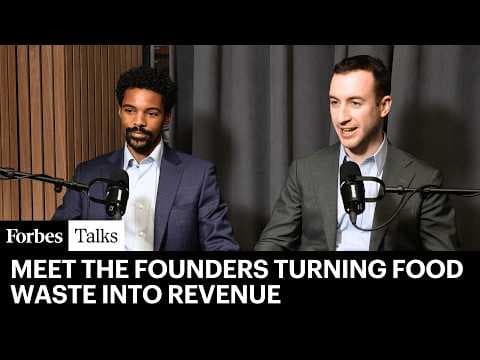
How This Pittsburgh Startup Turning Commercial Food Waste Into Revenue
Audio Summary
AI Summary
Ecotone Renewables, co-founded by Kyle and Dylan, is revolutionizing waste management by building and operating a fleet of distributed biodigester systems. The company, founded in Pittsburgh in 2019, operates coast-to-coast in the US, from Rhode Island to California, and is expanding into Canada. Their manufacturing hub is in Pittsburgh, where the co-founders visit monthly. The team consists of about 10 full-time employees, with sales representatives in New York and California, and operations, manufacturing, and engineering teams based in Pittsburgh.
The inspiration for Ecotone Renewables stemmed from a shared passion for sustainability and a recognition of the lack of reliable solutions in the food waste space. Kyle's interest in sustainability was sparked by studying abroad in the Amazon rainforest, where she witnessed deforestation and oil drilling, prompting her to consider how resources are wasted in the US. She learned that food waste is a significant contributor to carbon emissions. Dylan, drawing from his experience managing GE Renewables' fleet of wind turbines, saw the need for a reliable, distributed hardware solution for food waste, similar to the efficient design of wind turbines. He noted that existing food waste solutions often involved hauling to centralized facilities or on-site systems that lacked operational support. Both co-founders were struck by the global impact of food waste, which accounts for 8% of global greenhouse gas emissions—double the impact of all aviation worldwide.
Ecotone Renewables began as an aquaponics project in 2017, aiming to grow tilapia in a shipping container. However, they soon pivoted to food waste and anaerobic digestion, which forms the basis of their technology, focusing on creating a reliable solution for customers to process food waste and turn it into nutrients. The company incorporated in 2019, built its first digester system, and launched its commercialization phase two to three years ago.
Their flagship product, Zeus, is a biodigester system that functions much like a stomach. It takes food waste, blends it into a "gross smoothie," and processes it through a series of pipes and tanks. In the largest tank, bacteria break down the nutrients, producing methane gas, which is trapped and utilized as biofuel to create bioenergy. The leftover liquid is a nutrient-dense fertilizer called "soil sauce," which Ecotone bottles and sells in retail sizes for houseplants, and on a larger scale for farms and landscaping.
Ecotone's core business model is manufacturing, operating, and deploying these Zeus systems for buildings with commercial kitchens, such as schools, hospitals, offices, and restaurants. The company also sets up distribution channels for the soil sauce. A key aspect of their technology is automating the process, making it easy for users to simply dump food waste into a trash chute, and the system handles the rest.
For a customer, like a school, the process involves staff depositing food scraps into bins in their kitchen. These bins, with compostable bags, are then taken to the Zeus digester, an 8x20-foot shipping container with an ADA-compliant trash chute. The user deposits the bag, closes the chute, and their job is done. Ecotone operators manage the systems, checking, operating, and draining the soil sauce, which is then bottled and resold.
The development of Zeus involved many iterations, with version five launching soon. Early feedback from a senior center led to a redesign of the waste intake, moving from a six-foot staircase to a ground-level, easy-to-use location. A significant differentiator for Zeus is its ability to handle contaminated waste streams and all types of food waste, including meat, dairy, and frying oil, which are often prohibited in traditional composting. The system includes a camera vision system that photographs incoming food waste, analyzes it, reports wasted items and amounts to customers, and flags contaminants. Currently, operators remove these contaminants, but the goal is to automate this process. Education is also crucial, with Ecotone providing visual training and posters to help customers understand what can and cannot go into the digester.
Ecotone's system differs from other composting processes primarily because it's an on-site solution, eliminating reliance on hauling networks to landfills or large composting facilities. This compact system can manage various food waste types, including contaminated streams. The beneficial use of the soil sauce byproduct is another key differentiator. Unlike traditional composting, where dealing with the compost can be an operational challenge, Ecotone collects and resells the soil sauce, offering a profit-sharing program with digester customers. This reframes food waste from a cost center into an income and revenue center.
Investors, particularly climate tech investors, readily understand the impact and opportunities in food waste. There's growing interest from infrastructure-focused investors as well. Ecotone offers both purchase and finance lease options for their systems. The leasing option has been a significant enabler for rapid scaling, as it often results in net cost savings for customers due to reduced waste hauling bills, making it easier for sustainability directors to get internal approval. The sales process typically takes 3 to 12 months, while building a digester takes about 30 days, and setup takes only 15 minutes.
Certain parts of the country are more receptive to Ecotone's solutions, particularly states with food waste to landfill bans, such as Colorado, which recently passed regulations requiring food service businesses to find composting or food waste solutions. While state regulations drive some traction, the primary growth driver is financial, as waste hauling costs continue to rise. Ecotone positions itself as a cost-saving opportunity, making it a compelling business decision for many.
With a recent $3 million funding round, Ecotone plans international expansion, starting with Toronto, Canada, due to its proximity to their Pittsburgh warehouse. They are working with Compass Group Canada on this expansion. There are also opportunities in island nations facing high waste hauling costs and seeking to restart local agriculture programs.
For individuals, Ecotone emphasizes that while their primary focus is on large companies due to volume, people can significantly reduce food waste at home. Simple practices include reusing food scraps, such as making vegetable stock from frozen scraps or using onion and citrus peels as seasonings. The co-founders advocate for mindful consumption, suggesting freezing food to extend its longevity and avoiding buying items that consistently go unused.
Looking ahead, Ecotone Renewables aims to be the leading solution for food waste globally within the next five years. With landfills filling up and a growing shortage of fertilizer worldwide, they see significant opportunities for their decentralized grid of digesters to address these challenges. Their land-and-expand model focuses on deploying Zeus digesters to produce fertilizer and bioenergy, ultimately aiming to be the top solution for food waste management and a decentralized grid of these digesters.