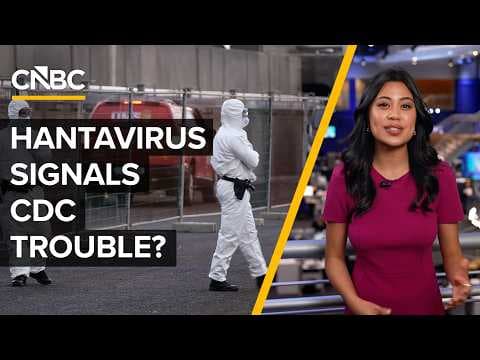
Why The U.S. Response To Hantavirus Could Signal Future Trouble
Audio Summary
AI Summary
Eighteen Americans are under monitoring for hantavirus after a cruise ship trip originating in Argentina. The ship spent weeks off the African coast, and at least 11 cases, including three deaths, have been reported. A Dutch couple, exposed to a rat species known to carry the virus during a bird-watching trip, are believed to be the initial patients.
Experts emphasize that hantavirus differs significantly from COVID-19, with lower public concern warranted. It's not a new disease, and its transmission and control are better understood. Typically, hantavirus spreads via contact with infected rodents or their droppings, not person-to-person, except for the Andes strain found in this outbreak. Transmission is not as easy as COVID-19, and large case numbers are not anticipated due to containment efforts.
However, the U.S. response has drawn criticism for being disjointed and late. Some attribute this to past Trump administration actions, such as CDC staff cuts and withdrawal from the WHO, alongside current leadership vacancies at the CDC. While hantavirus itself poses no pandemic threat, the situation highlights concerns about the U.S. preparedness for more transmissible disease outbreaks.
Get summaries like this automatically
BriefTube monitors your YouTube channels, generates AI-powered audio summaries, and delivers them wherever you listen. Telegram, Discord, Slack, or your podcast app. Fully automated.