เช็กเลย! สินค้าอะไร ‘ขึ้นราคา’ ไปแล้วบ้าง ตั้งแต่เกิดสงครามตะวันออกกลาง | THE STANDARD WEALTH
Audio Summary
AI Summary
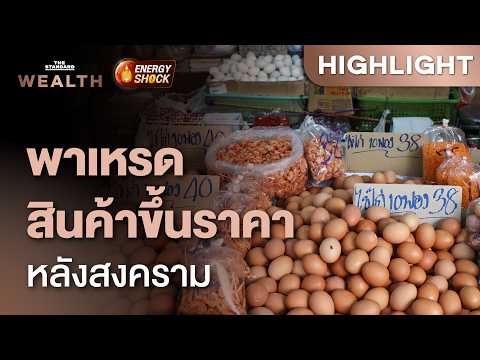
Energy prices are maintaining a level around 90-1 satang, and various costs are increasing. Several product prices have risen, according to the policy office and Commerce Strategy. Food and drinks, excluding alcohol, are seeing price increases. Meat, especially pork and minced pork, significantly impacts the inflation rate. The reference price for live pigs in Bangkok and surrounding areas increased from 70 baht to 72 baht per container, effective March 30th. Chicken eggs, with the highest inflation rate at 1.88% in the basket, also saw a price increase of 6 baht per tray, effective March 28th. Duck eggs similarly increased by 6 baht per tray.
Transportation and related services have seen price hikes. Airfares increased by 10-20% from April 1st, carrying a 0.04% weighting in the inflation basket. Chao Phraya Express Boat fares increased by 2 baht for all types of boats, effective March 30th, as did canal boat fares. The Saen Saep toll fee rose from 11-21 baht to 13-23 baht, effective March 30th, for all routes. Postal delivery fees temporarily increased by 3 baht from April 1st, with a 0.06% inflation basket weight.
In the tobacco and beverages category, alcoholic beverages like beer increased by 5 baht per bottle, or 50 satang per bottle, from March 28th, contributing 0.54% to the inflation basket. The price increases for pork (1.88%), chicken eggs (0.74%), and beer (0.54%) are expected to have a greater impact on the overall inflation rate.
Regarding fuel, a 1-baht increase in diesel price affects inflation by 0.075%, while similar increases in gasoline 95, gasohol 95, gasohol 91, and E20 have smaller impacts (0.003%, 0.01%, 0.06%, and 0.012% respectively). Diesel fuel is a significant contributor to energy prices and inflation, accounting for about 7% and having a 2.58% weight in the inflation basket. The overall inflation figures, based on over 400-500 calculated items, may not always align with real-life inflation, as the weighting of products and services in the official basket might not reflect individual consumption patterns.