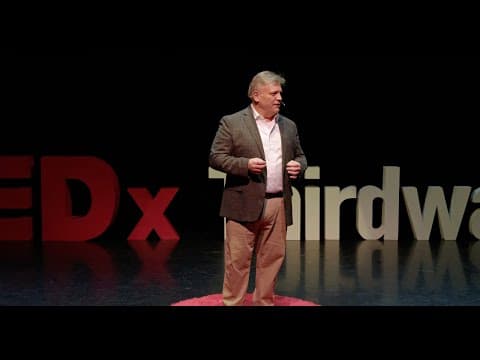
What is Toxic Perseverance? | Michael Scarano | TEDxThird Ward
Audio Summary
AI Summary
The speaker begins by recounting the tragic death of his close friend, Fotus Manavlis, who died by suicide on January 6, 2024. This event deeply affected the speaker, prompting him to obsessively question why his friend, whom he describes as a charismatic and exceptionally persevering individual, would take his own life. He reveals that Fotus experienced a profound tragedy on his 37th birthday when his mother was killed in a car accident while buying his birthday cake. The speaker notes that Fotus was never the same after this event and never recovered.
This personal tragedy and his lingering questions about Fotus's death lead the speaker to reflect on the struggles of others, including his own three children who endured a difficult divorce, his 86-year-old mother who battles fear and anxiety, and his brother who questioned the meaning of life. He emphasizes that we can never truly know the inner turmoil others are experiencing, but acknowledges that life is universally challenging.
The speaker then turns the focus to his own life, despite outward appearances of success, including two doctoral degrees and healthy children. He confesses to a lifelong struggle with a deep sense of shame. He initially believed in perseverance as a virtue, attributing his own success to constantly pushing forward. However, after contemplating Fotus's death and his own experiences, he realized that his perseverance stemmed from a toxic place, not a healthy one.
This realization led him to define "toxic perseverance" as a subconscious pattern driven by unresolved trauma, unmet needs, or painful setbacks. Instead of being guided by clarity and meaning, this pattern is fueled by toxic traits such as shame, fear, guilt, pride, anger, perfectionism, envy, and low self-confidence. Toxic perseverance, he explains, doesn't necessarily prevent success but can paradoxically fuel it, leading to a point where even accomplishments feel insufficient.
The speaker shares his personal journey with toxic perseverance, stemming from being undiagnosed with ADHD and learning disabilities in his youth, coupled with early childhood trauma. He internalized these difficulties, becoming his own harshest critic. This buried shame manifested as outward frustration and anger, which he used as a shield to avoid admitting his feelings of emptiness and loss of control. He argues that this anger prevented him from recognizing his loss of meaning.
He reiterates that toxic perseverance is about survival, existing in the gap between the life we present and the life we feel. While he cannot definitively explain Fotus's actions, he believes toxic perseverance contributed to his friend's decline and eventual loss of hope, widening the gap between his outward life and inner feelings after his mother's death.
The speaker notes that for those who identify with toxic perseverance, life doesn't always end tragically but can manifest as chronic pain, restlessness, loneliness, depression, and a pervasive feeling of inadequacy. He then offers a path to overcome toxic perseverance, starting with recognizing it as a lie—the lie that the worst moments of our lives define us.
He found healing by approaching his own story with compassionate curiosity and grace, rather than harsh judgment. This opened him to self-forgiveness and gratitude, not just for what he has, but for his life story, resilience, and the lessons learned. Healthy perseverance, for him, began when he stopped fighting himself and recognized the need to be in alignment with his true self. He now accepts that setbacks are inevitable but do not define his worth. Healthy perseverance is rooted in genuine curiosity, gratitude, vulnerability, and meaning.
The speaker concludes by stating that if we can embrace this shift, we may realize, as he did, that we have always been enough—Fotus was enough, and so is everyone listening.