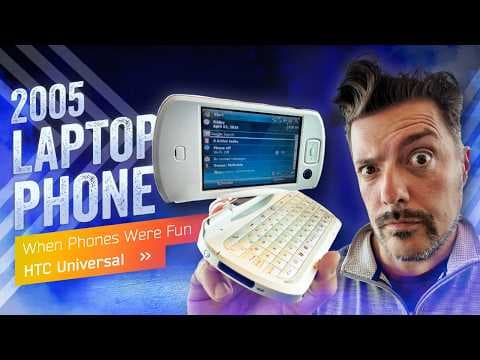
When Phones Were Laptops (HTC Universal, 2005)
Audio Summary
AI Summary
In 2005, HTC, a company now known for high-tech computers, released the HTC Universal, an ambitious device that blended the most advanced mobile elements of its time. This device was also known by other names like the O2 XDA Exec, the Imate Jazz Jar, or the T-Mobile MDA Pro. The narrator stumbled upon the T-Mobile MDA Pro in their archives but couldn't properly review it due to its German market quartz keyboard. Obsessed with the device, they acquired the Vodafone version of the HTC Universal on eBay and spent a week experiencing Windows Mobile life two decades later.
The mid-2000s were a period of innovation for mobile phones, and the Universal combined 3G connectivity, a full keyboard, a double hinge, a large display, and a Windows operating system into a "super insane smartphone." This device likely fueled the narrator's current obsession with pocket laptops, offering the idea of condensing the capabilities of a 10-pound desktop replacement PC into a 10-ounce portable device that fit in a pocket. This was compelling, not just for its ergonomic benefits, but because it felt like the future. However, the future wasn't quite here yet, partly due to the limited demand for such an expensive phone and the lack of a proper user interface.
HTC designed the Universal with a one-handed mode, recognizing that users wouldn't want to open a large clamshell just to check a text. It featured a twist-and-flip hinge, similar to the Samsung A600, allowing the 3.6-inch display to face outwards, creating a large-screen smartphone experience. The resistive touchscreen, common before the LG Prada and original iPhone, required a stylus for optimal use, responding to pressure rather than capacitance.
This was also the era of physical buttons, and the Universal was covered in them—13 on the sides and face for functions like calling, camera, SMS, and soft reset. Many of these buttons were prone to accidental presses, didn't always wake the device, and the power button was inconveniently placed at the bottom. However, in those early days, getting used to these button quirks was often easier than navigating the resistive touchscreen.
Opening the device revealed a 62-button keyboard, which the narrator praised. The buttons were large and slightly pillowy, making them distinct despite the lack of separation, and offered a satisfyingly clicky tactility. It provided all the shortcuts, modifiers, and alternate characters needed for a machine offering the full Microsoft Office mobile suite. Despite the keyboard's quality, the narrator found that typing with thumbs was the most comfortable method at this size, a reality reflected in the surging popularity of Blackberries and Trios at the time. Future HTC smartphones would shift to side-sliding QWERTY designs, intended for in-hand use rather than on a desk.
From a desktop perspective, Windows Mobile was easier to manage. With the phone on a table, its stereo speakers, blinking LEDs for Bluetooth or Wi-Fi, and a small webcam for video calls (rare even on laptops then) made it feel like a computer. In 2005, with most computers running Microsoft software, Windows was the standard.
The narrator admits not missing this particular era of Windows Mobile. Despite a capable Intel chipset and 64MB of RAM, the Pocket PC experience involved significant waiting for the OS to respond. The eBay model reviewed had been upgraded from Windows Mobile 5 to 6.1 and was loaded with custom software on an SD card, which likely contributed to some slowdowns. However, contemporary reviews from Judy Stanford of The Gadget and Gavin's Gadgets reported that the phone didn't feel sluggish and could indeed serve as a PC replacement. The narrator's own experiences with the HTC Apache and HTC Titan in 2006 and 2008 echoed the sentiment that Windows Mobile devices were too slow and clunky compared to the snappier Palm and Blackberry offerings. Pocket PC cameras were also consistently disappointing.
To enhance the Universal's functionality, the narrator installed third-party apps, leveraging the device's existing collection and adding more via an SD card. This highlighted the power of a third-party app ecosystem before the term "apps" became common. Features like GPS navigation and system backups, now standard, were once provided by these programs. The narrator enjoyed using Foxit Reader for PDFs, adding a Google search bar to the Today screen, and even a medical handbook. Gaming on the vintage phone was a relief, with paid games like Handmark Monopoly offering an ad-free experience, a stark contrast to modern mobile gaming.
The HTC Universal represented a bold promise in a time when mobile technology wasn't yet a commodity. Through 3G and a familiar form factor, it aimed to connect users to the entire internet, appearing futuristic and important, commanding "Blackberry-like corpo respect" with many more features. It inspired loyalty, with one viewer using theirs for five years and even controlling their home computer remotely through it. Its place in history was cemented when Android was ported to it six years after its release.
While HTC's mobile division has largely been absorbed into Google's Pixel unit, and Windows Mobile was replaced by the ill-fated Windows Phone, both the Universal and its operating system serve as reminders of a time when physical buttons were prevalent, the future of mobile seemed like an extension of the PC, and phones were genuinely fun.