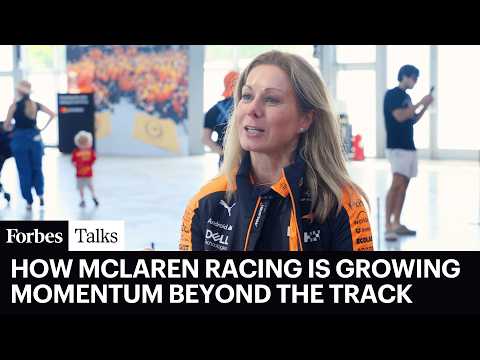
How McLaren Racing Is Building A Multi-Billion Dollar Business Beyond The Track
AI Summary
McLaren's Chief Marketing Officer, Lou Mchuan, discusses the team's impressive business growth, evidenced by $614 million in revenue in 2024 and a $4.4 billion valuation. She highlights the "supercharged" atmosphere of the Miami Grand Prix, noting the excitement surrounding the return to racing after a break and the significant off-track activities, including McLaren's own Racing Live event.
Mchuan elaborates on the strategic decision to rebrand back to McLaren's iconic papaya color in 2018. She explains that at a time when the team was struggling on the track, they needed to reconnect with their identity and fans. The return to papaya, chosen by founder Bruce McLaren in the 1960s for its distinctiveness, has unified their fanbase and created a strong, identifiable brand. The color's historical significance, standing out even on black and white television and in competitors' mirrors, is emphasized as a key element of its success.
The conversation then shifts to how McLaren has capitalized on the recent surge in Formula 1's popularity, particularly in the United States, fueled by initiatives like "Drive to Survive." Mchuan states that McLaren aimed to "democratize" the sport and make it more accessible. They recognized the value of catering to female fans, introducing female-first kits and collections, which differentiated them and attracted new audiences. This fan-first approach has been central to their rebuilding strategy.
Regarding McLaren's leadership, Mchuan points out that CEO Zak Brown's background in commercial and sponsorship, rather than engineering or racing, has fostered a different approach. Brown's focus on the business model, centered on partners and fan base growth, has been instrumental. His understanding of marketing and his position at the executive table ensure strong support for the team's fan engagement and commercial strategies.
The recent on-track success has significantly impacted marketing and sponsorship strategies, transforming McLaren from "hunters to the hunted." Mchuan stresses that the sport is highly competitive off-track as well, with constant competition for commercial dollars. She emphasizes the need to stay ahead and that performance is a key factor in their "incredible partner ecosystem." However, she also acknowledges that standing still is not an option.
Mchuan addresses the question of whether commercial success can become detached from racing success, drawing parallels to highly valued franchises in other sports. She asserts that while track performance is crucial, McLaren has prioritized underlying growth independent of race results to ensure sustainability. They cannot solely rely on performance because the inherent jeopardy of sport is what drives fan engagement. While they aim for continued success and silverware, they must build a sustainable brand and partnership base for times when they may not be at the front.
The discussion touches upon the evolving sponsorship landscape in F1, with new categories of brands entering the sport. Mchuan highlights the increasing appeal of F1 to female-focused brands and the importance of reaching female consumers, noting that Mastercard, a recent naming partner, recognized that many purchasing decisions are made by women. McLaren's status as the most followed team by female fans is a significant factor for partners.
The McLaren Racing Club is presented as a key initiative for sustaining fandom year-round. Recognizing that few fans can attend races in person, the club offers a free, inclusive program providing personalized content and a closer connection to the team, regardless of a fan's tenure. This "always-on" approach scales their fandom and keeps fans informed.
Mchuan praises McLaren's drivers, Lando Norris and Oscar Piastri, as the "best driver line up on the grid," emphasizing the importance of working with them authentically and playing to their individual strengths. She also discusses the cross-pollination of fans and brands between different racing series, particularly IndyCar and Formula 1, highlighting the strategic advantage of representing multiple racing disciplines, especially in the US market.
Comparing US and international fan engagement, Mchuan notes that America excels in fandom and has influenced McLaren's initiatives, including the Racing Club. She observes that US races often feature a larger lifestyle and off-track entertainment component, presenting a significant opportunity.
Looking ahead, Mchuan identifies the biggest challenge as growing the fan base further and proactively taking the brand to consumers. The ongoing development of the Racing Club, leveraging AI for personalization, and exploring new markets like Asia are key priorities for continued momentum.