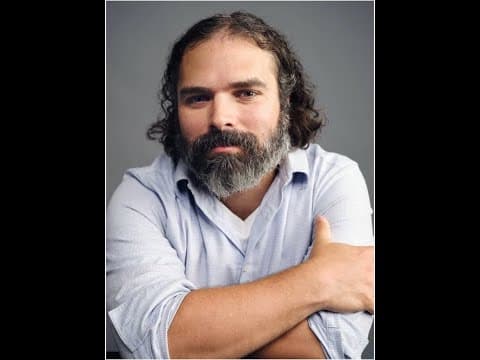
When the Tech Is Ready Before the Market Is | Adam Woodworth | TEDxPaloAlto
Audio Summary
AI Summary
Aviation remains a rare mode of transport, unlike ubiquitous cars, primarily because it operates within a fundamentally non-permissive environment. Unlike other transportation forms where one starts with freedom and rules are built around it, aviation begins with a prohibition on doing anything. Permission to operate, even minimally, requires extensive petitioning, testing, waivers, and demonstrations of safety.
For decades, we've been promised a future of flying cars and drone deliveries, a vision that has yet to materialize, creating a chicken-and-egg dilemma. Progress requires demonstrating operational technology, but agreement on operation is impossible without prior operation. Our challenge was to bridge this gap, committing to our vision of the future despite numerous "what-ifs."
As airplane designers, we frequently encountered skepticism, such as concerns about breaking eggs, plane malfunctions, excessive noise, or skies darkened by drones. A major hurdle was the "last mile" delivery: how to safely transfer goods from the plane to the customer. Imagine delivering a full, hot cup of coffee at 70 mph, hundreds of feet in the air, and gently placing it on a doorstep. Dropping items is impractical, and landing introduces ground obstacles like children and pets.
The solution required a simple, reliable, and scalable method to transfer packages from plane to ground. Initial designs became overly complex, with robot arms, sensors, actuators, and battery swapping. A stakeholder's blunt advice—"make the robot plane do robot stuff; don't surround it with other robots"—recalibrated our approach. This led to a remarkably simple mechanism: a single, non-moving plastic part capable of complex tasks, embodying our design philosophy of "fit for purpose" and built for true scale, not just demonstration.
Another significant challenge was noise. For drone delivery to scale and integrate into neighborhoods, public acceptance is crucial. While decibel meters show drones are quieter than cars, public perception often equates "drone" with "noisy." This is partly due to the novelty of the sound, even if quiet. Our aircraft, a vertical takeoff and landing (VTOL) design, takes off like a helicopter and then transitions to wing-borne flight. Initially, we focused on quieting the hover phase, assuming this was the most critical for public acceptance, being closest to people. Despite extensive rotor design work and noise reduction efforts, complaints persisted.
Community engagement revealed our misjudgment: people receiving deliveries were less bothered by noise, being active participants. However, those living under the flight path, who were not direct participants, were significantly impacted. This highlighted the need to reduce noise not just during hover but also during cruise flight, a realization we wouldn't have made in a lab. We redesigned cruise propellers and enlarged wings to make the aircraft virtually imperceptible when flying overhead, emphasizing the importance of checking assumptions and learning from real-world operations.
Finally, the question of the "pilot" in a fully automated, scalable system posed a significant regulatory hurdle. Current aviation regulations are designed for human-piloted aircraft, creating "square peg, round hole" problems. For instance, commercial aircraft must have seatbelts and a flight manual onboard, rules that are nonsensical for uncrewed drones. Navigating these regulations required countless hours discussing precise wording, demonstrating compliance, and earning trust to secure waivers and regulatory changes. This meticulous process, demonstrating a deep understanding of existing aviation culture while presenting a clear vision for the future, was crucial for achieving scalable operations. Our commitment to the original vision, despite the "grand canyon of what-ifs," allowed us to build a future where drone deliveries are now a daily reality for thousands across the US. The patience to prioritize this overarching vision over quick wins proved to be the most critical factor, embodying the aviation adage: "None of it flies until all of it flies."