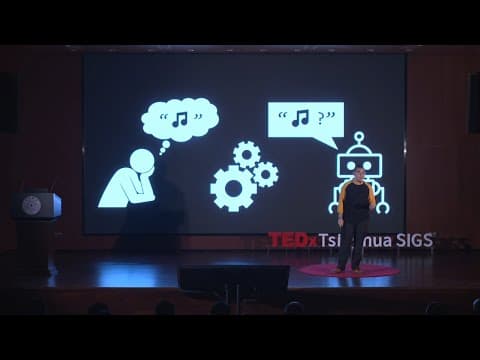
AI Music is "colorless." Here's how we can fix it. | Benjamin Honeray Lee | TEDxTsinghua SIGS
Audio Summary
AI Summary
The speaker uses the analogy of defining the color red solely in grayscale to illustrate a problem in how music is currently defined, particularly in the age of AI. Just as a grayscale definition misses the essence of red, current definitions of music often overlook crucial elements, leading to a "colorless" understanding. This is problematic because it hinders our ability to articulate why music is important and why human-made music is often preferred over AI-generated music.
The speaker, with a background in both computer science and music, argues that music is more than just sound following rules or music theory. The missing "color" is associations. They propose that associations with human beings, human effort, and alleviating human pain are vital components of music.
To illustrate the power of associations, the speaker uses the example of a well-known piece of music, suggesting that changing its composer from a victim to a perpetrator of historical suffering would drastically alter its perception. Similarly, even subtle changes like lyrics can evoke specific emotional responses.
The speaker identifies three primary colors of associations needed to enrich AI music:
1. **Associations to human beings:** Art is seen as a mirror of human experience. Honesty about the origin of music, whether human or AI, is crucial.
2. **Associations to human effort:** We value the dedication and soul poured into music by performers. AI music needs greater user control to allow for human input and modification.
3. **Associations to alleviating human pain:** Music's ability to heal is significant. The non-consensual use of human artistic works by AI music creates a contradiction, associating it with exploitation rather than well-being.
Solutions involve user honesty, increased user control in AI music algorithms, and the development of systems for tracing, crediting, and obtaining consent from human artists. By reintroducing these "colors," AI music can move beyond a "colorless shell" and contribute to a richer, more meaningful experience of music.