How We Break Vicious Cycles for Animals, and for Ourselves | Thea Xuan | TEDxRDFIS Youth
Audio Summary
AI Summary
The speaker challenges the traditional view of "anti-evolution" by extending it beyond human competition to encompass the welfare of animals. A key misunderstanding is that it doesn't mean eliminating all competition, but rather rejecting harmful and minimalist practices that negatively impact everyone, including animals. The focus shifts to how we treat animals, particularly within the global livestock industry.
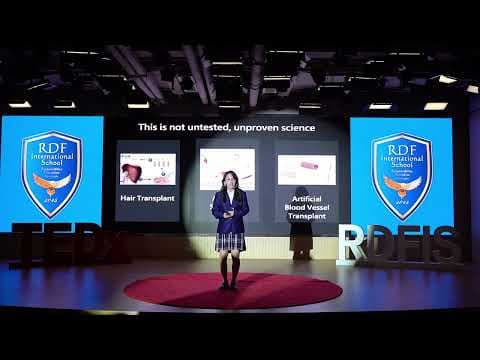
Cultivated meat, developed by Upside Food, is presented as a revolutionary solution. This "real meat" is grown from cells without breeding or slaughtering animals. Despite initial public skepticism, the process is explained as straightforward: a small biopsy from a living animal, followed by cell growth in a cultivator, fed the same nutrients an animal would consume. The resulting meat is identical in texture and taste to conventional meat, but without the ethical and environmental drawbacks. This biofabrication technology is already used in medicine for skin grafts and transplants, demonstrating its safety and effectiveness.
The traditional livestock industry is criticized for its immense land and freshwater consumption, significant greenhouse gas emissions, and its role as a breeding ground for diseases like African swine fever. It also contributes to animal abuse, exemplified by genetically modified broiler chickens that suffer due to rapid growth. The speaker argues that animals are sentient beings, not mere raw materials.
Beyond meat, the concept of "anti-evolution" extends to zoos and aquariums that prioritize spectacle over animal welfare, and to abnormal pet grooming and breeding driven by human aesthetics. The core message is to replace harmful, minimalist cycles with healthy, constructive ones by making conscious choices. This involves opting for cultivated meat, observing animals in nature, and adopting pets, ultimately promoting a more humane and sustainable future.