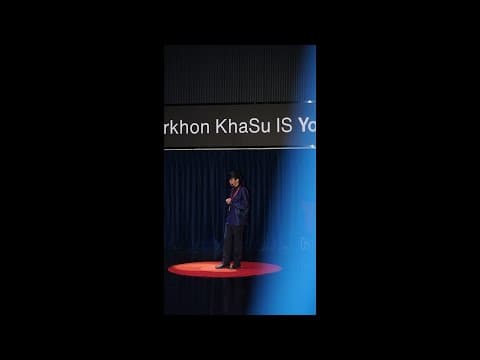
Монгол хэл, соёлын алдагдал | Bilguun Ganzorig | TEDxOrkhon KhaSu IS Youth
Audio Summary
AI Summary
The speaker expresses concern about the diminishing use of clear and beautiful Mongolian words and sentences among younger generations, attributing it to a misunderstanding of language as merely a tool for daily communication. They emphasize that language is a vast archive of collective memory, thoughts, and ideas, and the loss of the Mongolian language, a significant database, is a major concern in the era of globalization.
Globalization, defined as the convergence of countries in social, economic, military, and cultural spheres, poses a threat to the survival of unique languages and cultures. The speaker highlights the role of social media and the internet as catalysts for this change. With 83% of the Mongolian population having social media accounts, and about 80% being active online users, people are constantly exposed to foreign information and English words, leading to a rapid assimilation into their language and culture. This isn't forced assimilation but an inevitable consequence of digital native lifestyles.
The speaker contrasts this with previous generations who communicated solely in Mongolian. They point out the alarming trend of using foreign words in daily Mongolian conversations, predicting a drastic shift in the next 50-100 years if the current pace continues. UNESCO registers 7,000 languages, and over half are projected to be extinct by the end of this century. The loss of the Mongolian language would mean losing the unique identity of the Mongolian people, their respect for ancestors, and their distinct human nature, as language is what differentiates them.
While acknowledging the necessity of bilingualism and learning new languages in a globalized world, the speaker stresses that it shouldn't mean replacing one's primary language. They propose three solutions: educating younger generations about the value of Mongolian fairy tales, heroes, and history; encouraging proper use of the Mongolian script in daily communication rather than relying on abbreviations and foreign words; and fostering activists and teachers who promote Mongolian language and culture. The speech concludes by quoting a Mongolian poem and proverb, reinforcing that "as long as a language breathes, a nation is alive," and urging collective action to preserve the Mongolian language.