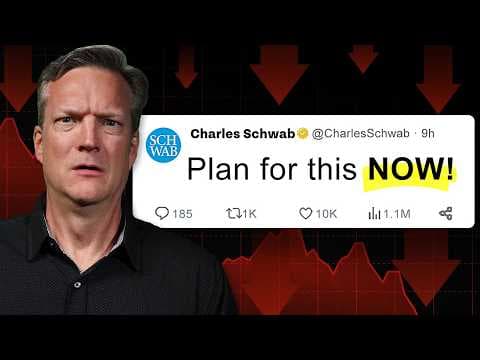
A Recession is Imminent? Do This Now.
AI Summary
The discussion addresses concerns about an impending recession, with Goldman Sachs estimating a 30% probability. However, the speakers emphasize that such predictions are speculative and shouldn't cause undue panic. They highlight that historical data, particularly when viewed over the long term, shows the stock market's resilience and upward trend despite numerous global conflicts and uncertainties. The core message is to maintain perspective, recognizing that market volatility is normal, akin to a yo-yo's up and down motion, while the overall economy trends upwards.
Charles Schwab's recession tips are reviewed and commented upon:
1. **Build up cash reserves:** This is seen as crucial, ideally established before a recession hits. The recommended amount varies from three to six months of living expenses, depending on individual circumstances like job security, dual income status, dependents, and debt levels. These reserves prevent desperate financial decisions during uncertain times.
2. **Stay invested:** This is deemed critical, with the worst decision being to sell during a market downturn and miss the subsequent recovery. The speakers advocate for a "ride or die" approach, suggesting an "always be buying" strategy through automatic investments. This can turn market volatility into an opportunity for long-term wealth building, especially for younger investors.
3. **Boost cash flow or cut expenses:** This aligns with the "Money Guy" philosophy of having two primary financial levers: earning more money or spending less. Becoming lean on expenses and maximizing positive cash flow is advised to better weather economic storms.
4. **Make strategic portfolio adjustments:** This tip is met with skepticism. The speakers argue that adjustments should be made *before* a recession, based on one's risk tolerance, capacity, age, and goals, rather than out of fear during a downturn. The focus should be on having an appropriate portfolio from the outset.
The conversation then shifts to how different life stages are affected by recessions and market volatility:
* **Early accumulators (e.g., in their 20s):** Volatility is seen as an amplifier for wealth, offering opportunities to acquire assets at cheaper prices.
* **Late accumulators (approaching retirement):** The focus shifts to asset allocation and diversification to protect accumulated wealth, while still aiming for long-term growth without taking excessive risks.
* **De-accumulators (those living off their portfolios):** Volatility is most impactful here. These individuals need robust diversification, asset allocation, and significantly boosted cash reserves to ensure they can weather market downturns for three to five years without making desperate decisions.
A key resource mentioned is the "Financial Order of Operations," a nine-step process designed to guide financial decisions regardless of market conditions.
The discussion then moves to listener questions:
* **Old 401(k)s and HSAs:** The advice is to consolidate old accounts. When leaving an employer, options include leaving the 401(k) (if the plan is exceptional), rolling it into a new employer's 401(k) (if the plan is good and low-cost), or rolling it into an IRA for greater investment choice and potentially lower fees. Cashing out is strongly discouraged due to taxes and penalties. HSAs should also be evaluated for investment options and consolidated if a better provider is available.
* **Masters experience and human connection:** A significant tangent discusses the experience of attending the Masters golf tournament, where phones are not allowed. This enforced disconnection led to a realization about the importance of in-person social interaction, contrasting it with the tendency to retreat into phones in other public spaces. The speakers advocate for nurturing social connections and engaging with others, suggesting potential "Money Guy meetups."
* **Retirement planning with low expenses:** For individuals who can comfortably live on less than the commonly recommended 80% of pre-retirement income, the key is to accurately define their actual, lower expense needs. This can allow them to reach financial independence sooner. However, for those in their younger years, it's cautioned against basing retirement plans solely on current modest living, as future expenses (like children's costs) can significantly increase. Using actual expenses closer to retirement is crucial for accurate planning.
* **Car ownership duration:** Following car-buying advice, the recommendation is to drive cars for as long as they are safe and functional, ideally for at least as long as they were financed. Driving cars for a decade or more is encouraged to minimize wealth-eroding transactions. Leasing is suggested as an alternative for those who frequently trade cars.
* **Rapid-fire questions:** A segment addressed various topics including marriage advice (communication about chores), benefits of traditional accounts with pensions (current tax benefits), defining luxury cars (subjective, but minimizing transactions is key), the progression of financial steps (from accumulation to abundance), favorite Masters holes (Hole 10 for its personal significance and design), pension payment choices (lump sum vs. monthly, requires math), using Roth IRA for a home purchase (less ideal, impacts tax-free growth), and paying for law school (requires more information on account types, loan interest rates, and total cost, but generally prefers using investment accounts if possible and avoiding debt).
* **PTO and emergency funds:** Accrued vacation days that must be paid out upon leaving a job cannot be counted towards an emergency fund or retirement plan until they are realized. They are a potential asset upon job separation but not a reliable reserve for other emergencies.
* **Three-bucket strategy:** The goal is not necessarily to have equal amounts in pre-tax, Roth, and after-tax buckets. The ideal mix is personalized, influenced by employer matches (pre-tax), tax rates (Roth for low-rate earners), and the desire for flexibility or specific goals like real estate purchases (after-tax).
The overarching theme emphasizes purposeful financial planning that aligns with personal goals, allowing individuals to live their best lives and achieve financial independence sooner.