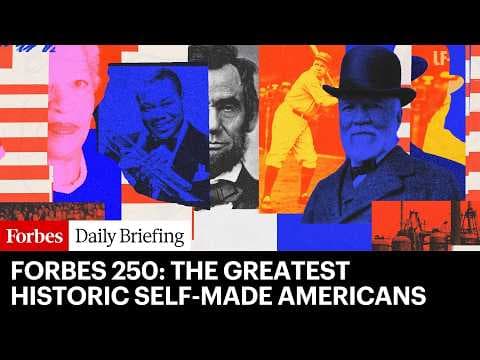
Forbes 250: The Greatest Historic Self-Made Americans
Audio Summary
AI Summary
This Forbes presentation honors the nation's 250th anniversary by highlighting the 250 greatest historic self-made Americans. These individuals rose from challenging circumstances like slavery, poverty, and abuse to achieve fame, fortune, and significant impact. The selection process involved extensive research through Forbes' century-plus old archives, utilizing AI tools like Gemini and ChatGPT for ideas, and consulting historical societies across all 50 states. The list includes notable businessmen, industrialists, influential scientists, artists, and athletes. Experts like Louis Hyman from Johns Hopkins University and Evelyn Sellers from Pepperdine University reviewed the names, with Forbes editors making the final ranking.
The top five on this list are:
1. **Abraham Lincoln (1809-1865):** The 16th U.S. President grew up in extreme poverty, was largely self-educated, and held various jobs before becoming an attorney. His failed Senate run in 1858 propelled him to national prominence, leading to his presidency in 1860.
2. **Andrew Carnegie (1835-1919):** Immigrating from Scotland, he started working in a cotton mill at 13. He educated himself, made savvy investments in railroads and bridges, and eventually founded the Carnegie Steel Company. He also financed over 2,500 public libraries globally.
3. **John Jacob Astor (1763-1848):** America's first multi-millionaire, he emigrated from Germany, started as a butcher, and became a leading force in the American fur trade, using the profits to build a vast real estate empire in New York City.
4. **Alexander Hamilton (1755-1804):** Born out of wedlock and orphaned, he became a clerk before moving to New York. He rose through the ranks during the Revolution as Washington's aide and was a key architect of America's financial system.
5. **Frederick Douglass (1818-1895):** Born into slavery, he honed business skills, escaped to freedom, published a best-selling autobiography, and launched a successful newspaper, The North Star. After the Civil War, he advised presidents and was appointed U.S. Marshal.
For the complete list and full coverage, readers are directed to an article by Alex Knapp and Michael Noer on forbes.com.