How Do Minerals Form?: Crash Course Geology #5
Audio Summary
AI Summary
Minerals, essential for life and historically valuable, are explored in this Crash Course Geology episode. A mineral is defined as an inorganic solid with a crystalline structure and specific chemical composition, formed by geological processes. While over 6,000 are known, some common examples include baking soda (nahcolite) and ice. Not everything that appears mineral-like qualifies; opal, pearl, mineral oil, rock candy, and glass are excluded based on the definition.
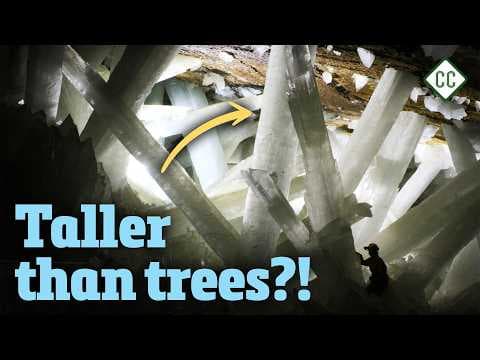
Rocks, in contrast, are solid aggregates of one or more minerals. Minerals form through several geological processes: cooling and crystallization of magma or lava, transformation under heat and pressure, biological processes (like in bones and shells), and evaporation or cooling of water. Examples range from the large gypsum crystals in Mexico, formed over a million years, to the calcium carbonate deposits on faucets.
Mineral identification relies on their chemical composition and physical properties. Some minerals are deceptive, like apatite. Others have distinctive traits: alexandrite changes color, sulfur has a smell, calcite and dolomite fizz with acid, and sylvite has a bitter taste. Geologists examine properties like luster (how light reflects), color (though often unreliable alone), streak (powder color), hardness (using the Mohs scale), cleavage (how they break), density or specific gravity, and crystal habit (shape).
Minerals play a crucial role in Earth's history and the development of life. Early Earth had few minerals, but their diversity grew with geological processes. Life's emergence dramatically increased mineral variety, as oxygen released by early organisms created new minerals. Living things also started producing minerals, and weathered rock mixed with organic matter formed soil, supporting further mineral creation. This feedback loop highlights the interconnectedness of life and minerals, with Earth boasting more minerals than other solar system bodies, partly due to life's influence. Minerals exist in all sizes, from microscopic to colossal, and have been integral to Earth's story and human history.