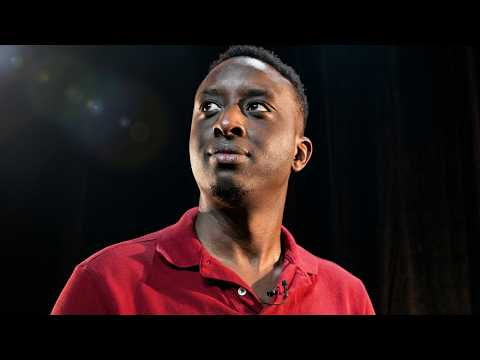
Ahmed Sylla : Portrait d'un humoriste
AI Summary
This transcript details the multifaceted career of French comedian and actor Ahmed Sila, highlighting his rapid rise to fame and his dedication to his craft. The narrative begins with Sila undergoing intensive basketball training for an upcoming film role, where he must portray a professional point guard. Despite having no prior experience, Sila is committed to mastering the sport, working with a coach to improve his technique, even using specialized glasses that prevent him from looking at the ball. This dedication is characteristic of his approach to acting, as seen in his previous performance in a film shot at over 5300 meters altitude, where he played a young man willing to do anything for love, including climbing Everest. This film was a significant success, drawing over a million viewers and earning an award at a comedy festival.
Born in 1990 in Nantes to Senegalese parents, Sila was drawn to theater from a young age, preferring it to traditional schooling. In 2010, he moved to Paris to pursue his acting ambitions, starting in small venues before gaining television recognition. His breakthrough on "Saturday Night Live" came with a memorable impersonation of Karine Le Marchand, which garnered significant attention and established him as a comedic talent. His journey in comedy has been marked by a progression from performing for audiences of 30 people in small theaters to selling out prestigious Parisian venues like the Casino de Paris, which seats 1500.
Sila's collaboration with his stage director, Caroline Dufo, is also emphasized. They have worked together for five years, refining his one-man shows. The transcript illustrates their meticulous work on his stage presence and gestures, particularly in the absence of elaborate sets, forcing Sila to carry the performance solo. The vastness of the Casino de Paris stage is contrasted with the intimate settings of his early career, like the Petit Palais des Glaces, where he honed his skills. Sila recalls the challenges of those early days, performing for small crowds and facing moments of doubt and disappointment, but his perseverance, supported by those who believed in him, ultimately paid off.
The transcript also delves into Sila's creative process and influences. He mentions studying comedians like Louis de Funès and Jim Carrey for their physical comedy and expressiveness. His early performances at the Petit Palais des Glaces, a venue known for nurturing emerging comedic talent, are highlighted as a crucial period in his development. He describes the intensity of performing in such an intimate space, where direct audience reaction is immediately apparent and the pressure to make even a small group laugh is immense. The memory of his modest dressing room at the Petit Palais des Glaces serves as a poignant reminder of his humble beginnings, contrasting sharply with the spacious and well-equipped dressing rooms he now enjoys at larger venues.
Sila's one-man show, "Ahmed Sila avec un grand A," is presented as a vehicle for his diverse storytelling and character work. The show is described as a 1.5-hour performance where he embodies a range of characters, from touching to unsympathetic, reflecting on his life, his roots, and contemporary society. He draws inspiration from his family, including his grandfather, who was his first supporter, and his father, whom he portrays in a humorous scene involving a stolen pen. The transcript also touches upon his Senegalese heritage and his mother's Corsican background.
The narrative culminates with Sila's triumphant sold-out performance at the Casino de Paris, where his fans eagerly await him. The contrast between his early, cramped dressing rooms and his current spacious ones underscores his remarkable success. His pre-show rituals, from checking his toiletries to selecting his stage attire, reveal his meticulous preparation and professionalism. As he prepares to go on stage, Sila expresses a childlike excitement and eagerness to entertain, a testament to his enduring passion for making people laugh. The transcript concludes by noting his upcoming performance at the legendary Olympia theater, marking another significant milestone in his career, and reiterating his core mission: to bring happiness to people.