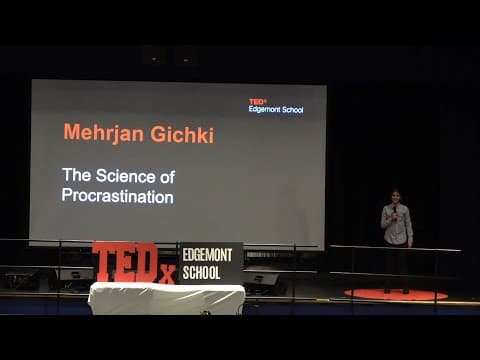
The Science of Procrastination | Mehrjan Gichki | TEDxEdgemont School
Audio Summary
AI Summary
The speaker, Mehani, defines procrastination as delaying or postponing tasks, often until the last minute, by distracting oneself with calming activities. While this might offer temporary relief from pressure, it ultimately leads to an overwhelming explosion of work, exhaustion, increased anxiety, and stress.
Mehani shares a personal anecdote from fifth grade where, instead of working on a 3D civilization project, they watched TV. The project was left until 9 PM on the last day, resulting in a rushed, low-quality outcome, super-glued hands, and immense anxiety about not finishing. This experience highlighted how the mentality of "at least I finished it" can perpetuate procrastination.
When you procrastinate, your brain prioritizes the limbic system, which controls emotions and behaviors, focusing on immediate desires over the rational prefrontal cortex, responsible for smart decision-making. This reduces neural connections and the capability of information processing. The speaker uses an analogy of the rational prefrontal cortex having a panic attack while the brain ignores it, prioritizing only immediate wants and viewing the future self as a stranger.
Procrastination also involves a "perceived threat response," where the brain perceives unpleasant tasks as threats, triggering the fear center and causing avoidance. "Dopamine hijack" occurs when low-effort activities are chosen over important ones, releasing dopamine and essentially rewarding the brain for doing nothing. Furthermore, procrastination doesn't reduce stress; it increases it, leading to chronic stress, guilt, and low self-worth.
Reflecting on their own experience, Mehani suggests that fear of starting the project caused their brain to block it off, prioritizing desires over necessities. The speaker emphasizes that procrastination, often labeled as a lazy habit, can be more complex, sometimes stemming from brain functions that are not easily changed, and can be driven by fear rather than just laziness.