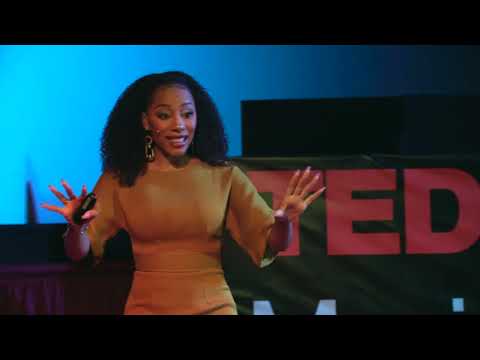
Make Lemonade: How to Turn Pain into Power, Peace, and Purpose | Terri Lomax | TEDxMeritAcademy
Audio Summary
AI Summary
The speaker begins by establishing a conversational tone, asking the audience to repeat phrases and engage. She then shares deeply personal childhood memories of abuse from her mother, including being beaten and punched, and the instability of her family life due to her mother's incarceration and periods of homelessness. Despite facing numerous statistics that suggested she should have a difficult life, the speaker asserts that she was "meant for something more."
She then shifts to a pivotal age, 17, describing it as a time of dreams, goals, and excitement, with acceptance into college and plans for a mission trip. However, this period of optimism was shattered when, on July 21st, 2007, her father passed away unexpectedly in their hotel room. This devastating event brought her future into question, forcing her to confront the loss of the family's primary support.
The speaker introduces the concept of "making lemonade" from life's "sour moments," defining it as processing pain with courage and honesty to find purpose, power, pain, and perspective. She explains that her own power emerged when she stopped asking "why me?" and instead asked, "What can I make of this?" Her response to adversity became creation.
She illustrates this by sharing how, a month after her father's death, she went to college, determined to use her education as a way out of poverty. She graduated and became a commencement speaker, sharing her story and honoring her father. Eight years later, on the anniversary of his death, she chose to repurpose the day by getting married, transforming it from a day of sadness to one of love and new beginnings. She acknowledges that not all stories have fairy tales, but the most beautiful gift from her marriage was her daughter. Further demonstrating her philosophy, she released a book on turning pain into power on July 21st, 2020, the anniversary of her father's passing.
The speaker then addresses her complex relationship with her mother. Despite respecting her mother and trying to be a good daughter, she realized that her mother lacked the capacity to provide what she needed. When her mother asked her to bring illegal substances into prison, and spread rumors, the speaker understood that she couldn't expect something from her mother that wasn't available. She adopted the advice, "You can't expect from someone what's not on their shelf," and has maintained no contact with her mother for six years, finding it peaceful and liberating. She emphasizes that forgiveness is a journey, and while she forgives her mother, she sometimes finds herself forgiving her repeatedly.
She reflects on the cyclical nature of pain, noting that her four-year-old daughter is the same age she was when her mother was abusive. This motivates her to break the cycle and be better, not bitter. She advocates for processing feelings, therapy, and focusing on "what can I make of this?" rather than dwelling on unanswered "why me?" questions.
The speaker shares how she has turned pain into peace, passing on positive traits learned from her mother, such as awareness of surroundings, while consciously equipping herself with tools to mother her daughter differently. She reveals a moment of deep despair in college when facing a $10,000 bill after her father's death and her mother's continued legal troubles. Contemplating suicide, she was stopped by the realization that her siblings depended on her. This led her to understand she had a "bigger purpose" and to keep pushing forward.
Finally, she recounts a visit to her dying uncle, whose words about his body being "effed up" made her more grateful for her own life, despite unaccomplished dreams. She concludes by posing two questions to the audience: "What will you do with the time that you have? Will you be bitter or will you be better?" and "What will you make of yours?" She thanks the audience for attending her "TED talk."