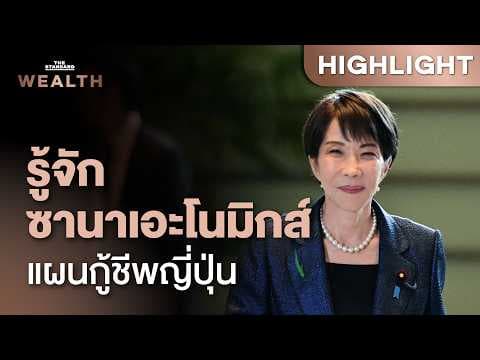
รู้จัก ‘ซานาเอะโนมิกส์’ เดิมพันครั้งใหญ่ หวังกู้ชีพเศรษฐกิจญี่ปุ่น | THE STANDARD WEALTH
Audio Summary
AI Summary
This summary compares two economic approaches, focusing on "Abe-nomika" and the current policies under Mr. Na-ek Kataichi, referred to as "soknomi." Abe-nomika originated in Japan and involved economic stimulus measures aimed at recovery from deflation by creating and promoting a free market economy. It emphasized bold government spending and leadership in investment, with the government stepping in to fill gaps left by private companies cutting costs. This was achieved through proactive fiscal policies, viewing government borrowing for growth as a worthwhile investment that would generate future income. The government also aimed to stimulate demand by purchasing goods and services, pressuring businesses to increase investment or hiring. The belief was that the era of solely relying on market mechanisms was over, advocating for government intervention and investment in target industries like semiconductor manufacturing, industrial regeneration, shipbuilding, digital technology, and security. Short-term measures included tax reductions on energy and electricity subsidies to provide immediate public benefit.
Comparing "soknomi" with Abe-nomika, similarities include the shared goal of economic prosperity and pulling Japan out of deflation. Both approaches aim for economic growth and recognize the need for a robust economy. Notably, a former key aide in Shinzo Abe’s government, Takao Imaina, has rejoined the current team, suggesting a continuation of a mindset that achieved success during Abe's era in terms of job creation, structure, and decision-making mechanisms.
However, key differences exist. One major distinction is the role of the central bank. During Abe's era, the central bank was seen as a primary driver, employing aggressive monetary policies like printing and injecting money. In contrast, under "soknomi," the central bank's role is diminished; they are considered supporters of the government, allowing for gradual interest rate adjustments. The current policy emphasizes consistency and avoids contradictory actions, such as simultaneously stimulating the economy with money while raising consumption taxes, which was likened to hitting the brakes and accelerator at the same time. Therefore, "soknomi" aims to avoid premature tax increases and interest rate hikes that could harm the economy.
Regarding growth strategy, while Abe's era involved broadly injecting money, Sanae Nobi's approach focuses on targeted government assistance for specific industries poised for growth, such as AI chip manufacturing and shipbuilding, rather than a general injection of funds. Another difference lies in public communication. Abe-nomika was known for its "three arrows" slogan, which was simple and memorable. "Soknomi," however, is described as more complex, requiring a detailed explanation to the public and a shift in investor mindset to accept government debt as an investment for the future. This policy aims to address deep-rooted behavioral issues like a preference for saving over spending and investment, which have hindered economic stimulation and growth in Japan. The success of "soknomi" ultimately hinges on effective execution, concrete planning, budgeting, timeline management, and staffing to transform vision into tangible improvements in people's quality of life and revive the Japanese economy. The goal is to overcome the fears of investment and spending that have historically led to a preference for saving, which, while good for individuals, can impede broader economic growth.