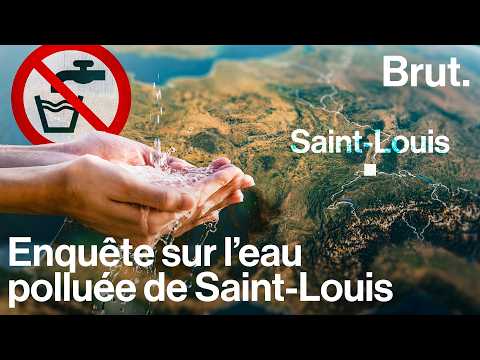
L'eau du robinet était interdite dans cette agglomération de France
AI Summary
Many residents in the Saint-Louis agglomeration, near the Swiss border in Haut-Rhin, distrust tap water and have stopped consuming it, even for cooking, due to past contamination. Last year, for several months, sensitive individuals were advised not to drink tap water because of PFAS (per- and polyfluoroalkyl substances) contamination, often referred to as "eternal pollutants." The tolerated level is 0.1, but the water in Saint-Louis reached 0.43, indicating non-conformity.
Eleven of the 40 communes in the agglomeration were affected by these restrictions, impacting nearly 60,000 people. The source of the contamination was traced to the EuroAirport Basel-Mulhouse, where firefighters used PFAS-containing fire-fighting foams for decades during training. These foams polluted the underlying Alsatian water table, one of Europe's largest, located just a few meters beneath the airport. The EuroAirport confirmed the use of these foams until December 2016, stating that they ceased use in January 2017 once non-fluorinated alternatives were certified and authorized.
Measurements revealed severe contamination of the subsoil and well water, with some communes experiencing PFAS levels more than seven times the norm. The underground water contamination in this area is among the highest in France. Bruno Volun Schneider claims that knowledge of this contamination dates back several years, with measurements taken by water agencies in 2015 that were allegedly not communicated. The regional health agency (ARS) of Grand Est has consistently denied prior knowledge of these measurements, only conducting analyses in 2023 that confirmed the pollution. This meant the population had been drinking highly contaminated water for decades.
In January 2024, the public was informed of the pollution, but consumption restrictions were only enacted a year later. On April 25, 2025, the prefect of Haut-Rhin banned tap water consumption for sensitive individuals (pregnant women, breastfeeding women, infants under two, and immunocompromised people).
Critics, including Bruno Volun Schneider and his association Ladra, point to the responsibility of the airport as the polluter, the health authorities for their delayed response, and the Saint-Louis agglomeration, responsible for water distribution, for their slow reaction. The agglomeration, in turn, stated they implemented a progressive depollution plan as soon as they became aware of PFAS in drinking water. This plan included mapping PFC presence, closing a highly concentrated well near the airport, and responding to new state regulations and health advisories in 2024 and 2025.
To address the health risks, the Saint-Louis agglomeration deployed mobile water treatment units to make the water consumable again. One such unit in Bartenheim has been operational since September. These units use activated carbon to filter out PFAS. Activated carbon, derived from coal or plants, contains fissures that trap pollutant molecules. While effective when new, the filters eventually saturate and must be replaced to maintain safe PFAS levels.
Initially, the prefectural decree aimed to restore water conformity by December 31, 2025. However, the consumption ban was lifted in some communes on September 8 and officially for all affected communes on December 15, as PFAS concentrations fell below regulatory standards (100 nanograms per liter, which will be the European and French norm from January 2026). These mobile units are a temporary solution, with permanent structures housing the same technology expected by mid-2027.
The depollution plan is costly, totaling nearly 20 million euros, with EuroAirport contributing 50%. However, a significant portion of the remaining cost will fall to consumers through increased water prices, which critics argue contradicts the "polluter pays" principle. EuroAirport has not committed to further financial participation for more permanent depollution solutions, stating they remain in close contact with authorities. While these initial depollution efforts are a step forward, confining and thoroughly decontaminating the polluted sites are deemed essential.
Despite current compliance with consumption standards, the "eternal" nature of PFAS remains a concern, as most have a half-life of 5 to 8 years and accumulate in the body. A study in 2025 found that 99 out of 100 volunteers in the agglomeration had PFAS blood levels significantly above the national average of 10. These results raise concerns about hidden toxicity for which residents are not responsible.
LAADRA sent an open letter to the ARS Grand Est on December 8, 2025, calling for a health plan including free blood tests, an epidemiological study to link PFAS to local diseases, targeted health monitoring, and an investigation into cancer, autoimmune diseases, and malformations potentially linked to PFAS, using the Haut-Rhin cancer registry. The ARS Grand Est has not responded, and the cancer registry could not provide specific data for Saint-Louis. While a direct correlation between contaminated water and cancer cannot yet be established, scientific studies increasingly highlight the health dangers of PFAS, linking them to immune disorders, kidney and liver diseases, thyroid issues, and fatty liver disease.
PFAS are ubiquitous in everyday life, found in air conditioners, cosmetics, non-stick coatings, waterproof clothing, and food packaging. The "Forever Pollution Project" in 2023 mapped widespread PFAS contamination across Europe. The lack of historical data and recent awareness make understanding the full scope of the problem challenging. The ARS's discovery of the figures in early 2025 was a turning point, raising awareness of the risk. Other French communes, such as those in the Ardennes, Meuse, and Lyon, are now investigating similar contaminations, with 200 citizens in Lyon filing a historic complaint in February. A new EU regulation effective January 12, 2026, mandates systematic testing for 20 PFAS in drinking water across all member states.