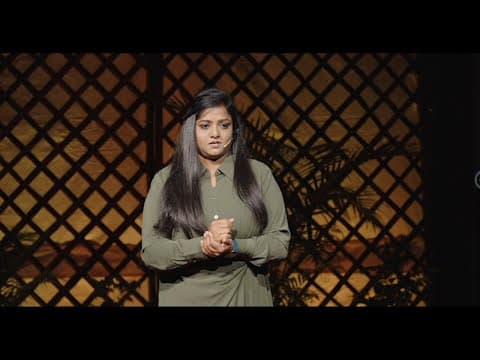
Why do forecasts fall short in the climate-change era? | Dr. Kirthiga Murugesan | TEDxNapier Bridge
Audio Summary
AI Summary
The speaker, Dr. Kirtiga, recounts her childhood experience with her father, a farmer struggling to interpret weather forecasts for his rice crop due to industrialization's impact on weather patterns. This personal anecdote highlights the persistent challenges farmers face with weather predictions, even with advancements in technology. She notes that despite sophisticated physics-based and AI-hybrid models, ensemble simulations, and high-resolution convective-permitting scale models like India's Bharat forecasting system, the problem of effectively utilizing forecasts remains.
The core issue, she explains, lies in the inherent uncertainty and dynamic nature of weather, often misunderstood by users. Forecasts are probabilistic, not guarantees, yet are frequently perceived in binary terms, leading to mistrust. The real challenge, therefore, is not just in the science of forecasting but in communication, particularly reaching the "last mile."
Dr. Kirtiga's research focuses on bridging this communication gap by transforming static forecast data into practical tools. Her approach involves generating high-resolution ensemble weather scenarios and using these probabilistic forecasts to provide actionable insights for vulnerable communities. For farmers, this translates into a mobile app, "NeerPasana," which delivers simple, localized weather information in their language, using icons and voice prompts for inclusivity. This app also facilitates two-way feedback, improving model accuracy and building trust. The pilot programs have shown improvements in water productivity and reduced unnecessary fertilizer application.
The speaker extends this approach to disaster risk management, using ensemble forecasts combined with hydrodynamic models to predict waterlogging and flash floods, enabling timely alerts and preparedness for disaster response teams. The ultimate goal is to build robust, inclusive, and trusted weather forecasting systems that empower individuals to make informed decisions, moving from mere weather forecasting to impact-based forecasting.