20 Games That PUNISH You For Being TOO HONEST
Audio Summary
AI Summary
This video explores 20 video games that punish players for being honest or doing the "right thing," often rewarding deception or less conventional choices.
**Detroit: Become Human** is highlighted for a climactic moment where taking stolen bus tickets to escape a city is more beneficial than returning them honestly. Returning the tickets leads to a perilous boat journey with a high chance of injury or death, while taking the bus offers a smoother, safer escape.
In **Dishonored**, the stealth-focused gameplay inherently encourages subterfuge. However, directly confronting the Lord Regent via a communication screen, revealing your identity and vengeful intent, immediately alerts all guards. While possible to overcome this with high combat skill, it's a significantly harder path than stealth.
**Kingdom Come: Deliverance 2** presents a scenario in the "Necessary Evil" quest where honesty with Lord Otto von Burghoff about a massacre leads to immediate imprisonment and execution. Lying about involvement is crucial for survival.
**The Witcher 3** features a quest where deceiving a client by making a ritual appear real (throwing a baby into an oven) is the easier and better outcome. Revealing the deception upfront leads to a difficult boss fight against a spirit.
**Dragon Age: Inquisition's** "The Great Game" mission emphasizes the importance of schmoozing and telling nobles what they want to hear to gain their support. Honesty and straightforwardness alienate the court, leading to being thrown out of the ball and failing the mission.
**Cyberpunk 2077** punishes players who are too slow or "too honest" to hide during the prologue's heist. Waiting around instead of following instructions results in an immediate, unavoidable death by Adam Smasher.
**Lies of P** subverts expectations by requiring players to lie extensively to achieve the best ending. High levels of "humanity" are gained through deception, which is necessary for Pinocchio's full development and the most satisfying conclusion.
In **Divinity: Original Sin 2**, playing as an undead character necessitates constant deception. Revealing your true nature to most NPCs leads to hostility and combat, forcing players to cover their appearance to survive and progress.
**Call of Duty: Black Ops Cold War** offers a choice where the traditionally "good" ending, siding with the CIA and betraying your former Soviet allies, results in your character being killed. Conversely, betraying the CIA and aligning with Perseus leads to a more personally rewarding outcome, becoming a Soviet hero.
**The Elder Scrolls: Morrowind** features a quest where retrieving a lost ring for a woman leads to an ambush by her and an invisible accomplice. This "good deed" is met with betrayal and a difficult search for a practically worthless item.
**Warhammer 40k: Rogue Trader** makes being an "Iconoclast" (the closest to good) the hardest and least rewarding path. Dogmatic and heretic routes offer greater benefits, while honesty and good intentions are met with distrust and setbacks.
**Mass Effect 2** presents a situation where being honest about Tali's father's misdeeds, to exonerate her, leads to losing her loyalty and negatively impacts the Quarian-Geth conflict resolution in Mass Effect 3. Keeping the secret is the "better" choice for long-term outcomes.
**Tactics Ogre** forces players into morally gray decisions from the start, with no easy "right" answer. Refusing to slaughter a village leads to being hunted by former allies and constantly questioned about your perceived hypocrisy.
**"No, I'm Not Human"** is a game where survival depends on constant deception. Players must lie about being alone to avoid visitors and hide symptoms of potentially becoming a visitor themselves to avoid being killed.
**Mr. Sleepy Man** rewards destructive behavior over genuine help. Ruining a marriage and causing chaos is necessary to progress and obtain key items, while trying to genuinely help the family yields no rewards.
**Wolfenstein II: The New Colossus** has a segment where attempting to kill Hitler while disguised as an actor leads to instant death. The "dishonest" act of playing along with the charade is necessary for survival.
**Call of Duty: Black Ops 2** features a choice where revealing your character is a double agent (being honest) leads to immediate death and a worse overall ending. Maintaining cover is crucial for the good ending.
**Fallout 3** punishes honesty when captured by the Enclave. Telling Colonel Autumn the codes to the water purifier results in immediate execution.
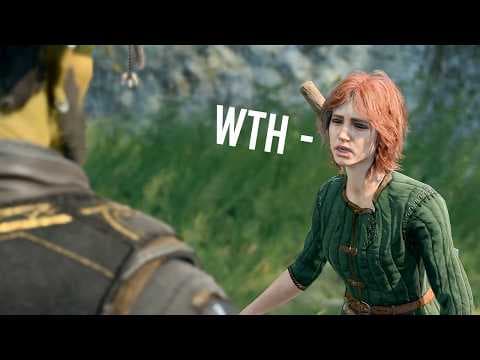
**Baldur's Gate 3** requires constant lying to survive, hiding a parasite infection and affiliations with certain groups. However, the game frequently presents opportunities to be truthful with no benefit, often leading to unwinnable fights or significantly harder scenarios.
**Fallout (original)** is cited as a prime example where honesty leads to dire consequences. Telling super mutants your true nature leads to capture and interrogation, where revealing Vault 13's location results in becoming a monster and the vault's destruction.