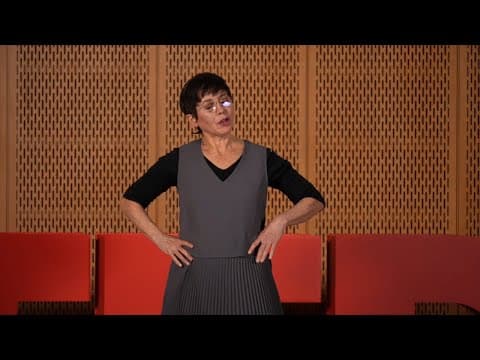
"Stories Will Save Us" | Dyane Neiman | TEDxESMTBerlin
Audio Summary
AI Summary
The speaker recounts how a dinner party conversation about cowboy boots evolved into sharing personal stories, highlighting how one story sparks another, revealing universal emotions like independence and coming of age. This experience led her to question if stories are merely entertainment or essential for survival.
As a former choreographer, she previously told stories through movement. After becoming a single mother, she felt isolated and yearned for purpose. Seven years later, she discovered "The Moth" – a book of true personal stories told live. Recognizing the shared human experiences of love, loss, and fear within these narratives, she felt compelled to bring a similar concept to Berlin. Despite initial rejection from The Moth, she was encouraged to start her own "Moth-inspired" show.
With no venue, audience, storytellers, or money, she launched "The Bear," a monthly open stage for true personal stories, named for the word "ear" within it, emphasizing listening. Despite the exhaustion of organizing each event alone, the stories themselves, like Carl's painful divorce after fighting for marriage equality, kept her going. Carl's story resonated with everyone, regardless of their own life experiences, demonstrating how stories bridge differences by revealing shared feelings of loss and loneliness.
She observed that stories also bridge generations, citing Sylvia, a 75-year-old woman who shared her humorous experience growing up in Cold War Berlin and her first romantic encounter. Sylvia's vulnerability connected with young university students, illustrating how stories collapse time and transmit experience without textbooks.
The speaker recognized a pattern: stories transform strangers into connected humans. Psychologists at Emory University found that teens who knew more family stories exhibited stronger identity and emotional resilience, fostering an "intergenerational self." Stories also prepare us for crisis, acting as a dress rehearsal for life by allowing us to mentally practice choices.
She shares an anecdote about coaching a business team pitching to investors. Their data-driven presentation lacked emotional impact until they added a story about 8-year-old Nami in rural Kenya, who became blind and deaf due to a missed vaccine. This story, though brief, helped the investors envision the impact of their solution, leading the team to win funding. Data informs, but story decides.
The speaker concludes that in an increasingly isolated and mistrustful world, shared storytelling is crucial for human connection and survival. She invites the audience to light up their phones as a vow to listen more, tell their own stories, and stay human together.