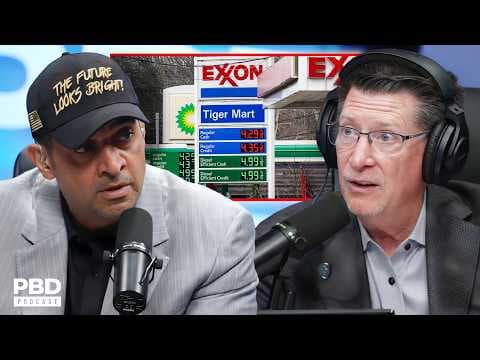
"18 Cents A Gallon" - Why Trump's Gas Tax Suspension WON'T Save Struggling Americans
Audio Summary
AI Summary
The president is considering suspending the federal gas tax, a move that would reduce prices by 18 cents per gallon for gasoline and 24 cents for diesel. This proposal comes amid rising fuel costs, with the average price of unleaded gasoline reaching approximately $4.50 per gallon. The president argues that families need relief and believes gas prices will decrease once the war in Ukraine concludes.
However, some commentators suggest that an 18-cent reduction is a small help and propose more impactful solutions. One suggestion is to offer tax credits to carriers of products, providing $1.50 per gallon of diesel used in the latter half of the year. This would significantly lower the cost of diesel, potentially reducing prices for consumers on goods like food and furniture. The idea is to directly address the cost of transporting goods to market, thereby easing price pressures.
The discussion then shifts to the broader economic challenges facing Americans. It's noted that a significant portion of the population lives on low incomes and has little to no savings for emergencies. The surge in gas prices, from $2.50 to $4.50 per gallon, has exacerbated this financial strain. Some believe that temporary subsidies for the market could be feasible, especially given the national deficit. The sentiment of the U.S. population regarding gas prices is seen as a critical factor, potentially impacting the country's leverage in international relations.
There's a sentiment that the problems facing the country, like high gas prices, are not inherently difficult to solve but remain unaddressed. This leads to speculation about whether there's a lack of political will to implement effective solutions. The conversation then moves to a discussion about prioritization, using a project list with an "eight or higher" importance rating as an analogy. Participants estimate the number of high-priority projects for themselves, their company, and former President Trump, suggesting that leaders must make difficult decisions about which issues to tackle.
The conversation then touches upon the complexities of leadership and decision-making, particularly when faced with numerous competing priorities and advice. The analogy of playing chess is used to illustrate the exponential increase in possible moves and the importance of strategic sequencing. This leads into a promotional segment for "The Vault Conference," an annual event focused on personal and business growth, covering topics such as self-mastery, decision-making, team building, scaling, and power plays. The conference is described as a gathering of like-minded individuals focused on money, values, principles, family, faith, and wealth. The segment concludes with repeated calls to register for the conference at vault2026.com.