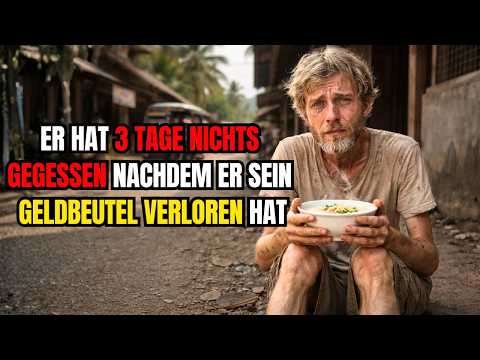
Western Tourist Starves 3 Days in Thailand — What Happens Next is Shocking!
Audio Summary
AI Summary
This is the story of Perry Lockheart, a 46-year-old man from Scranton, Pennsylvania, who lived a life of quiet routine and predictability. He worked as a delivery truck driver for a linen service, a job he'd held for nine years, after a string of similar, unremarkable positions since his honorable discharge from the army at 22. His life was characterized by a profound sense of sameness, waking at 5:40 AM, showering, driving to the depot, and running the same 47 stops across Lackawanna County every Tuesday through Saturday. He earned a modest income, approximately $34,000 net annually, after taxes and a high-deductible health insurance premium. His marriage to Tina had ended amicably but without passion, leaving him with no children and a lingering sense of emotional coldness. Perry describes himself as not a man to whom things happen; rather, he exists within the accumulated mass of uneventful days.
The catalyst for change came from a coworker, Daryl, who returned from a trip to Pattaya, Thailand, with a collection of vibrant photographs and an infectious grin. One photo, of Daryl with a young Thai woman, conveyed a powerful message to Perry: "Something happened." This sparked a desire in Perry to experience something similar, to feel like the main character in his own life for once. Despite his limited financial resources – a total of $2,422 available for the trip – he booked a flight. His savings account held $1,142.63, his checking account about $620, and his credit card had $1,280 in available credit. This left him with approximately $146 per day for ten days in Thailand, covering food, lodging, transportation, and emergencies. He booked the flight for $879 and a bus to JFK for $39 each way, leaving him with $1,465 for his expenses. He did not inform his credit union of his international travel plans, nor did he purchase travel insurance or learn more than a few basic Thai phrases.
Upon arriving in Bangkok, Perry was immediately struck by the foreignness of the air, the language, and the sheer scale of everything. He was overcharged for his taxi to Pattaya, paying 1,500 baht ($42) instead of the metered rate. The drive, however, was filled with a sense of wonder and curiosity, a feeling of "wanting" that he hadn't experienced in years. He checked into a guesthouse recommended by Daryl for 600 baht ($17) a night. The first few days in Pattaya were a sensory explosion, a stark contrast to Scranton. He marveled at the vibrant colors, the heat, the noise, and the constant motion. He bought sunglasses for $4, ate delicious pad thai from a street stall for $1.40, and enjoyed a Singha beer for $2.50. He sent a photo of the sunset to Daryl, feeling for the first time like he had "made something happen."
However, the financial reality began to creep in. ATM fees, international transaction fees, and a less favorable exchange rate silently eroded his budget. He also encountered Bam, a woman at a beer bar, whose attention, whether professional or not, felt significant to him after years of emotional isolation. He spent $56 on drinks and lady drinks over two nights, a cost he rationalized as worth the human connection.
The turning point came on day four when he decided to rent a motorbike, a decision fueled by Daryl's casual mention of it costing about $5 a day. The rental required a 3,000 baht ($84) cash deposit, as he opted not to surrender his passport. Having not ridden a motorbike in 30 years and unfamiliar with Thai road conditions, he misjudged a curve on day five near Jomtien Beach. The resulting fall was minor but resulted in scraped forearms and damage to the bike. The rental shop charged him 5,000 baht ($140) for the damage. His deposit was confiscated, and he had to pay the remaining 2,000 baht. A pharmacist treated his arm for $8.50, but the visible bandage became a constant reminder of his misjudgment and the cost of pretending to be someone he wasn't. By the end of day five, his expenses had mounted, leaving him with approximately $1,150 for the remaining five days.
The illusion of adequacy shattered on day six at a 7-Eleven ATM. His debit card was declined due to insufficient funds. He discovered that automatic payments for his health insurance and phone bill had processed, overdrawing his checking account. The overdraft fees began to compound, and he couldn't contact his credit union due to international roaming charges. With only $400 in available credit on his credit card, he took out a $140 cash advance, which incurred a high interest rate. In a moment of desperation and irrationality, he went to a bar, spending $117 on drinks that night, a decision he later labeled the "stupidest thing I have ever done."
By day eight, with only 800 baht ($22) remaining for three days, he created a plan to survive. He allocated 150 baht for the bus to Bangkok and 35 baht for the airport link, leaving him with a meager 263 baht ($7.36) for food and emergencies over approximately 36 hours. He ate sparingly, prioritizing transportation over sustenance. On day nine, his credit card was declined when he attempted to buy a meal, as his credit union's fraud detection system had frozen his account due to the cash advance. He was unable to get it unfrozen quickly due to the 24-48 hour processing time. He spent the rest of the day with 218 baht ($6.11) remaining, eating one small meal and skipping dinner.
On day ten, with just 33 baht (92 cents) after buying his bus ticket and airport link fare, he waited at the bus station for seven hours, watching others eat while he endured his hunger. He arrived at Suvarnabhumi Airport in Bangkok with no money for food, facing a world of restaurants and food courts that were inaccessible to him. He sat in the departure terminal for three hours, his body in a state of extreme deprivation. When the flight attendant asked for his meal choice, he instinctively said "chicken." The airline meal, though objectively mediocre, was a profound experience for Perry, representing a return to basic sustenance. He ate it with immense care, describing it as the most intense sensory experience of his life, a moment of existential reawakening.
Upon landing at JFK, his credit card had been unfrozen. He took the bus back to Scranton, the credit card working again, a small beep of approval signifying his return to his familiar, albeit financially precarious, life. He returned to his mother's house, finding limited food and a sense of profound exhaustion. He texted Daryl, describing the trip as "amazing" and the "best trip of my life," a lie born of a complex mix of emotions.
In the aftermath, Perry began to save, $20 a week at first, then more, meticulously rebuilding his finances. He created a handwritten list of lessons learned, including bringing a backup card, eating three meals a day, budgeting, learning Thai, and notifying his credit union. He learned the word for "chicken" in Thai, viewing it as a talisman. After eleven months, he had saved enough to book another flight to Pattaya. He plans to go back, not seeking to share the experience or his plan with Daryl, but for himself. He concludes that the three days of starvation in Thailand were more alive than thirty years of eating in Scranton. The experience, though fraught with hardship, revealed to him a fundamental truth: that he is alive, and that feeling of aliveness, though born of desperation, was the most profound thing that had ever happened to him.