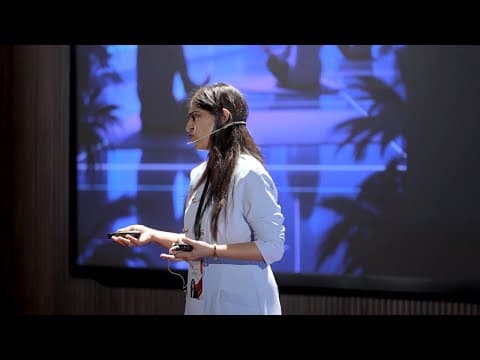
Becoming vs. Acquiring (Full Carts with Empty Hearts) | Mrs. Navita Arora | TEDxMarwadi University
Audio Summary
AI Summary
The speaker observes that people constantly check their phones when idle, a habit driven by a desire to avoid doing nothing. This behavior stems from a quiet anxiety and comparison with others, fueled by the feeling that everyone else has their lives figured out. The speaker recalls an MBA experience, where constant refreshing of inboxes and comparing oneself to peers led to anxiety about lagging behind.
A pivotal moment occurred at an airport lounge when the speaker's devices (phone, laptop, smartwatch) all simultaneously lost functionality. Initially peaceful, this silence quickly led to restlessness. The speaker notes that when our brains are not focused on a specific activity, they wander, replaying past conversations, anticipating future problems, and evaluating identity. This internal noise makes silence feel loud, prompting us to constantly rush, run, and escape our own thoughts, chasing the "next" thing in life.
An experiment asking people to go blank for five seconds or students to sit quietly revealed that most struggle with stillness. This is attributed to our brain's wiring for survival, not peace. The speaker suggests that while humans are born with a spine (vertebrates), external pressure and validation make us behave like invertebrates, losing our structure and becoming adaptable to fit in, often accumulating things for display rather than genuine satisfaction. This leads to full cards but empty hearts, as we prioritize how we are perceived over living authentically. Even travel becomes about creating social media content rather than absorbing experiences.
The speaker advocates for "non-consumeristic delight"—simple, ordinary moments like walking on grass or having coffee with friends without checking phones. These moments bring genuine smiles and calmness, creating cherished memories that material possessions cannot.
Life often moves faster than planned, with constant changes in relationships and personal identity. In this flux, what remains are memories, particularly those quiet moments of introspection. The airport experience taught the speaker that the disturbance wasn't the silent devices but the discomfort of facing one's own thoughts in a world obsessed with future achievements and external validation.
The speaker urges focusing on depth over display, genuine happiness over accumulation, and sharpening inherent qualities rather than following trends. It's crucial to ask "what is within" and seek clarity to become the true driver of one's life, not defined by others' opinions or social media posts. Our inputs define us, so we must carefully choose them to discover our authentic selves and define our own happiness.