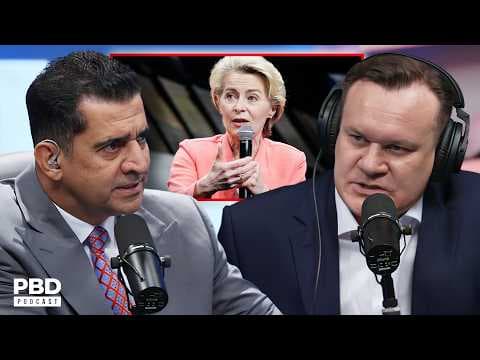
“Suitcases FILLED With Cash” - Qatar BUSTED Buying EU Influence From Parliment Members
Audio Summary
AI Summary
The discussion focuses on the "Cuttergate" corruption scandal that took place in 2022, where four individuals were arrested by Belgian police for allegedly accepting 1.5 million dollars in cash for influence. This incident involved a vice president of the European Parliament, Eva Kaili, a Socialist, who was arrested with two suitcases full of cash. Her father was also arrested with suitcases of cash. The speaker emphasizes that such a clear-cut case of bribery should not require years of investigation to confirm that someone was paid by Qatar.
Eva Kaili was caught after being under surveillance by Belgian police and services for some time, including her car. It was not European Parliament services like OLAF, which is an anti-corruption European institution, that uncovered the scandal, but rather Belgian authorities. Despite the arrests and clear evidence, Kaili is now out, and the investigation is still ongoing, with no apparent consequences. The speaker believes that Qatar paid money to people who were in favor of their businesses, particularly after a scandal involving workers dying during the construction of stadiums. Qatar allegedly sought to improve its public relations by easily buying off 15-20 Members of the European Parliament (MEPs).
This situation leads the speaker to question sudden changes in political stances, particularly within movements like MAGA. When influential figures in conservative movements change their positions overnight, the speaker suspects they have been paid. The speaker finds it difficult to believe that such a significant shift could be natural, especially for intelligent individuals.
The speaker suggests that if Qatar were to target individuals in other countries, particularly the US and Israel, they would likely go after influential figures like Donald Trump. Their method of targeting would involve media, influencers, and journalists, offering large sums of money. The speaker recounts a personal experience in Jerusalem where they stated that Qatar has no limits on how much they would pay, suggesting that even if someone earns $20,000 a month, they might be offered $20 million or $200 million. This belief in financial motivation for sudden changes in political positions is reinforced by the lack of consequences in the European Parliament scandal. The speaker argues that when politicians, journalists, and influencers are caught with money and face no repercussions, it encourages others to accept large sums.
Regarding whether President Trump is aware of such corruption, the speaker believes he likely knows but acknowledges the difficulty in stopping individuals who are prepared to bring in large amounts of cash. The investigation revealed that one MEP had so much cash—specifically €60,000—that they dropped it in a bin in the parliament because they couldn't physically carry it all. This cash was allegedly shared in the parliament after meetings with ambassadors, including one from Morocco, in various cities. The arrested individuals openly admitted their involvement during the investigation, and these stories were leaked to the press.
The speaker finds it shocking that individuals would engage in such activities for money. While believing Trump might know, the speaker questions how one can stop an MEP from bringing cash into the parliament, as they cannot be searched like ordinary citizens. The speaker also shares an anecdote about a meeting in Washington with Tommy Robinson and experienced Congress members who were surprisingly unaware of the serious and advanced nature of jihad in Europe and worldwide. This experience leads the speaker to consider that Trump might not have the full picture or might not be fully briefed on all these issues.