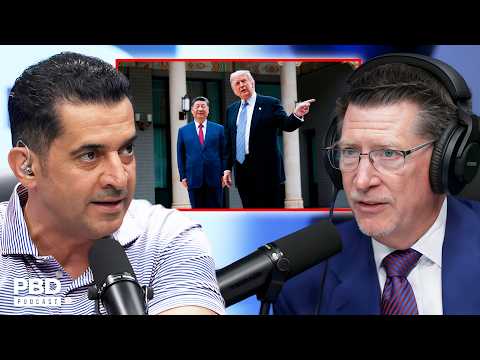
"25,000 CCP Spies" - The SHOCKING Secret Behind China's 500K U.S. Students
Audio Summary
AI Summary
The discussion begins by addressing the presence of 500,000 Chinese students in U.S. universities. One speaker expresses concern that barring these students, who are described as good students, would be insulting to China and could lead to the development of more universities within China. He also notes that the U.S. often doesn't grant green cards to these students if they wish to stay. The argument is made that removing such a large number of students could be detrimental to the university system.
A counterpoint is raised regarding the potential for espionage. It's suggested that the Chinese Communist Party (CCP) is likely in communication with these students, and even conservatively estimating 5% as potential spies would amount to 25,000 individuals. This raises questions about trust and national security. The conversation then shifts to a news clip about Eileen Wang, the former mayor of Arcadia, who resigned and took a plea deal after the FBI accused her of acting as an illegal covert agent for Beijing. The clip highlights that she conducted her campaigns in Chinese and was accused of secretly serving the interests of the Chinese government. This example is used to illustrate the concerns Americans have about national interests and the potential for foreign influence.
The discussion then pivots to the perceived decline in the U.S. educational system, exemplified by a clip showing a student struggling to read and comprehend a simple sentence, including the word "silhouette." This is presented as a failure of the educational system, with the implication that if the system is not performing, it might need to adapt or face consequences, especially when losing out on significant "customers" like the Chinese students. The speaker contrasts this with his own experience of learning English as an immigrant, emphasizing that current students born and raised in the U.S. struggling with basic vocabulary indicates a systemic issue.
The conversation then moves to a broader discussion of "winners and losers" in the context of economic and geopolitical relations with China. Nvidia and Chinese companies that receive advanced chips are identified as clear winners. City Bank is also seen as a winner for gaining an opportunity to offer services to wealthy Chinese. The speaker also notes that dialogue with China, despite disagreements, is a winner, as it can help de-escalate tensions.
Another perspective suggests that the United States is the ultimate winner, emphasizing "stability through strength" rather than "peace through strength." The comparison is made to the Cold War with the USSR, highlighting that the current relationship with China, while competitive, involves dialogue and interdependence, which is seen as a more manageable rivalry than the ideological divide with the Soviet Union. The argument is made that China's reliance on deceit and espionage stems from an inability to compete fairly with the U.S.
The discussion briefly touches on U.S. political dynamics, specifically mentioning a moment where Donald Trump joked with JD Vance about assassination attempts and succession, which is described as "purely made for TV." The nature of political maneuvering and potential future rivalries within the Republican party, particularly between figures like Rubio and Vance, is discussed, with the Iran war being cited as a potential point of divergence.
Finally, the conversation shifts to promotional content for limited-edition merchandise, specifically hats and apparel related to a "250-year anniversary" and the slogan "The future looks bright." The urgency of purchasing these items is emphasized, with claims of limited availability and the potential for resale on platforms like eBay. The video concludes with links to other content and the full podcast.