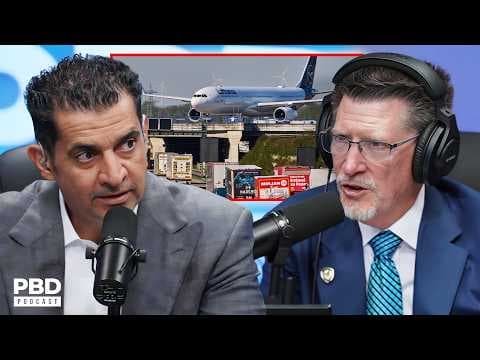
“Cancelling 20,000 Flights” - Jet Fuel Prices SKYROCKET Forcing Airlines To Cut Routes
Audio Summary
AI Summary
The discussion centers on the rising cost of jet fuel and its significant impact on the airline industry, leading to flight cancellations, reduced forecasts, and increased ticket prices. Lufthansa has announced the cancellation of 20,000 short-haul flights between May and October to save approximately 40,000 tons of jet fuel. This move, which represents about 1% of their available seat kilometers, is part of a broader profitability strategy that includes cutting 4,000 administrative jobs by 2030.
In the United States, United Airlines has also revised its 2026 financial forecasts downwards, from $12-$14 per share to $7-$11 per share, due to surging fuel costs. The airline, like others, is scaling back its flight plans to reduce expenses. Analysts had already adjusted their expectations, forecasting United's full-year earnings at $9.58 per share, with a specific forecast for the second quarter of $1-$2 per share, lower than the expected $2.08. United anticipates that it will only be able to cover between 40% to 50% of the fuel price increase in the second quarter, rising to 80% in the third, and 85% to 100% by the end of the year. Despite these challenges, overall revenue for United rose by over 10% year-over-year.
Tom explains that the airline industry relies heavily on economists for fuel hedging strategies to plan for price fluctuations. Currently, the unexpected surge in fuel costs is forcing airlines to seek cost reductions. A significant factor is that many shorter, regional flights are not profitable on their own. Airlines often operate these flights to feed passengers into major hubs, like Delta's hub in Atlanta, from where passengers take more profitable long-haul flights on larger aircraft. Lufthansa's decision to cut flights from its regional division, CityLine, exemplifies this strategy, forcing passengers to travel further to larger airports.
An anecdote illustrates the impact on travelers: a coach ticket from Fort Lauderdale to Idaho on Delta, involving multiple stops, cost $750. The return trip six weeks later for the same route is priced at $1,600, a stark increase attributed partly to the fuel costs and the small size of the destination airport. This situation raises concerns for travelers like Kim, who may face further disruptions if airlines like Delta reduce or eliminate service to smaller airports, potentially requiring longer drives to reach their destinations.
Airlines initially absorbed some of the increased fuel costs to maintain market share and customer loyalty, but are now passing these costs on, leading to higher fares and the elimination of less profitable routes. This trend is not isolated to Lufthansa and United; Cathay Pacific Airways plans to cancel about 2% of its scheduled passenger flights, HK Express will cut about 6%, and KLM will reduce 160 flights in Europe. Vietnam Airlines has signaled potential cuts of up to 18% of its international flights and 26% of its domestic flights.
Brandon notes that the current impact is likely the beginning, as the lag effect of fuel shipments procured before recent geopolitical events is just starting to be felt. He suggests that while some predict inflation, the increased spending on energy and travel could instead reduce disposable income, potentially lowering prices in other sectors. Airlines, with historically thin profit margins (2-5%), often rely on government subsidies and are therefore highly susceptible to such cost pressures.
For travelers facing cancellations or significant itinerary changes, CNBC advises knowing their rights, as federal regulations mandate prompt refunds for canceled or significantly altered flights, even for non-refundable tickets. It's also crucial to ensure contact information is up-to-date with the airline and to act quickly when notified of changes to maximize available options. Flying nonstop is suggested as a way to minimize disruptions, though it is typically more expensive. Travel insurance is also recommended.
The conversation then shifts to sponsorship opportunities for the "Vault Conference," an event that has seen significant growth since its inception in 2019. The 2026 conference is projected to host over 12,000 entrepreneurs, CEOs, and business leaders at the MGM Grand in Las Vegas. The event targets decision-makers from companies of varying sizes, with a strong emphasis on engagement with sponsors. A significant percentage of attendees interact with sponsors on-site, generating qualified leads and fostering relationships. The conference offers various sponsorship levels, including premium booth placements, branding on the Las Vegas Strip, logo placement on attendee badges, stage presence, and in-app advertising. Past sponsors include notable companies and figures like PayPal, Tony Robbins, and Zoa Energy. The pitch deck is available for businesses interested in sponsoring, with a call to action for companies to submit applications and for individuals to share the opportunity with their executive teams. The link for more information will be provided.