If I Wanted to Build a Personal Brand in 2026, I'd Do This First
Audio Summary
AI Summary
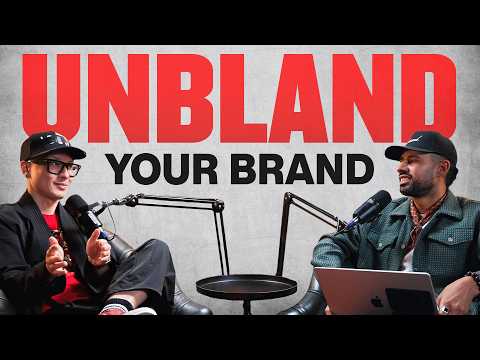
The core philosophy behind "Unblend Yourself" is the idea that society often socializes individuals to conform and blend in, leading many to lose touch with their authentic selves and core beliefs. This tendency is amplified by social media, where fear of backlash prevents people from expressing their true thoughts, feelings, and even personal style. The "Unblend Yourself" workbook is a culmination of three years of research and workshops, designed to help individuals rediscover who they truly are and who they are meant to be. The book offers a self-paced, private journey of introspection, encouraging honest conversations with oneself to unearth buried aspects of identity.
The speaker's own journey of "unblending" began with exploring the safety of expressing his true self, particularly through his work with video. He realized that many self-imposed rules are not actual laws, leading to greater freedom. This concept is illustrated by the analogy of a dog with an electric shock collar or an elephant held by a string, both of which learn boundaries that may no longer exist. Humans similarly adopt societal norms, playing small and failing to realize the world is much bigger than their immediate environment.
A significant hurdle in the speaker's personal unblending was the fear of negative impact on his business. However, he learned two key lessons: firstly, people are not paying as much attention as one might think, and clients are primarily focused on themselves. Secondly, there's a wider level of acceptance for authenticity than anticipated. When individuals show more of themselves, some will connect and others will not, which is a positive outcome. The fear of alienating everyone often leads to saying nothing, resulting in irrelevance. Expressing convictions, not to be contrarian but with genuine meaning, should both compel and repel, attracting those who resonate and deterring those who don't. This applies to fashion choices, personal beliefs, and even discussing personal growth tools like therapy.
Regarding content creation and personal branding, many people get stuck talking about "what they do" rather than "who they are." This stems from societal conditioning against self-focus and a lack of self-awareness. In a world saturated with choices and information, being indistinguishable from others leads to being overlooked. The "paradox of choice" suggests that too many options paralyze decision-making, which can prevent potential clients from engaging.
A crucial point in building a personal brand is understanding that not every decision is irreversible, challenging the "door one" mentality where paths are seen as permanent. Many decisions, like changing jobs, can be undone. The biggest problem in modern entrepreneurial circles is making no decision at all due to the fear of making the "wrong" one.
To develop self-awareness and understand what resonates with others, one must explain their knowledge, thoughts, and beliefs to people and observe their reactions. Feedback from diverse individuals can reveal aspects of oneself that were previously unknown. Building a personal brand isn't just about tutorials; it's about sharing one's philosophy and worldview. The "blend" of creating value and weaving in personal story is essential. The example of bottled water illustrates this: while water is fundamentally the same, its story (provenance) determines its perceived value and price. Humans are meaning-making machines, and without a story, there's no meaning or connection.
Before making that first post or creating content, it's vital to understand "who you are." This involves exploring beliefs, values, and even the "shadow self"—vulnerabilities and anxieties that can make one more interesting and relatable than a facade of perfection. Authenticity, including sharing quirks and imperfections, fosters connection.
For those paralyzed by the idea of deep self-work, the speaker offers a simpler framework for personal branding, called the "unblend essence" or "foundational layer," consisting of three core elements:
1. **The one thing you want to be known for:** Ideally a single word. This requires assessing if one can realistically "own" this space within a year or two, as the world rewards number one. If not, a different niche should be considered.
2. **The enemy:** What are you on a mission to rid the world of? Brands are often united by a common enemy, which creates a stronger bond than a common friend. Examples include Louis Vuitton fighting fast fashion or Brian Johnson fighting death/entropy with longevity.
3. **Your rallying cry (slogan):** A phrase that activates your audience and community. For Brian Johnson, it's "Don't Die."
These three elements provide clarity and a strong foundation for building a unique brand. The number one leader in any vertical is significantly larger than number two, emphasizing the importance of owning a specific niche. If one cannot be number one, it's often better to pivot and find a different lane, perhaps by adding a dimension of specificity (e.g., "YouTube strategist for Latin America").
The speaker also outlines three principles of personal branding:
1. **Be intentionally or meaningfully different:** Blending in means having no brand.
2. **Have the courage to be disliked:** Being different will inevitably lead to criticism and misunderstanding, so one must be prepared for it.
3. **Be aesthetically discerning:** Visual presentation plays a crucial role, as over 50% of the brain is dedicated to visual processing. Clothes and appearance are tools that signal identity and intent, influencing how others perceive you. Dressing intentionally should align with the "job" one is trying to solve, whether it's professionalism, standing out, or inviting conversation.
The speaker shares a personal anecdote about his unique fashion choices at social events. As a socially awkward introvert, he uses his distinctive style as a "provocateur" to invite conversations, solving his problem of not knowing how to initiate interaction.
Reflecting on 2025 and looking to 2026, the speaker notes setbacks and team changes, which led to a period of hyper-focus and execution. Financial goals have shifted significantly, requiring a renewed dedication to work and efficiency. He emphasizes the importance of being "pulled" towards a goal rather than merely "pushed," finding new motivation to achieve the next level of success. This means optimizing his life, cutting out distractions, and working with intense focus to achieve ambitious property acquisition goals.
To support the speaker and his work, individuals can become YouTube channel members (patron level is most impactful) or purchase his workbooks from future.com or by following him on social media @theChrisDoe. The speaker believes in giving back to support content that transforms lives, aligning with the idea that every dollar spent is a vote for the world one wants to see. The next chapter for 2026 promises to be a dream-come-true journey, inviting the audience to learn alongside him.