Jackie Chan et son fils : La sombre vérité derrière la gloire, l'échec et les secrets de famille
Audio Summary
AI Summary
The world often simplifies the story of Jackie Chan, a global icon who turned adversity into box office success, and his son, JC Chan, a privileged child who went to prison. This narrative, however, fails to capture the uncomfortable truth within their family, where long before JC’s mistakes, there was a father who never truly learned how to parent.
Jackie Chan’s early life was marked by extreme precarity. Born in Hong Kong, his parents were so poor they reportedly considered selling him to a British doctor to cover hospital fees. This early instability profoundly shaped him. He recalled waiting near restaurants for scraps and pretending to sit at tables to retrieve leftovers, a struggle for survival mixed with humiliation. At age seven, he was sent to the China Drama Academy, a Beijing opera school in Hong Kong, where children endured ten years of rigid training in martial arts, acrobatics, singing, and discipline. This harsh regimen included physical punishment, minimal family contact, and an emphasis on endurance over comfort. By the end, Jackie was not only talented but conditioned; pain was normal, emotions suppressed, and discipline replaced softness.
Entering the film industry as a stuntman, Jackie started at the bottom, accepting hard hits and dangerous falls. He meticulously observed camera angles, timing, and editing, learning production from directors. His early work alongside Bruce Lee in *Fist of Fury* was pivotal. Lee represented what was possible—a Chinese martial artist dominating globally. Jackie famously recounted Lee accidentally hitting him during filming and apologizing, a moment he cherished. When Lee died, the industry sought a replacement, attempting to mold Jackie into Lee’s image. Films like *New Fist of Fury* pushed him towards imitation, but Jackie realized that copying Lee would only create a shadow.
Instead, Jackie changed direction, introducing physical comedy into martial arts. He smiled during fights and used everyday objects—chairs, ladders, umbrellas—as weapons. His choreography, though seemingly chaotic, was precise, blending slapstick with martial arts in an unprecedented way. Crucially, he decided to perform his own stunts, ensuring his face was visible during dangerous leaps and crashes. This authenticity built trust with audiences. Films like *Police Story* redefined the genre, and *Rush Hour*, co-starring Chris Tucker, brought him global recognition, generating hundreds of millions worldwide.
While audiences admired his daring, Jackie’s body paid a heavy price, enduring burns, fractures, electric shocks, broken fingers, and a cracked eye socket. During the filming of *Armour of God*, he nearly died after falling from a tree, sustaining a skull fracture that required surgery. Each injury fueled his legend, but this mindset of enduring pain also permeated his personal life.
In 1982, he secretly married Taiwanese actress Joan Lin after she became pregnant. Jackie admitted he hadn’t planned for fatherhood or marriage at that time. Though proud of his son, JC, pride didn’t equate to preparedness. His career soared, and his lifestyle shifted dramatically from poverty to immense wealth. He indulged in partying, drinking, and luxury cars, recounting impulsive purchases and a fast-paced life, as if consuming everything he had been deprived of. Meanwhile, JC grew up largely without him. Jackie confessed he often only saw his son early in the morning after filming, a sleepy child and an exhausted father.
Jackie publicly recounted a troubling incident where, in a fit of rage, he threw his young son across the room, an act he described as a turning point, vowing never to raise his hand again. This moment revealed a man raised in brutality, trained to endure pain, and taught discipline over affection, now attempting to raise a child he barely knew. The public saw an action hero, but at home, he was a father struggling to understand presence.
JC’s story began in comfort, not the hunger or violence Jackie experienced. He lived in luxury with private security and a famous name that opened doors. Jackie often compared JC’s soft life to his own harsh upbringing, believing that difficulty builds character. However, JC’s struggles were psychological, not physical. He grew up under the immense shadow of an "invincible" father who built himself from nothing and redefined a genre. JC recalled seeing his father more on screen than at home, fostering admiration but also distance.
When JC was old enough to choose his path, the expectations were immense. He briefly attended university in Virginia but dropped out, feeling disconnected and bored. He returned to Hong Kong, where his father’s name held the most weight, intending to pursue music. His approach, however, was marked by skepticism. He admitted not reading the script for *The Twins Effect 2*, thinking it would be easy. His debut album, *JC*, despite significant support, failed to achieve success. Critics questioned if he would have received opportunities without his father’s name, a question that haunted him. He never retreated to hone his craft or returned with undeniable work. His interviews often conveyed detachment, speaking of enjoying himself and seeing where things led, lacking visible urgency.
His acting career followed a similar trajectory. Films like *Toyoung*, *Mcdull*, *The Alumni*, and *The Drummer* had artistic merit or potential, but none established him as a leading actor. He wasn't violently criticized; he was largely ignored, a fate more destructive than frontal attack, reinforcing the idea that he couldn't carry what he was given. Yet, glimpses of deeper emotion appeared, like when a director struggled to make him cry for a scene until his mother was mentioned, prompting an instant breakdown. This revealed a search for approval, not fame.
Meanwhile, Jackie began to reflect. Working on *The Karate Kid* remake with Jaden Smith, he observed Will Smith’s constant presence and active guidance of his son. Jackie admitted this made him uncomfortable, describing himself as traditionally Chinese in parenting, believing children should solve problems alone and associating difficulty with growth. But he began to differentiate between structured challenge and emotional distance.
They decided to collaborate on *1911*, a historical film about the Chinese revolution. Though a commercial and critical failure, privately, something shifted. They spent time together, talking. JC began pursuing more action-oriented projects, seemingly trying to connect with his father’s world. The distance appeared to lessen, and effort seemed shared.
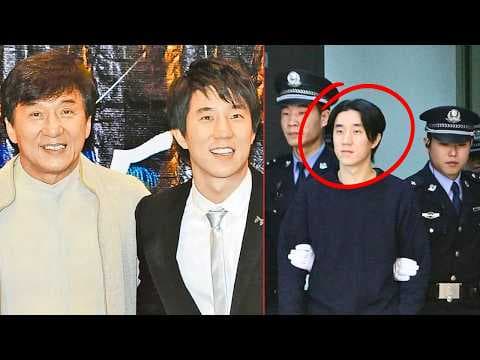
Then, in August 2014, during a major anti-drug campaign in China, police found 100g of marijuana in JC’s Beijing apartment. He was arrested alongside actor Kai Ko and tested positive for drug use. In China, the consequences were severe; JC faced years in prison. The headlines were unforgiving, especially given Jackie Chan’s public role as an anti-drug ambassador. Jackie’s public statement was firm: his son broke the law and must face the consequences. He apologized to the public, expressed shame, and did not publicly protect his son.
JC spent six months in detention and was sentenced to six months in prison for drug possession and for providing a venue for others to use drugs, also receiving a fine. Upon release, he didn't blame his father but described the experience as a shock, reflecting and working harder than ever before. For Jackie, a man shaped by strict systems, enduring punishment made sense. He spoke of it as a lesson learned, even joking that some rich youth should experience prison to correct their arrogance. For him, difficulty forged character.
After JC’s release, Jackie made a rare confession, admitting his absence and that letting his son manage alone was abandonment disguised as strength. He expressed a desire to change, and they reportedly began talking more and collaborating musically. However, a final decision complicated their relationship: Jackie publicly stated he would not leave his fortune to JC, believing his son should earn his own money or risk wasting it. Instead, his wealth would go to charity. This was seen by some as consistent with his belief in self-reliance, by others as a final act of emotional distance.
JC didn't grow up in poverty, but in a home filled with trophies that weren’t his, overshadowed by a legendary father. What he lacked was a consistent presence. Jackie Chan’s life is a triumph over adversity, but building oneself doesn't automatically teach one how to build another. The family conflict was not just about talent but about translation: a father who understood pain but struggled with tenderness, and a son who knew comfort but lacked direction. The arrest and humiliation were public, but the deepest tension existed long before the police raid. Two men, shaped by their environments, sought each other's respect without ever truly speaking the same language. The world remembers the stunts and broken bones, but sometimes the hardest fall happens at home.