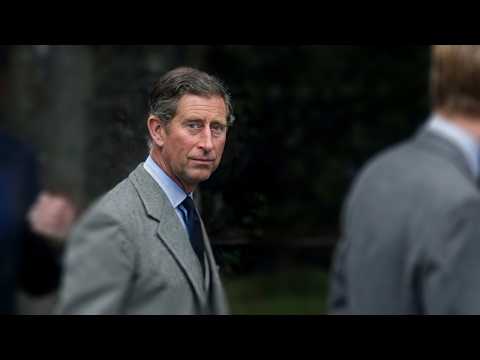
Charles III, les secrets inavouables du nouveau Roi
AI Summary
On September 8, 2022, Queen Elizabeth II passed away at 96, ending her seven-decade reign and ushering in the era of King Charles III. For Charles, her eldest son, this marked the end of an "interminable wait" of 70 years to assume his role. Inheriting the crown at Balmoral Castle, he immediately faced immense pressure to live up to his mother's legacy. Public perception of the new king was complex, oscillating between an "indecipherable and explosive" image. He was often seen as a "big simpleton" with a "terrible character," prone to anger, as evidenced by an early incident involving a leaking pen. His aristocratic habits, like having pajamas and shoelaces ironed, contributed to a public image of someone accustomed to being served. His revolutionary ideas, such as potentially not residing in Buckingham Palace, sparked controversy, threatening London's tourism.
Charles's challenging public image stemmed partly from a deeply traumatic childhood marked by absent parents. Queen Elizabeth II, described as the "mother of the nation" rather than a conventional mother, maintained a demanding and often harsh demeanor towards him, providing little time or emotional guidance. This lack of a parental "instruction manual" later complicated his own relationships with his children. At age 10, Charles was sent to Gordonstoun, a strict Scottish boarding school, which he later described as "years in prison" and a "living hell," imposing cold showers and dawn runs with brick bags. This severe upbringing profoundly impacted his temperament.
His personal life was further complicated by his high-profile marriage to Princess Diana, which quickly devolved into a public nightmare. The union, largely arranged by the crown for an heir, saw Charles and Diana meet only five times before their wedding. Charles, not truly in love, fulfilled his duty to produce an heir. Diana, however, became a global icon, the "people's princess," who sought revenge through public popularity as she realized her husband's heart belonged to another woman. The scandalous revelation of intimate phone conversations between Charles and his long-time mistress, Camilla Parker Bowles—including the infamous "tampon comment"—vilified Charles and made him a laughingstock. Diana’s 1995 Panorama interview, where she publicly doubted Charles's fitness to be king, was devastating, leading directly to their divorce.
Diana's tragic death in a 1997 car accident plunged Charles into further public condemnation. He was seen as an unfaithful husband, indirectly responsible for her demise, and even wore a bulletproof vest at her funeral due to intense public hatred. The decision for William and Harry to walk behind their mother's coffin was a source of contention, with some, like Diana's brother, opposing it.
Amidst this turmoil, Camilla Parker Bowles, whom Charles met in 1971, emerged as the pivotal figure in his life. Despite their immediate bond, Camilla's lack of aristocratic pedigree and previous marriage made her unsuitable for a royal match in the eyes of the crown. Their prolonged adulterous affair led to Camilla being branded "public enemy number one," a "witch," and "Rottweiler" by the media. However, Charles's greatest personal victory has been Camilla's eventual acceptance as Queen Consort. She is described as the only person capable of calming and framing him, earning his absolute trust. Camilla’s integration into the royal family involved significant personal changes, including weight loss, dental work, and posture lessons, transforming her from a reviled figure to a universally admired consort with over 50% public approval. Elizabeth II's late-life endorsement of Camilla as Queen Consort underscored her crucial role.
Diana's death, while a personal tragedy, forced Charles to become a more engaged father. He transitioned from an often-absent parent to one who actively sought to rebuild his image by caring for his two young, grieving sons. He was "a much better father than a husband," taking them on family trips and offering emotional support. However, Charles also dedicated much of this time to integrating Camilla into the royal family, a decision that initially caused deep resentment in William, who blamed Camilla for his parents' divorce.
Over time, the relationship dynamics shifted. William, once the rebel, grew closer to his father, sharing a strong sense of duty and seeking Charles's advice as the heir. Kate Middleton also played a crucial role in fostering reconciliation between William and Camilla. Harry, initially closer to his father, became the "spare," mechanically condemned to supporting roles. His struggles led him to psychoanalysis, and his eventual departure with Meghan Markle for the United States "extremely hurt" Charles. Despite this, Charles deeply believed in Harry’s marriage to Meghan, seeing her as strong ("tungsten") and a valuable asset to the crown. He remains saddened by the estrangement and desires reconciliation, particularly to see his grandchildren, Archie and Lilibet.
Beyond family life, Charles has been a lifelong environmental activist, a passion born from his experiences in the Scottish wilderness. Starting at 21, he publicly spoke about climate change, enduring mockery for his unconventional views and being caricatured as someone who "talked to trees." His Highgrove estate, purchased in 1980, became a laboratory for organic farming, and he famously converted his Aston Martin DB6 to run on bioethanol derived from wine and cottage cheese waste. As the manager of the Duchy of Cornwall, he demonstrated shrewd business acumen, creating the successful "Duchy Originals" organic brand, which was initially ridiculed. Charles’s public stances on issues like architecture, natural medicine, and diversity often put him at odds with his mother, who believed a sovereign's duty was to remain silent. His Poundbury project, a traditionalist housing development, exemplified his vision of "change within continuity."
Despite their differing conceptions of power and frequent disagreements, Charles and Elizabeth II grew closer in her final decade. Charles reassured her that he would cease commenting on controversial topics upon becoming king. His tender "Mommy" speech at the Queen's Diamond Jubilee in 2022 endeared him to the British public, showcasing an emotional side that fostered empathy. Charles, a "rebel but not a revolutionary," is deeply attached to monarchical tradition.
Upon his accession, Charles decisively addressed the long-standing issue of his younger brother, Prince Andrew. Andrew, long seen as the Queen's favorite, caused significant scandal due to his association with Jeffrey Epstein. Charles, alongside William, forcefully advocated for Andrew to be stripped of his honorary titles. As king, Charles has effectively "liquidated" Andrew's public figure, banishing the House of York from the inner circle of the crown and advocating for a smaller, more streamlined monarchy.
Known for his lavish lifestyle contrasting with his mother's austerity, Charles has also cultivated a timeless and elegant personal style, becoming a fashion icon. His custom-made clothing and signature "hand-in-pocket" gesture reflect a deliberate, classic aesthetic. At 74, Charles III has survived numerous storms. His atypical personality, blending tradition with hyper-modernity, suggests a reign that will be anything but insignificant, poised to shape the future of the Windsor saga.