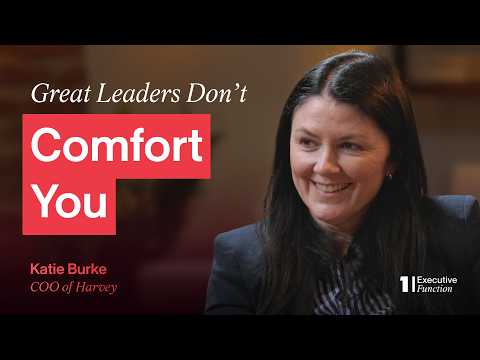
A people leader’s job isn’t to make you happy | Katie Burke (COO, Harvey)
Audio Summary
AI Summary
As a Chief People Officer (CPO), a key differentiator is approaching internal communications and recruiting with a marketer's mindset, focusing on "share of attention" to make messages compelling. This contrasts with traditional HR, which often assumes a captive audience. Another distinct approach is intentionally hiring from hospitality backgrounds, as individuals with experience in restaurants and hotels tend to excel at thinking about guest and employee experiences, leading to innovative solutions. The third crucial aspect is to "build the table and set the menu" rather than just asking for a seat, meaning the people function must prioritize business and customer needs, ensuring employee programs align with strategic goals.
An example of "building the table" is HubSpot's approach to transparency, particularly after going public. Instead of restricting information, the company made everyone a "designated insider," sharing information at a high velocity, which employees valued as a "mini MBA." This commitment to transparency extended to releasing full employee Net Promoter Score surveys, including critical feedback, demonstrating a willingness to live values even when difficult.
Other unconventional yet successful strategies included offering employees choice in work location during the pandemic, providing options like home, flex, and office, which boosted recruiting. The implementation of a "failure forum" where executives openly discussed mistakes, fostering humility and loyalty, was another unique practice.
The people function acts as a strategic input driver in several ways: recruiting individuals who are great at execution, embody company values, and drive urgency; empowering managers to reinforce company messages and behaviors; and proactively planning for future leadership skills, rather than just succession for unexpected departures.
A particularly delicate aspect of the CPO role is being the HR business partner for the executive team. This involves both helping executives with organizational structure and providing direct feedback on their behavior. Trust is the most important currency in this role, requiring discretion and the ability to share thematic feedback without betraying individual confidences. The CPO must also be able to honestly assess the executive team's capabilities to the CEO and board, even if it involves difficult conversations about underperformance, prioritizing the company's long-term success.
When addressing underperformance, the ideal approach is a direct, one-on-one conversation, allowing individuals to receive feedback and, if necessary, exit gracefully. Transparency in this context means providing direct feedback to the individual rather than broadly disclosing reasons for termination, as the latter can harm an individual's future prospects and create unhelpful rumors. However, there are instances, such as public violations of a code of conduct, where a brief, clear statement about not meeting organizational standards is appropriate.
Navigating values during challenging times, such as layoffs, is particularly difficult. During HubSpot's 2023 layoff, the tension between the value of empathy and the necessity of the decision was managed by providing generous severance packages, creating office hours for one-on-one conversations with senior leaders, and making leaders available to feel the impact of the decision. This experience highlighted the "hangover" effect of layoffs, which can last for two to two-and-a-half years, impacting survivor guilt and ongoing fear, underscoring the need for long-term cultural nurturing.
Headcount planning is inherently messy, especially with the addition of AI agents. Effective planning involves defining the work first, pushing for clear accountability between finance and business teams, and recognizing that each new hire adds complexity and the potential for "disparate ownership." Regular replanning, even quarterly, is essential, particularly in fast-paced environments like AI, to ensure alignment with evolving business needs.
Reflecting on the shift from "nanny state" cultures to performance-driven ones, it's crucial for companies to be clear about their identity and ensure that their stated culture matches the day-to-day experience. While some companies went too far in prioritizing happiness, the current overcorrection towards solely demanding work and removing perks is also problematic. The goal should be an "intense but reasonable" environment that balances high expectations with human support, such as respecting parental leave or doctor's appointments. There isn't a universally "correct" culture; what matters is clarity and consistency.
Incentives, as Charlie Munger noted, rule the world. The key to effective incentive structures is simplicity, avoiding overly complex systems with multiple variables that can be manipulated. When designing bonus programs, it's essential to anticipate "failure modes" and understand the trade-offs. Managers often act as lobbyists for their teams, prioritizing their direct reports over individual gain, which needs to be considered in promotion calibrations and performance ratings. To ensure a high-performance culture, leaders must be honest about the standards they set within their teams, using real examples and feedback to drive behavioral change.
Regarding titles in fast-growing companies, while executives may claim titles don't matter, they do for employees. However, an excessive focus on title during the interview process can be a red flag. Simplicity in title structures and rough career guides are often more appropriate for rapidly scaling startups, acknowledging the inherent ambiguity. Federal guidelines for leveling are crucial to prevent inconsistencies across different departments.
A CPO must be comfortable with the fact that approximately 20% of employees will always be unhappy with some decisions. The challenge lies in distinguishing between "protein" (substantive, critical feedback) and "sugar" (minor complaints). While ignoring all complaints is a mistake, dwelling on trivial issues like "Berrygate" (a humorous anecdote about employee outrage over changing a snack perk) indicates a "loss of plot." Effective CPOs focus on feedback that genuinely impacts company success and culture, while also being vigilant about "frequent flyers" who spread negativity and distract from important work.
A demanding work environment, where people are focused on meaningful tasks, can naturally reduce trivial complaints. Leaders should strive for an environment that is demanding but not overwhelming. Behavioral patterns, like new hires who immediately focus on what could be better rather than what was positive, or sales reps who struggle with basic IT instructions, can be early indicators of future performance and attrition.
A manager does not need to be the absolute best in their discipline but must possess enough subject matter expertise to command credibility and provide guidance. The transition from a VP to a C-level executive often hinges on self-awareness and the ability to recruit people better than oneself. For directors moving to VP, it's about elevating their operating system from "camp counselor" to empowering their team and focusing on broader strategic oversight.
At scale, common pitfalls for people functions include becoming too program-centric rather than people-centric, relying solely on lagging indicators like attrition instead of predictive analytics (e.g., "I see myself at HubSpot in the next 12 months"), and internal territorial conflicts within the people team itself.
Since joining Harvey, the CPO has shifted focus from culture as the primary differentiator to product and brand leadership, with culture supporting that. The pace of work has also significantly accelerated, with less luxury for slow decision-making, especially in the AI space.
AI is transforming the people function by enabling automation of routine tasks, such as writing job descriptions or streamlining onboarding processes, allowing leaders to focus on creating a human experience. People leaders must proactively identify how AI can eliminate or reduce processes and should lead, not follow, discussions about workforce planning that integrate both human and AI agents. AI also offers possibilities for personalized internal communications and performance reviews.
The CPO believes that while AI will automate many tasks, the importance of emotional intelligence (EQ) in management will remain paramount. This could free up managers to engage in more mentorship and training. People leaders also need to set the pace for AI adoption within their organizations, acting as change agents and aligning incentives with AI usage.
Being a demanding manager is crucial, prioritizing respect over being liked. The best leaders can be both demanding and supportive, pushing individuals to deliver their best while also showing empathy and care. This involves being comfortable with "awkward conversations" to provide direct, constructive feedback, which, while difficult in the moment, often leads to long-term growth and appreciation.
Key personal improvements as a CPO include learning to speak less and add more value in meetings, taking full ownership of mistakes rather than pointing fingers, and letting go of perfectionism, embracing the reality that even top executives don't always "bat 1.000."
Disagreeing well with a CEO relies on mutual respect, shared long-term goals, and agreed-upon mechanisms for handling conflict. While the CEO doesn't have to make all decisions, clarity on who is the decision-maker for specific areas is vital.
For a first-time CPO, advice includes seeking help and exposure from experienced board members, observing board meetings before presenting, and building relationships with board members before and after formal meetings. The CPO role has a uniquely complex relationship with the board, particularly concerning compensation and succession planning, requiring deep trust and the ability to navigate delicate dual responsibilities to investors and employees.
Ultimately, the CPO hopes their team would say they are someone who wants the company to win and pushes them hard to achieve that, while always having their back.